
Interstate 485 (Charlotte Outer Loop)
Interstate 485 is the beltway that encircles Charlotte, North Carolina. Built in segments and completed in 2015, it functions as a major commuter, freight, and development corridor for the region.
Overview
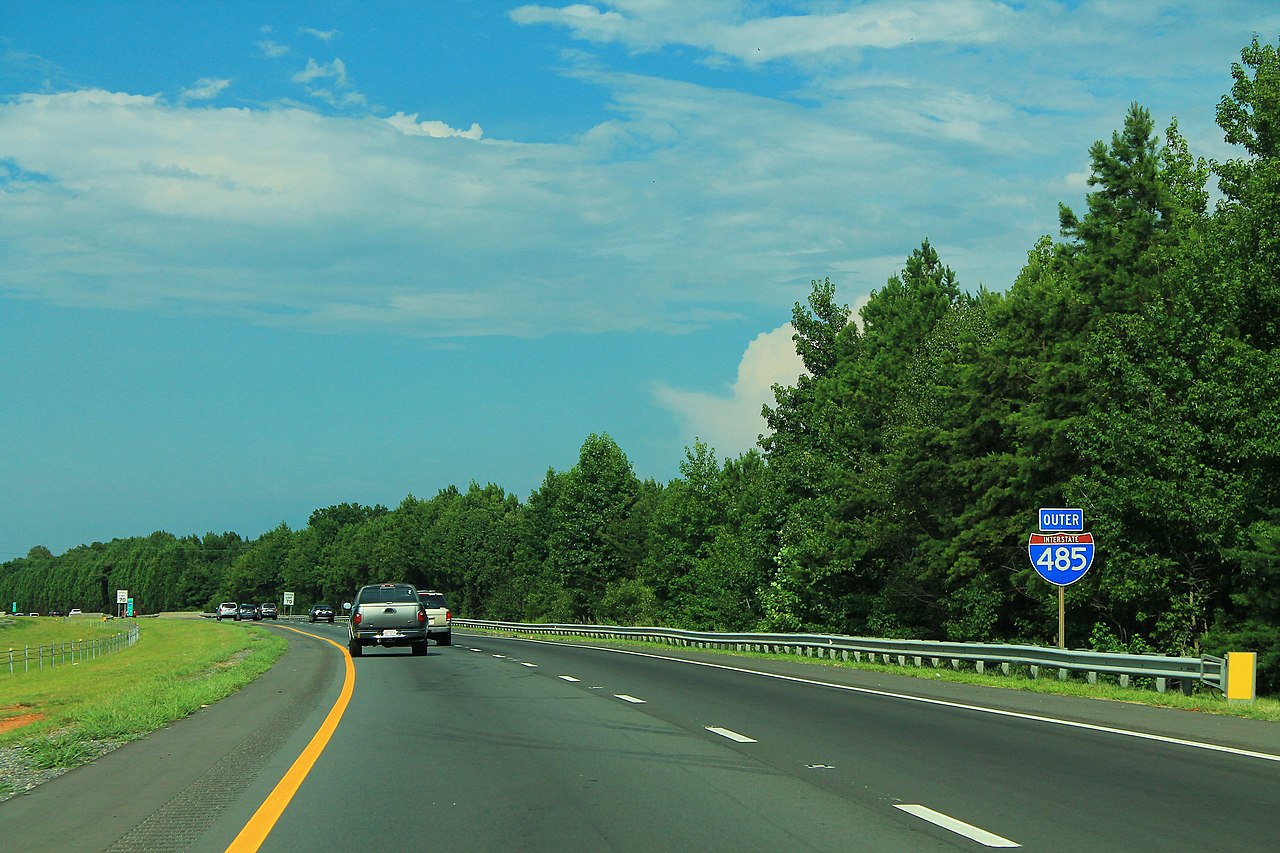
Interstate 485 is the circumferential interstate highway that surrounds the Charlotte, North Carolina, metropolitan area. Commonly called the Charlotte Outer Loop, it provides a continuous high-capacity route around the city that links suburban neighborhoods, commercial districts, and radial interstates. The beltway was built in stages and reached full continuity when the last segment opened in 2015. For maps and route details see the official project or route pages: route map.
Image gallery
7 Images




Route and characteristics
The highway forms a full loop around Charlotte and its suburbs, with multiple lanes in each direction and a mix of full and partial interchanges. It connects with several principal highways that serve Charlotte and the surrounding region, providing motorists with options to bypass downtown traffic and to link residential areas with employment centers. The corridor is designed for high-volume commuting, regional freight movement, and access to local points of interest. Detailed traffic and planning documents are available from regional transportation authorities: transportation resources.
History and development
Planning for an outer loop around Charlotte began in the mid-20th century as the metropolitan area expanded. Construction proceeded in segments over multiple decades, reflecting funding, environmental review, and phased engineering work. The progressive completion of portions of the beltway allowed successive waves of suburban growth, and the final connecting segment was finished in 2015, creating a continuous interstate loop.
Role and impacts
I-485 has had substantial effects on travel patterns and land use in the Charlotte region. It reduces through-traffic on inner-city streets, shortens travel times for many commutes, and provides improved access for logistics and commercial activity. At the same time, the presence of the beltway has influenced development patterns, encouraging new residential subdivisions, shopping centers, and office parks along interchanges.
Notable facts
- It is widely referred to as the Charlotte Outer Loop in local usage.
- The loop was completed in stages; the final linking segment opened in 2015, completing the continuous route.
- I-485 serves as a major distributor, connecting to several primary interstates and state highways that radiate from Charlotte.
For travelers and planners, I-485 is an example of a modern urban beltway intended to balance long-distance mobility with local access, and it remains an important element of the Charlotte region's transportation network.
Related articles
Author
AlegsaOnline.com Interstate 485 (Charlotte Outer Loop) Leandro Alegsa
URL: https://en.alegsaonline.com/art/47780
Sources
- maps.google.com : "Google Maps"