
Interhalogen compounds
Interhalogens are binary compounds of two different halogens. They show distinctive stoichiometries, strong oxidizing and fluorinating behavior, varied molecular shapes and important but hazardous laboratory uses.
Overview
Interhalogens are binary chemical compounds formed from two different halogen elements (fluorine, chlorine, bromine, iodine, astatine). They typically adopt formulas such as XY, XY3, XY5 or XY7, where the larger, less electronegative halogen occupies the central position. These species are generally more reactive than the constituent elemental halogens and are often powerful oxidizing or fluorinating agents.
Image gallery
6 Images


Structure and bonding
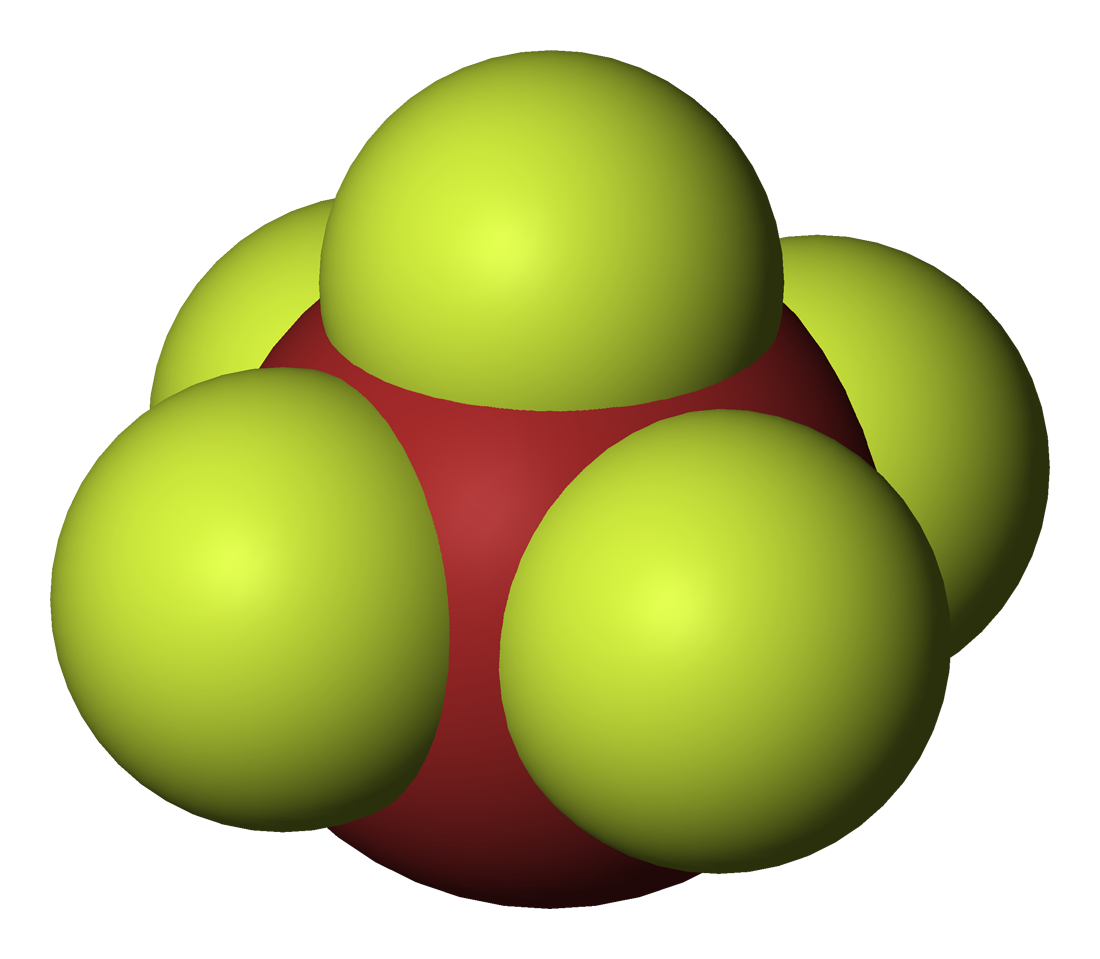
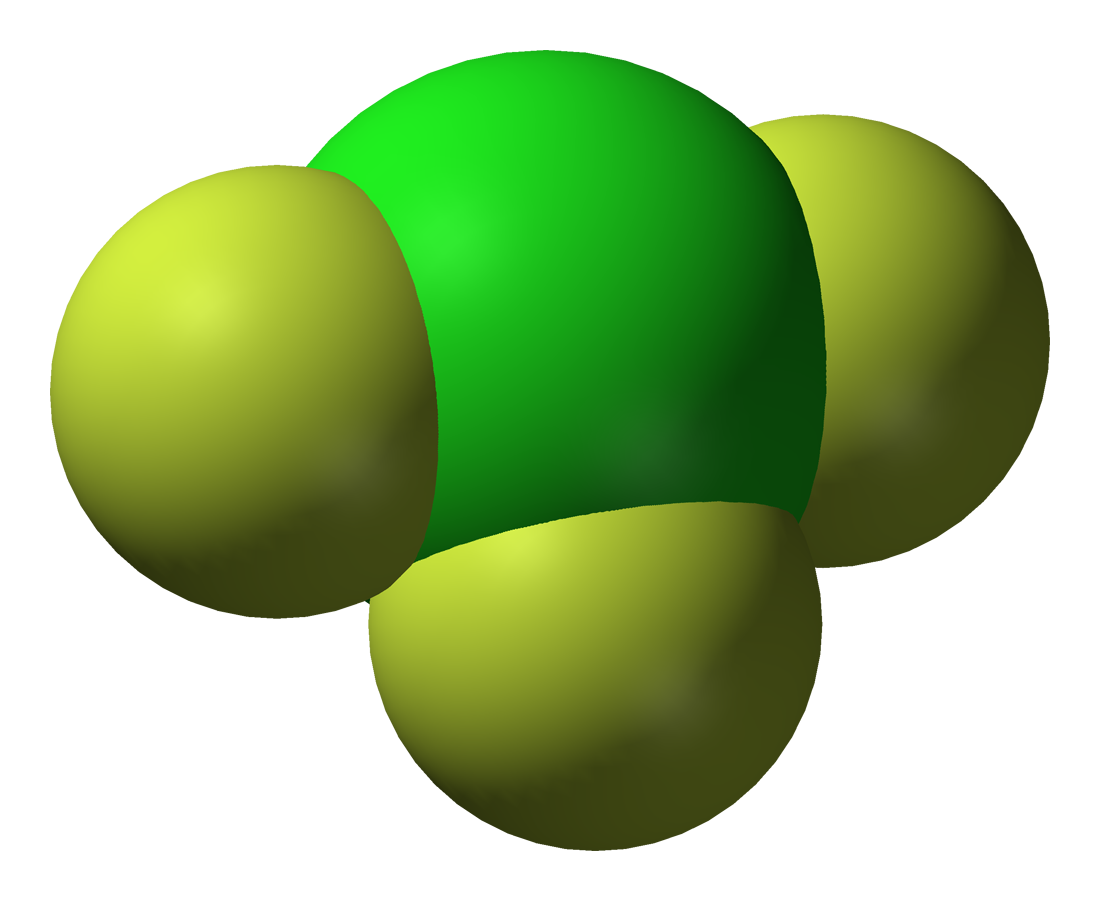
Bonding in interhalogens is covalent and usually polar. The smallest members are diatomic (XY) and resemble simple halogen molecules, while polyhalogen forms (XY3, XY5, XY7) feature the heavier atom at the center with terminal atoms arranged according to VSEPR shapes: T-shaped for AB3, square pyramidal for AB5, and pentagonal bipyramidal for AB7. Electronegativity differences and lone pairs on the central atom influence bond lengths and reactivity.
Synthesis and typical reactions
Many interhalogens are prepared by direct combination of the elemental halogens under controlled temperatures or by halogen exchange reactions. They react readily with water, organic compounds and many inorganic substrates; hydrolysis normally yields halogen acids and oxidized products. Highly fluorinated interhalogens (for example, chlorine trifluoride) are exceptionally vigorous and can ignite materials that resist ordinary oxidizers.
Examples and uses
- Chlorine trifluoride (ClF3) — a powerful fluorinating and oxidizing agent used in specialized industrial or military contexts and in certain nuclear fuel processing steps.
- Bromine monochloride (BrCl) — used as an analytical oxidizer and in water treatment chemistry.
- Iodine monochloride (ICl) and other interhalogens — employed as electrophilic halogenating reagents in organic synthesis.
Safety and handling
Interhalogens are often toxic, corrosive and reactive with organic materials. They must be handled in appropriate apparatus, using compatible materials and strict ventilation controls. Many will hydrolyze to release halogen acids and gases, so storage and quenching procedures are important for laboratory and industrial safety.
Distinctions and related species
Interhalogens are distinct from halogen oxides, polyhalide ions (such as I3−) and simple halogen salts. Their chemistry is dominated by covalent bonding between different halogen atoms rather than ionic interactions. For further general reference on halogen chemistry see halogen elements.
Related articles
Author
AlegsaOnline.com Interhalogen compounds Leandro Alegsa
URL: https://en.alegsaonline.com/art/47593