
Iodine heptafluoride (IF7)
Iodine heptafluoride, IF7, is a volatile interhalogen compound in which iodine attains its highest common oxidation state. It is a strong oxidizer and fluorinating agent, handled only under controlled conditions.
Iodine heptafluoride (IF7) is a molecular interhalogen compound composed of one iodine atom bonded to seven fluorine atoms. It is notable for containing iodine in a very high oxidation state and for adopting a hypervalent structure. In typical descriptions the species is treated as a neutral covalent molecule rather than an ionic salt; it does not consist of discrete iodide and fluoride ions as simple salts do (not ionic).
Image gallery
3 Images

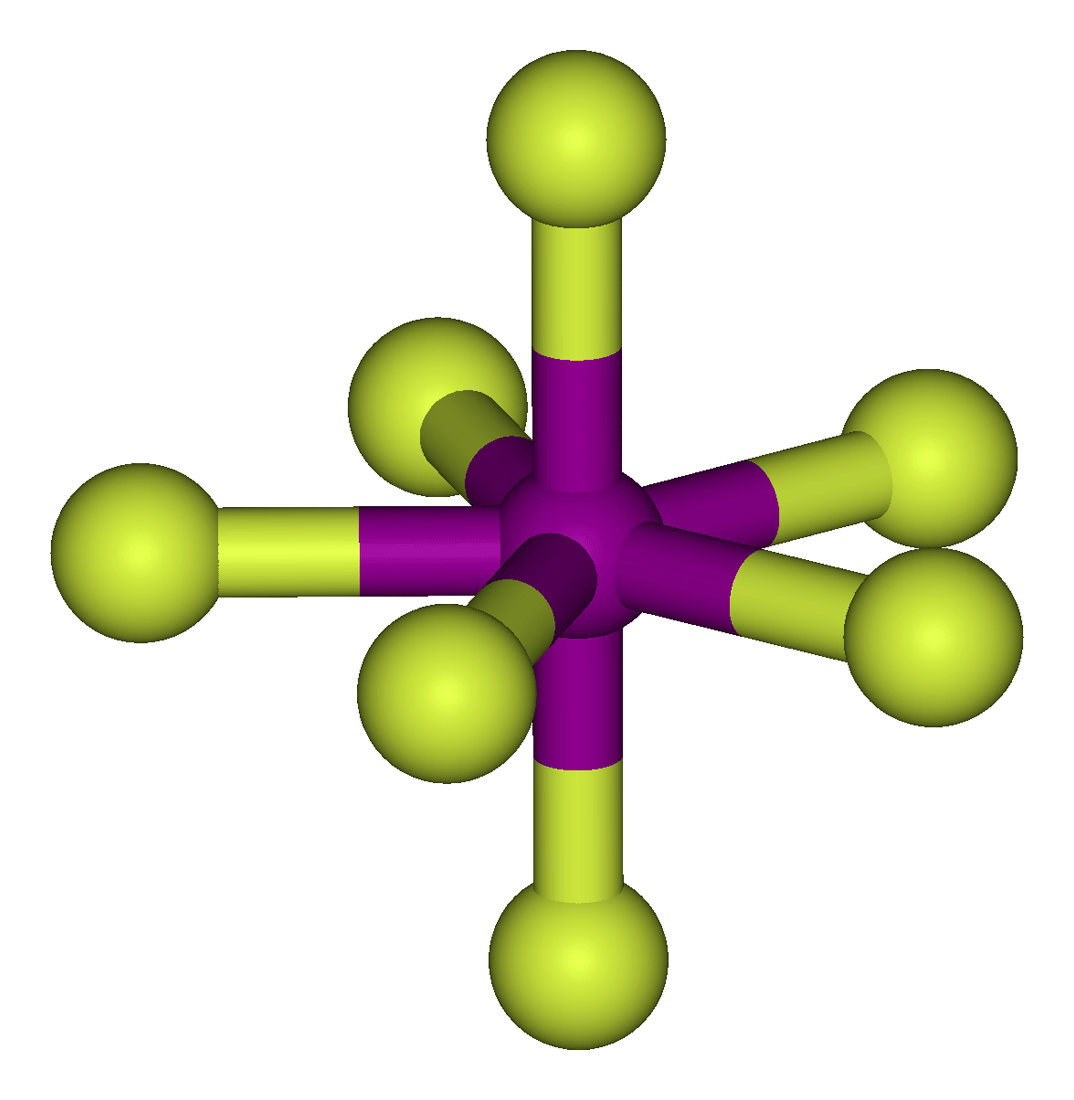
Structure and bonding
IF7 is an example of a hypervalent molecule: the central iodine atom expands its valence shell to accommodate seven fluorine ligands. The geometry is a pentagonal bipyramid with five fluorine atoms arranged in an equatorial pentagon and two occupying axial positions. This arrangement minimizes electron-pair repulsion and gives IF7 distinct spectroscopic and steric properties compared with lower iodine fluorides.
Preparation and reactions
IF7 is prepared by exhaustive fluorination of iodine-containing precursors, for example by fluorinating lower iodides under controlled conditions. It is a strong oxidizing and fluorinating agent and reacts readily with water and many organic and inorganic substrates. Hydrolysis and other reactions yield oxyacids of iodine and fluoride-containing products; these reactions typically produce hydrogen fluoride and oxidized iodine species.
Typical chemical behaviour includes vigorous attack on metals and glass in the presence of moisture, and selective fluorination of substrates under specialized conditions. Because of its reactivity it has only limited practical applications outside research.
- Physical character: a volatile, corrosive molecular substance handled as a gas or condensate.
- Chemical role: powerful oxidizer and fluorinating reagent.
- Safety: corrosive, toxic by inhalation, and reacts with water to form acidic and hazardous products.
Historically, the discovery and study of compounds such as IF7 helped establish concepts of hypervalency and bonding beyond the octet. Iodine attains its maximum common oxidation number in this compound (see oxidation state discussions), and comparisons with other interhalogens like IF5 highlight differences in geometry and reactivity. For practical and safety guidance consult authoritative sources and material safety data provided by suppliers (iodine references, compound summaries).
Related articles
Author
AlegsaOnline.com Iodine heptafluoride (IF7) Leandro Alegsa
URL: https://en.alegsaonline.com/art/47956