
Industrial Workers of the World (IWW)
A radical international labor union founded in 1905 advocating industrial unionism, direct action, and worker solidarity; known for the "Wobblies," songs, and organizing of unskilled and immigrant labor.
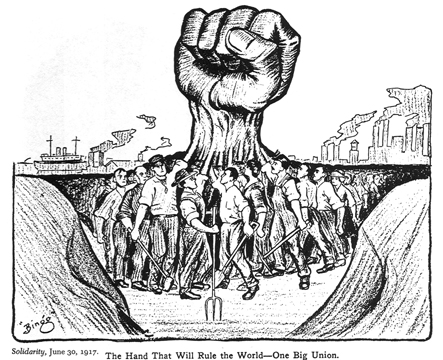
The Industrial Workers of the World (IWW), commonly called the Wobblies, is an international labor union founded in 1905 that promotes industrial unionism and grassroots worker organization. From its beginning the IWW set itself apart from craft-based unions by arguing that all workers in a given industry should belong to a single union and that the working class should organize across trades, languages and ethnicities.
Image gallery
10 Images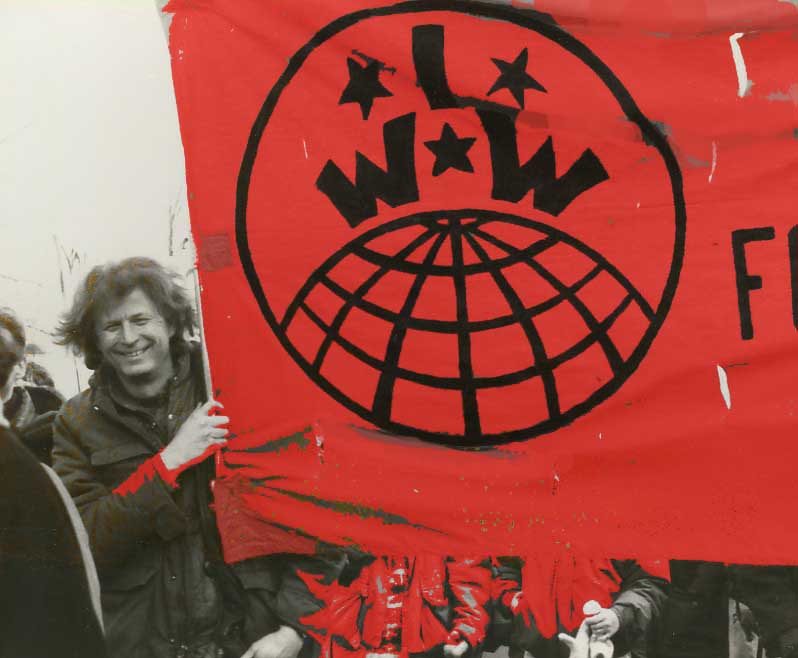


Origins and early activity
The IWW grew out of a ferment of labor radicalism in the United States and abroad. Early leaders and prominent members included William "Big Bill" Haywood, Joe Hill and Elizabeth Gurley Flynn. The union became known for organizing unskilled, migrant and marginalized workers in industries such as mining, logging, agriculture and manufacturing, and for staging free-speech fights and high-profile strikes in the 1910s.
Principles and organization
Central IWW ideas include solidarity across craft lines, direct action by workers (including strikes and slowdowns), and the goal of transferring control of production to workers rather than capital owners. The IWW favored a decentralized structure in which rank-and-file members exercised significant influence, and it published widely distributed materials like the Little Red Songbook to build a shared culture.
Tactics, culture and notable traits
- Emphasis on direct action: strikes, workplace organizing and occasional general strikes.
- Use of culture: music, songs and pamphlets to spread messages and maintain morale.
- Inclusive organizing: immigrants, women and people of color were central to efforts when many other unions excluded them.
- Legal and political resistance: members often faced arrests, trials and government repression.
The IWW attracted intense opposition from employers and the state, especially during World War I and the postwar Red Scare, when many activists were arrested and union activities were curtailed. The 1910s and 1920s saw significant decline from those pressures, internal splits, and competition from mainstream unions.
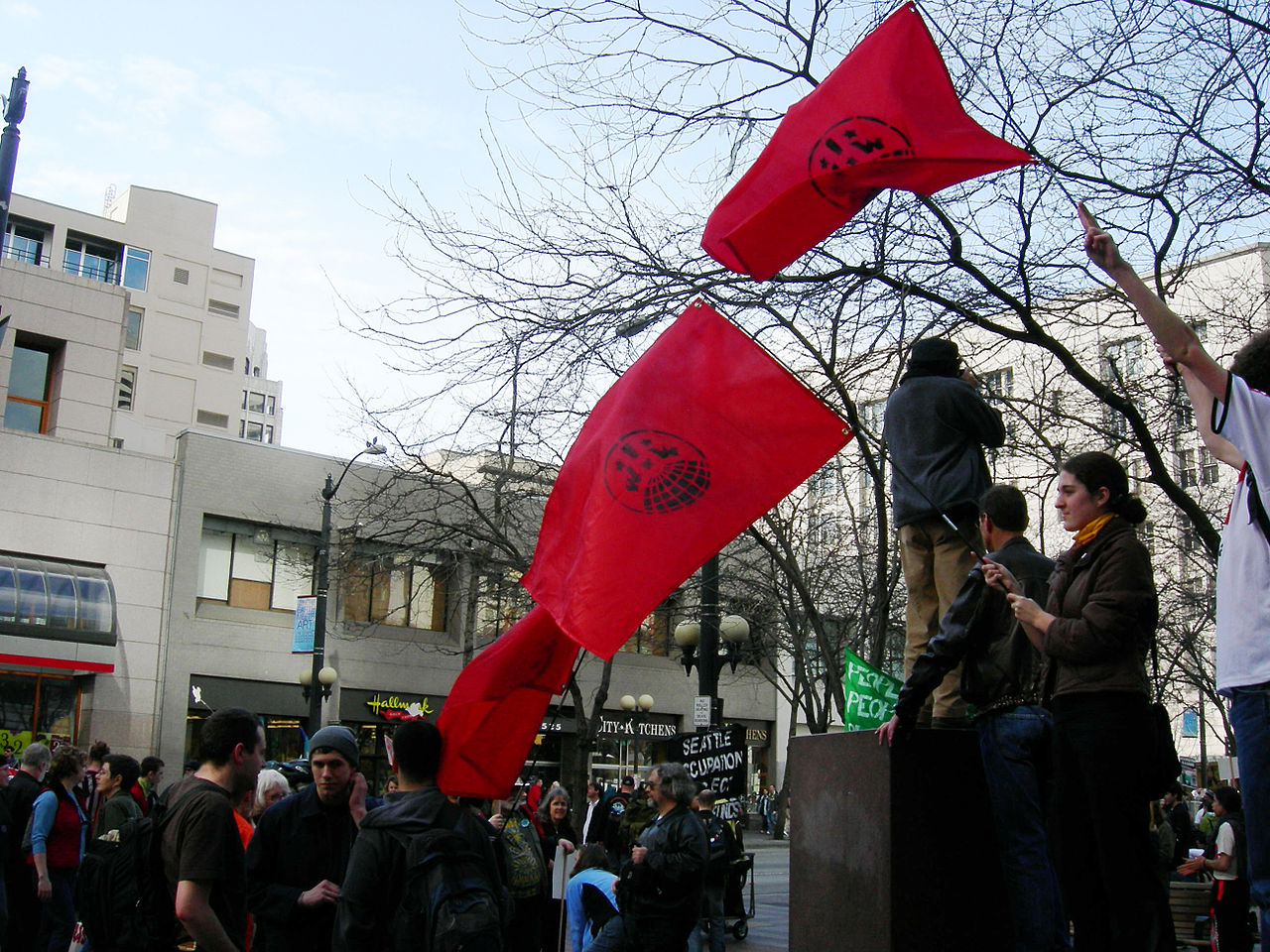
Although its membership never returned to early-20th-century peaks, the IWW persisted as a surviving radical union with international branches and occasional successful campaigns in service, timber and other sectors. Its legacy endures in labor history, workplace direct-action tactics and protest culture. For more information and historical materials, see the IWW official site.
Related articles
Author
AlegsaOnline.com Industrial Workers of the World (IWW) Leandro Alegsa
URL: https://en.alegsaonline.com/art/47246
Sources
- en.wikisource.org : Industrial Workers of the World
- pbs.org : "People & Events: The Industrial Workers of the World"
- historylink.org : "Industrial Workers of the World (IWW)"
- u-s-history.com : "Industrial Workers of the World (I.W.W.)"
- library.arizona.edu : "PREAMBLE AND CONSTITUTION of the INDUSTRIAL WORKERS OF THE WORLD"