
Inns of Court (England and Wales legal societies)
Four historic London societies that admit, train and regulate barristers: Lincoln's Inn, Gray's Inn, Inner Temple and Middle Temple, providing libraries, dining, chapels and professional governance.
Overview
The Inns of Court are four long-established professional societies in London that have traditionally been responsible for the education, admission and discipline of barristers in England and Wales. Membership of one of the Inns is a customary requirement before a person can be "called to the bar" and practise as a barrister. The Inns combine professional regulation with social, educational and ceremonial roles and remain a distinctive feature of the English legal system. The Inns are linked historically to the broader concept of the British bar.
Image gallery
1 Image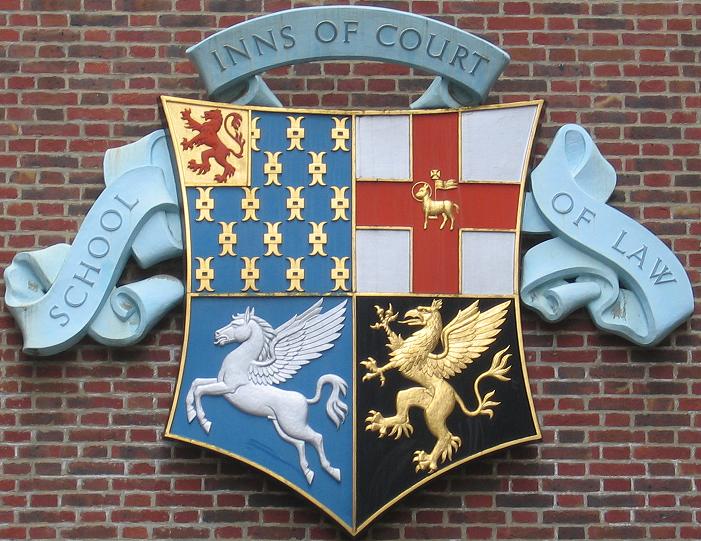
The four Inns
Only four Inns now perform these functions; each preserves its own traditions, buildings and governance. They are:
Structure and functions
Each Inn is governed by senior members known as benchers who oversee administration, discipline and the provision of facilities. The Inns maintain libraries, dining halls and accommodation for members, and each possesses a chapel or church for services and memorials — for example, members often attend their Inn's chapel as part of formal events and rites of passage (chapel and religious life). Historically, attendance at qualifying dining sessions was part of legal training; the Inns still run educational and networking events alongside academic instruction.
History and development
The Inns of Court emerged from medieval legal communities that congregated near the courts of London. Over several centuries they evolved into institutions that combined legal education, collegiality and regulation. While the formal mechanics of legal training have changed — with modern academic and vocational courses now provided by universities and professional bodies — the Inns have retained ceremonial powers and an influential advisory and disciplinary role.
Role today and notable facts
Today the Inns support students and practising barristers through scholarships, advocacy training, mentorship and professional development. They also play a part in calling candidates to the bar and in upholding professional standards. The Inner and Middle Temples occupy a distinctive precinct close to the Royal Courts of Justice, and the four Inns are both historic patrimonies and active professional communities. Their combination of social, educational and regulatory functions makes them unique institutions within the common-law world.
Questions and answers
Q: What are the Inns of Court?
A: The Inns of Court are a group of four legal societies in Britain that have the exclusive right to train barristers and to regulate their admission to the British bar.
Q: What are the buildings that house the legal societies called?
A: The buildings that house the legal societies are called Inns of Court.
Q: What functions do the Inns of Court have over their members?
A: The Inns of Court have directing and disciplinary functions over their members.
Q: What facilities do the Inns of Court provide to their members?
A: The Inns of Court provide libraries, dining facilities, and professional accommodations to their members.
Q: What religious feature does each Inn of Court have?
A: Each Inn of Court has a church or chapel.
Q: How many active Inns of Court are there?
A: There are four active Inns of Court, which are Lincoln's Inn, Gray's Inn, Inner Temple and Middle Temple.
Q: What is the exclusive right of the Inns of Court in training barristers?
A: The Inns of Court have the exclusive right to train barristers and to regulate their admission to the British bar.
Related articles
Author
AlegsaOnline.com Inns of Court (England and Wales legal societies) Leandro Alegsa
URL: https://en.alegsaonline.com/art/47412