
Inception (2010 film)
Christopher Nolan's 2010 science-fiction heist film that explores shared dreaming, memory, and reality; overview of plot, cast, production, visual style, release, reception and legacy.
Inception is a 2010 science fiction action heist film written and directed by Christopher Nolan and produced by Nolan and Emma Thomas. The film stars Leonardo DiCaprio as Dom Cobb, an extractor who enters others’ dreams to steal information or implant ideas. The premise blends procedural heist elements with philosophical questions about memory, guilt and the boundary between dream and waking life.
Image gallery
3 Images

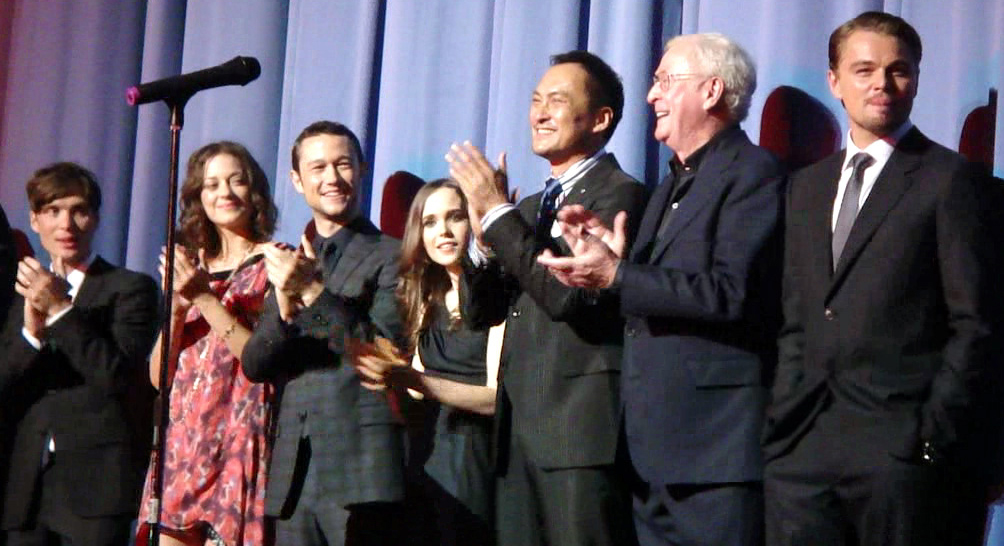
Plot and principal characters
The central plot follows Cobb, a specialist in shared-dream technology, who is offered a chance to erase his criminal record if he successfully performs an unusual mission: rather than extracting an idea, he must plant one deeply enough so the subject believes it is original. To accomplish this, Cobb assembles a team and enters multiple nested dream levels, where time and causality behave differently.
The ensemble cast supports the central conceit and its emotional stakes. Supporting performances include Ken Watanabe as a business figure who hires the team, Joseph Gordon-Levitt as the team’s point man, Marion Cotillard in a pivotal role that connects Cobb’s guilt to the dream world, Elliot Page as an architect who designs dream environments, and Tom Hardy as a forger and field operative. Other important cast members include Cillian Murphy, Tom Berenger, and Michael Caine, each contributing to the film’s tonal balance between action, personal drama and cerebral puzzle.
Development and production
Nolan developed the idea that would become Inception over many years, tracing it to an initial treatment written after his earlier work, including Insomnia. He shelved the concept until he had more experience with larger-scale productions and studio backing. Nolan’s track record with films such as Batman Begins and The Dark Knight helped secure studio confidence when he returned to the script.
Warner Bros. (Warner Bros.) and production partners including Legendary financed the project. Filming used a mix of on-location sequences and carefully staged practical effects; principal photography spanned multiple countries and concluded with work in Canada. Nolan emphasized in-camera effects, tangible sets and large-format photography to achieve credible physicality even in unreal dream environments.
Design, visual effects and score
The film is notable for sequences that physically subvert gravity, architecture and urban logic; these moments relied on a combination of practical rigs, detailed set construction, and visual effects compositing. Widespread commentary singled out the film’s production design and cinematography for contributing to a textured, immersive sense of layered reality. At ceremonies and industry awards the film received recognition in technical categories, including a win for Best Cinematography, while its musical score — designed to heighten suspense and emotional beats — attracted nominations and discussion, including recognition for Best Original Score at high-profile awards.
Release, box office and reception
Inception premiered in London and opened broadly in both standard formats and large-screen presentations such as IMAX. It achieved significant commercial success worldwide and ranked among the year’s highest-grossing releases. Critics praised the film’s ambition, narrative complexity, technical craft and ensemble performances, while some reviewers noted that the film’s dense structure rewards repeat viewings and close attention.
Awards and critical distinctions
The film received multiple nominations at major award ceremonies and won several technical Oscars. Its recognition included major-category nominations such as Best Picture, along with wins and nominations in cinematography, sound and visual effects categories. The combination of box-office reach and awards attention reinforced the film’s visibility within mainstream and specialist film circles.
Themes, interpretation and legacy
Inception continues to be discussed for how it stages philosophical questions through genre filmmaking. The film uses the heist framework to explore grief, responsibility, and self-deception; tangible motifs such as totems and recurring imagery function as narrative anchors for debates about authenticity and closure. Its influence is visible in later mainstream films that attempt to blend high-concept ideas with action-oriented storytelling, and it remains a frequent subject of academic and popular analysis for its formal inventions and its unresolved ending.
Beyond its immediate achievements, Inception has had lasting cultural impact by demonstrating commercial appetite for intellectually ambitious blockbusters and by popularizing practical effects and thoughtful sound-and-image design in large-scale studio films. Directors, critics and audiences continue to cite it as a touchstone for discussions of narrative complexity in contemporary cinema.
Questions and answers
Q: What is Inception?
A: Inception is a 2010 British-American science fiction action heist movie written and directed by Christopher Nolan, who also produced the movie with his wife, Emma Thomas. The movie stars Leonardo DiCaprio as a professional thief who steals information by infiltrating the subconscious of his targets.
Q: Who wrote and directed Inception?
A: Inception was written and directed by Christopher Nolan, who also produced the movie with his wife, Emma Thomas.
Q: Who are some of the actors in the ensemble cast for Inception?
A: The ensemble cast for Inception includes Ken Watanabe, Joseph Gordon-Levitt, Marion Cotillard, Elliot Page, Tom Hardy, Dileep Rao, Cillian Murphy, Tom Berenger, and Michael Caine.
Q: How long did it take to develop the idea behind Inception?
A: It took nine years to develop the idea behind Inception before it was released.
Q: What other film is similar to Inception?
A: There is another anime film just like it called Paprika (2006 film).
Q: When did filming for Inception begin and end?
A: Filming for inception began in Tokyo on June 19th and finished in Canada on November 22nd.
Q: How much money was spent on advertising for Inception? A: $100 million was spent on advertising for inception.
Related articles
Author
AlegsaOnline.com Inception (2010 film) Leandro Alegsa
URL: https://en.alegsaonline.com/art/46998
Sources
- cinemarewind.com : "Inception Cast and Crew Updates"
- bbfc.co.uk : "Inception"
- latimesblogs.latimes.com : "Movie projector: 'Inception' headed for No. 1, 'Sorcerer's Apprentice' to open in third"
- boxofficemojo.com : "Inception(2010)"
- screenrant.com : "Updated 'Inception' Synopsis Reveals More"
- abcnews.go.com : "Inside 'Inception': Could Christopher Nolan's Dream World Exist in Real Life? Dream Experts Say 'Inception's' Conception of the Subconscious Isn't Far From Science"
- artsbeat.blogs.nytimes.com : "A Man and His Dream: [[Christopher Nolan]] and Inception"
- variety.com : "Nolan tackles Inception for WB"
- boxofficemojo.com : "Weekend Briefing: 'Inception' Breaks In, 'Apprentice' Lacks Magic"
- news.yahoo.com : "Partying for a Cause at the "Inception" Premiere"