
Illinois General Assembly
The bicameral legislature of Illinois, composed of the House and Senate. Established under the 1818 constitution, it drafts laws, approves budgets, and represents 59 legislative districts (one senator, two reps).
The Illinois General Assembly is the state legislature for the state of Illinois. It is a bicameral body made up of two chambers: the House of Representatives and the Senate. Together these chambers introduce, debate and pass statutes that govern the Illinois government and its residents. The Assembly meets at the Illinois State Capitol in Springfield and carries the core responsibility for creating the state budget, enacting laws, and providing legislative oversight.
Image gallery
2 Images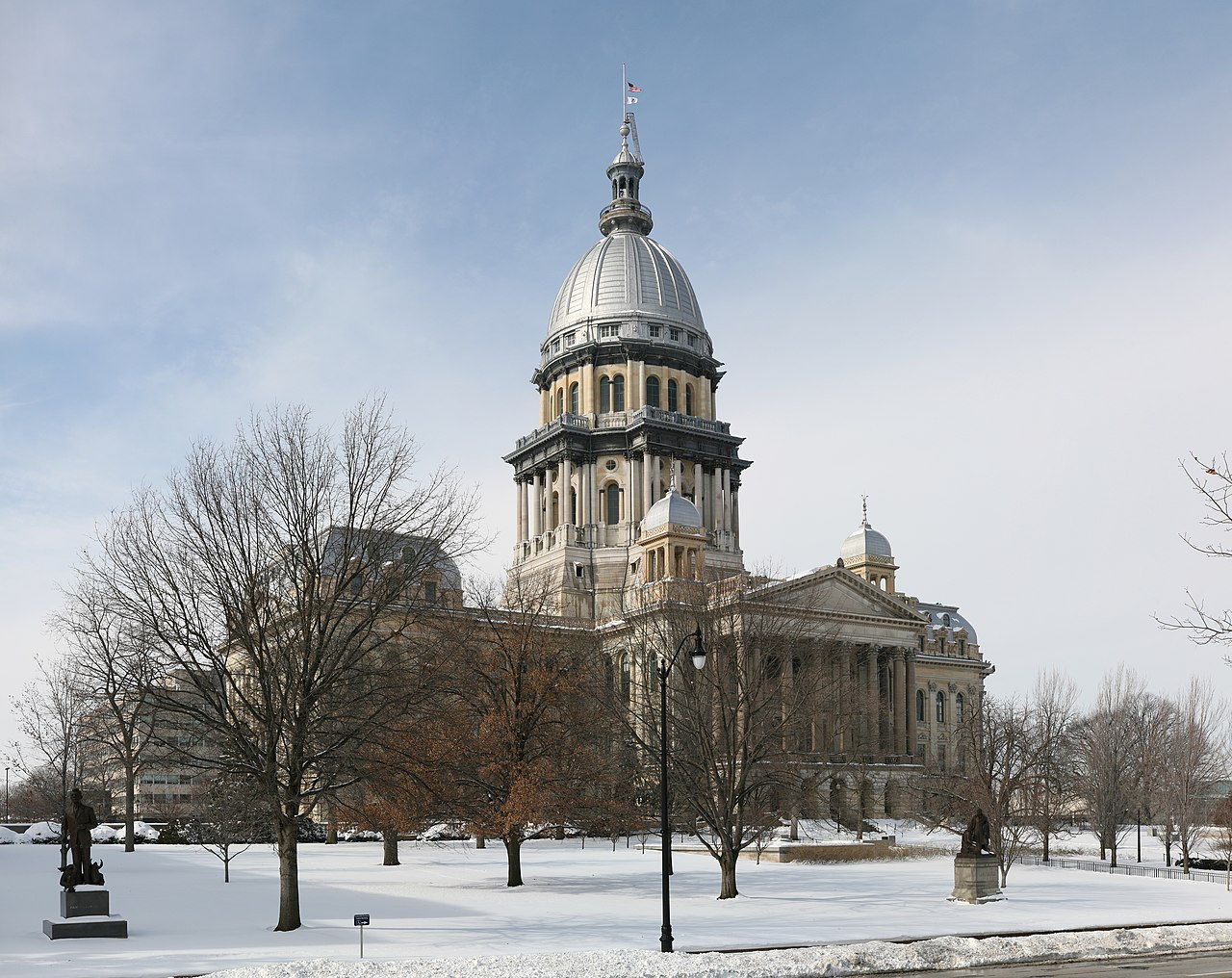

Composition and election
The General Assembly is divided into 59 legislative districts. Each district elects one senator and two representatives, making representation geographically based across the state. Members of the House typically serve two-year terms; Senate terms are staggered and can be either two or four years depending on the election cycle and redistricting, a design intended to maintain continuity while reflecting population changes.
Powers and procedures
The Assembly passes bills that become state law after the governor's approval, or can override vetoes by the constitutionally required majorities. Legislative work is organized through standing and special committees that review proposals, hold hearings, and shape legislation before full-chamber votes. The House has the sole power to initiate impeachment proceedings; the Senate conducts impeachment trials. The legislature also adopts the state budget and typically confirms some gubernatorial appointments.
History and development
The General Assembly was established by Illinois’s first state constitution, adopted in 1818. Over the centuries its structure and rules have evolved through constitutional revisions, statutory reforms and changes in electoral maps. These changes reflect shifts in population, political practice and efforts to improve representation, transparency and legislative efficiency.
Roles and public importance
As the primary lawmaking branch of state government, the General Assembly shapes policy on education, transportation, public safety, health, taxation and more. Individual legislators sponsor bills on local and statewide concerns; committees refine policy details; and floor debates and votes set the legal framework for public programs and services. Citizens engage the Assembly through public testimony, constituent outreach and the electoral process.
Notable distinctions
- The bicameral model separates deliberative review (Senate) from broader representation (House).
- District-based representation aims to balance regional interests across Illinois’s urban, suburban and rural areas.
- Staggered Senate terms provide a mix of continuity and responsiveness following each decennial redistricting.
Related articles
Author
AlegsaOnline.com Illinois General Assembly Leandro Alegsa
URL: https://en.alegsaonline.com/art/46727