
Illinois House of Representatives
The lower chamber of the Illinois General Assembly. Composed of 118 members elected for two-year terms, it drafts state law, controls spending, conducts oversight and can impeach state officers.
The Illinois House of Representatives is the lower chamber of the state legislature and one of two bodies that make up the Illinois General Assembly. It represents the people of the state of Illinois through legislators elected from single-member districts. The House initiates, debates and votes on bills that affect state law, the state budget, and a wide range of public policy matters. Members serve short terms intended to keep them responsive to voters and local concerns.
Image gallery
1 Image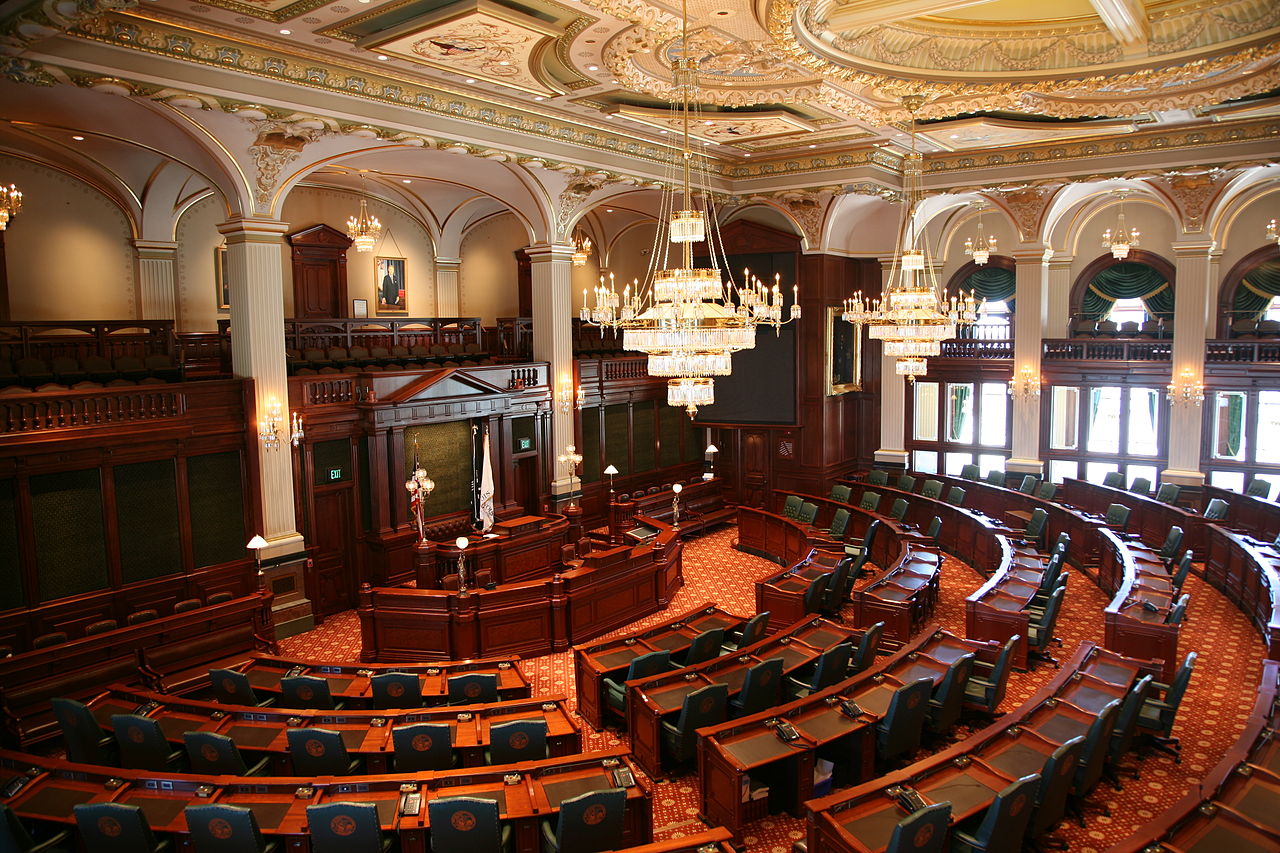
Composition and qualifications
The House consists of 118 representatives, each elected for a two-year term with no limit on the number of terms an individual may serve. Elections are held in even-numbered years, and every seat is up for election at the same time. Candidates must meet constitutional qualifications established by the state, which include citizenship and residency requirements designed to ensure a connection to the districts they represent. Leadership positions include the Speaker, majority and minority leaders, and officers who organize legislative work.
Role, powers and duties
The House performs standard legislative duties common to state lower chambers: introducing bills, amending proposed laws, voting to enact statutes, and appropriating funds. It has several specific and important powers within Illinois government. For example, the chamber has the sole authority to bring impeachment charges against certain state officials; the trial that follows typically occurs in the state senate. The House also exercises oversight of state agencies and programs, conducts investigations through committees, and plays a central role in negotiating the biennial state budget.
Organization and legislative process
Much of the House's substantive work is carried out in standing committees that focus on policy areas such as appropriations, education, judiciary, health, transportation and revenue. Bills are normally introduced, assigned to a committee for study and amendment, and—if approved—sent to the full chamber for further consideration. Leadership controls key procedural tools, including committee assignments, bill referrals and the scheduling of floor action, which shapes the legislative agenda and priorities.
History and notable developments
The House was established by Illinois's first constitution in 1818 and has evolved since then through constitutional revisions and statutory changes. One major change came in 1980 with the adoption of the Cutback Amendment, which replaced the previous system of multi-member districts and cumulative voting with single-member districts and reduced the size of the House to its current total of 118 members. The state's 1970 constitution and subsequent reforms have shaped the modern balance of powers, procedures and member qualifications.
Importance and public service
As the legislative body closest to voters, the Illinois House of Representatives plays a significant role in shaping daily life in the state: it passes laws that affect education, public safety, transportation, taxation and social services. Representatives frequently assist constituents with problems involving state agencies, use committee hearings to bring attention to local issues, and serve as the primary forum for debating competing policy proposals at the state level.
Distinctive facts
- The House meets in the Illinois State Capitol in Springfield and works alongside the Senate to enact state law.
- Members serve two-year terms, which allows voters to evaluate and replace representatives frequently.
- Leadership roles—especially the Speaker—carry significant influence over what legislation reaches the floor.
Together with the Illinois Senate, the House is central to the state's representative democracy: it translates citizen views into legislation, holds the executive branch accountable, and manages the allocation of public resources. For further procedural details and current membership, consult official legislative resources maintained by the Illinois General Assembly and state information pages about the state of Illinois.
Related articles
Author
AlegsaOnline.com Illinois House of Representatives Leandro Alegsa
URL: https://en.alegsaonline.com/art/46728