
Antimatter fuel: principles, applications, and technical challenges
Antimatter fuel uses particle–antiparticle annihilation to release mass-energy. This article explains how it works, storage and production issues, propulsion and power concepts, safety hazards, history, and current research.
Overview
Antimatter fuel is the idea of using antiparticles — the mirror partners of ordinary particles — as a source of energy. When an antiparticle meets its corresponding particle, they annihilate and convert their mass into other forms of energy. This process is governed by mass–energy equivalence (E=mc^2) and produces highly energetic photons and particle showers. Because annihilation converts mass directly into energy, it represents the highest theoretical energy density of any known fuel.
Image gallery
2 Images
Characteristics and storage
Antiparticles exist naturally only in trace amounts, are produced in particle accelerators and certain radioactive decays, and must be collected or synthesized for use. Storing antimatter is nontrivial: charges repel contact with ordinary matter, so antimatter is held away from container walls by electromagnetic fields in devices such as Penning or Paul traps. Neutral antimatter like antihydrogen can be confined in magnetic or cryogenic traps. Long-term bulk storage would require solutions to prevent recombination, manage heat, and limit losses from interactions with background gas and radiation.
Uses and propulsion concepts
In engineering proposals, antimatter can be used to produce thrust or electricity. For propulsion, annihilation energy can be converted into kinetic energy of charged particles or used to heat propellant. Concepts include direct-annihilation rockets that channel energetic products to generate thrust, antimatter-catalyzed fusion where a small annihilation event ignites fusion in surrounding fuel, and hybrid designs that use annihilation to produce electricity for power systems. For power generation, annihilation energy could in principle be converted to heat and then to electricity, but practical conversion faces major efficiency and safety hurdles.
Advantages and challenges
- Advantages: unparalleled energy per unit mass, potential for very high specific impulse in propulsion, and compact energy storage if production and containment can be solved.
- Challenges: production requires far more energy than can currently be recovered; storage and handling are complex; annihilation emits penetrating radiation that demands heavy shielding; and the risk of misuse or accidental release is significant.
Safety, radiation, and engineering limits
Annihilation produces high-energy photons (gamma rays) and secondary particles that can damage electronics, human tissue, and surrounding materials. These emissions can also activate structures, making them radioactive. Effective shielding increases mass and complicates spacecraft design. Because making antimatter today is extremely energy-intensive and expensive, any realistic application must confront both the economic and radiological consequences of carrying and using even tiny amounts of antiparticles.
History and current research
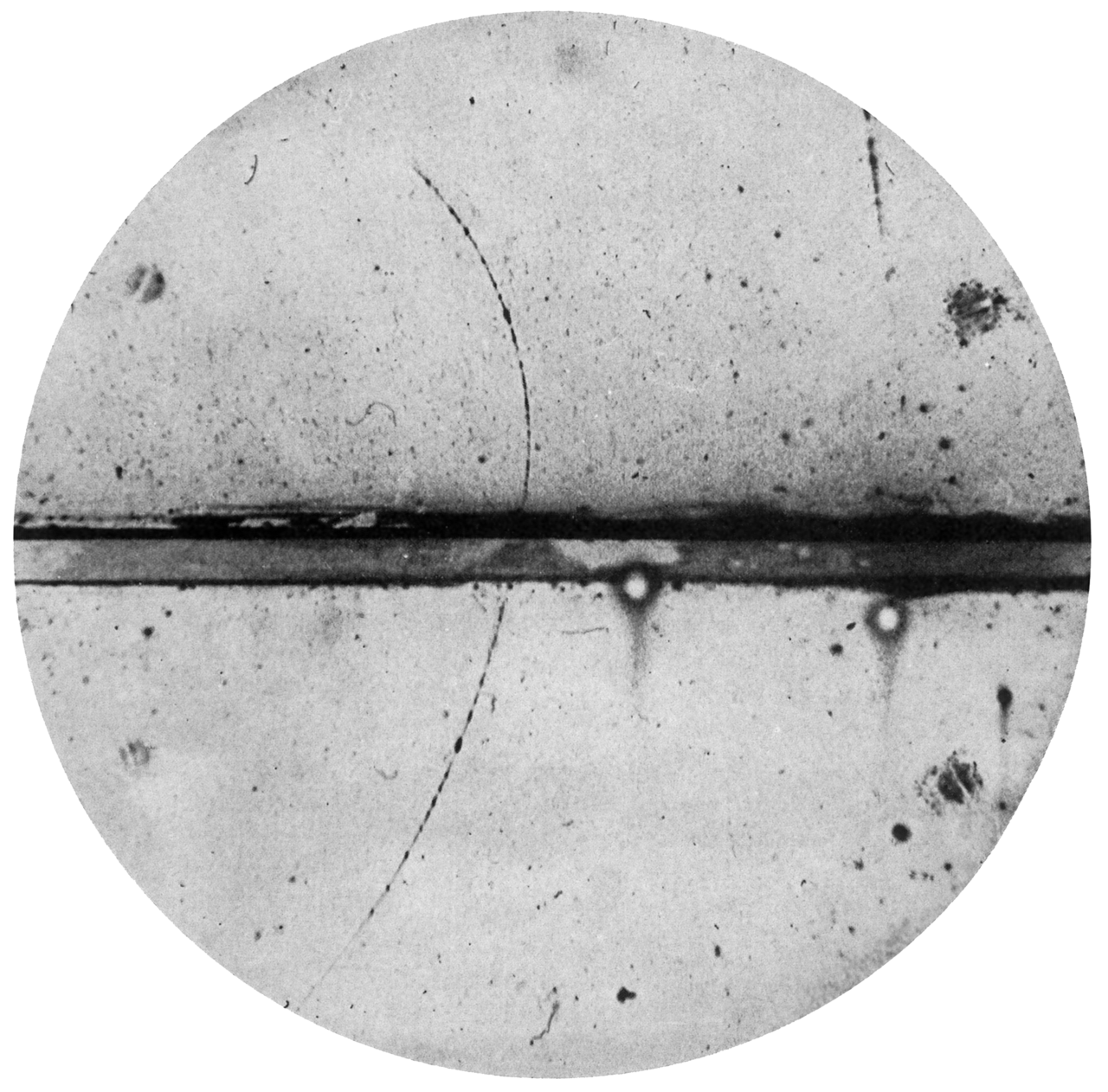
The existence of antiparticles was predicted in the early 20th century and confirmed in laboratory experiments. Over decades, physicists have produced and briefly stored antiparticles and small neutral antihydrogen samples. Theoretical work and conceptual studies have explored antimatter propulsion and power, and research organizations including NASA and national laboratories have examined specific problems such as storage, shielding, and fuel cycles. Practical deployment remains speculative: active efforts focus on reducing production energy cost, improving traps and cold-storage methods, and limiting harmful radiation — topics covered in ongoing research.
Distinctions and outlook
Compared with chemical or conventional nuclear fuels, antimatter offers far greater energy per mass but suffers from overwhelming hurdles in manufacture, containment, and safety. Near-term uses are limited to scientific experiments and small-scale tests. Breakthroughs that could change that outlook include cheaper production, scalable neutral-antimatter traps, or efficient methods to channel annihilation products into usable thrust or electricity. For now, antimatter fuel remains a powerful theoretical concept with practical application dependent on substantial future advances.
See also: antimatter and its basic properties; the relationship to matter in annihilation events.
Related articles
Author
AlegsaOnline.com Antimatter fuel: principles, applications, and technical challenges Leandro Alegsa
URL: https://en.alegsaonline.com/art/4655
Sources
- nasa.gov : "Bill Steigerwald"