
House of Representatives of New Zealand
The unicameral elected chamber of New Zealand's Parliament. Describes composition, electoral system, functions, procedures, historical development and distinguishing features.
Overview
The House of Representatives is the single elected chamber of New Zealand's national legislature. Together with the Sovereign, represented in New Zealand, it forms the Parliament of New Zealand. Members of the House are known as Members of Parliament (MPs). The House exercises the principal responsibilities of representative government: making laws, approving government spending, and holding the executive to account.
Image gallery
10 Images




Composition and electoral system
The House is normally composed of around 120 MPs, though the total can vary when additional 'overhang' seats are required. MPs are returned to the House under the mixed-member proportional (MMP) voting system. Under MMP each voter has two votes: one for an electorate candidate in a defined geographic district and one for a political party. Parties that pass the threshold receive a number of seats roughly proportional to their party vote; those seats are filled by successful electorate candidates and by names from party lists.
Functions and procedures
The House carries out core parliamentary functions. It debates and passes legislation, considers and approves the government's budget and public spending, and scrutinises ministers and public administration through questions, debates and committee inquiry. The Prime Minister and Cabinet are drawn from MPs who command the confidence of the House and are collectively responsible to it.
- Legislation: introduction, committee consideration, and passage in stages.
- Oversight: oral questions, select committees, and inquiries.
- Confidence and supply: the House determines which ministry can govern.
- Representation: MPs represent geographic electorates, special Māori electorates and party list mandates.
Meetings, officers and committees
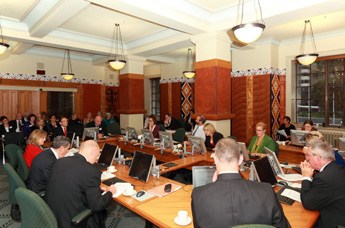
The House meets in a debating chamber where business is chaired by the Speaker of the House. Much of the detailed work takes place in select committees that examine bills, expenditure and issues raised by the public. Committees have a prominent role in allowing expert and community input, and they report back to the whole House with recommendations for change.
History and development
New Zealand's parliamentary institutions derive from the Westminster tradition but have been adapted to local circumstances. Originally the legislature included an appointed upper chamber, the Legislative Council; that body was abolished in the mid-20th century, leaving a unicameral parliament. The electoral system was changed from first-past-the-post to mixed-member proportional (MMP) following a public referendum in the 1990s, which substantially altered party representation and coalition practice.
Notable features and distinctions
Key distinguishing features include the unicameral structure in a Westminster-derived system, the use of MMP which mixes proportional party lists with electorate MPs, and guaranteed Māori representation through separate Māori electorates. The House's composition often produces coalition or minority governments requiring negotiation among parties. For more detail on constitutional arrangements see the broad description of the country's legislature, the role of Parliament itself at Parliament of New Zealand, and the office of the Prime Minister.
Related articles
Author
AlegsaOnline.com House of Representatives of New Zealand Leandro Alegsa
URL: https://en.alegsaonline.com/art/45331