
Hydrometeorological Prediction Center (HPC) — U.S. Forecast and Precipitation Center
The Hydrometeorological Prediction Center (HPC), now the Weather Prediction Center, is an NCEP service center of the U.S. National Weather Service focused on quantitative precipitation, medium-range forecasts and storm summaries.
Overview
The Hydrometeorological Prediction Center (commonly abbreviated HPC) was a specialized service center within the National Centers for Environmental Prediction (NCEP). It operated as part of the National Weather Service, under the broader umbrella of the National Oceanic and Atmospheric Administration and the U.S. government. The center developed and issued guidance on precipitation amounts, medium-range synoptic patterns and storm summaries intended for forecasters, hydrologic services and emergency managers.
Image gallery
4 Images

Main responsibilities
The HPC served as a focal point for translating numerical weather prediction model output into actionable hydrometeorological guidance. Its routine responsibilities included:
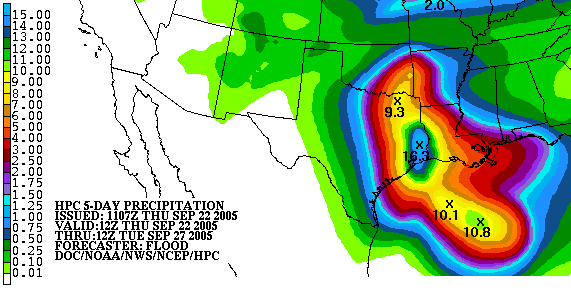
- Quantitative precipitation forecasting (QPF): producing forecast rainfall and snowfall amounts and probability fields to support flood forecasting and water resource planning, including consolidated rainfall analyses and outlooks and snowfall summaries.
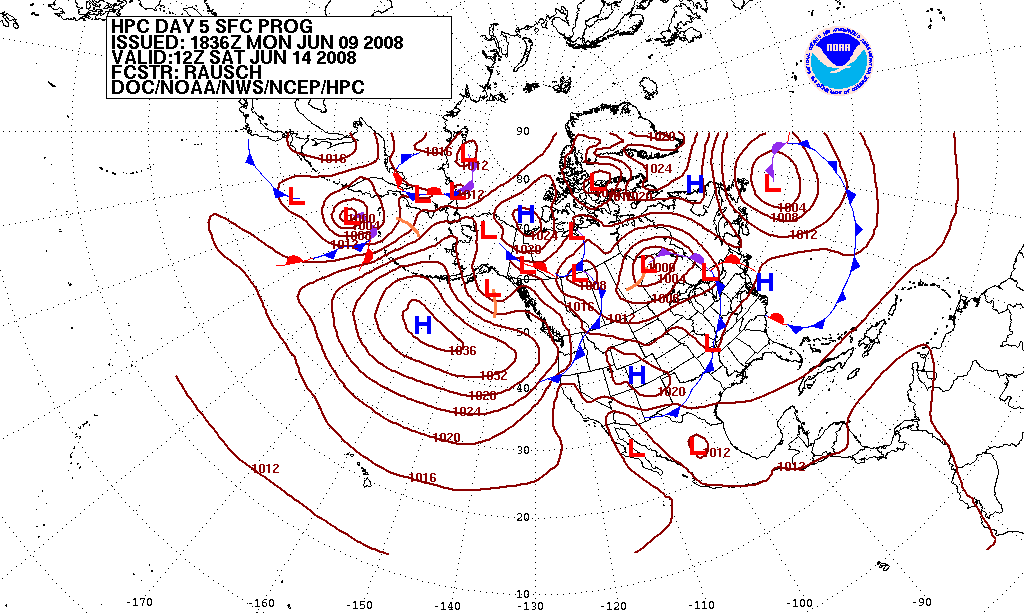
- Medium-range forecasting: interpreting model solutions, ensemble guidance and trends for days three through seven to identify significant evolving weather patterns across the United States.
- Tropical inland advisories and backup services: issuing narrative discussions and impact guidance for tropical cyclones after landfall when responsibility shifted away from the National Hurricane Center, and providing communications backup to that center when required for tropical cyclone events.
Products and methods
HPC analysts combined deterministic model runs, ensemble output, satellite and radar observations, and hydrologic information to create products designed for operational use. Common deliverables included graphical QPF fields, probabilistic precipitation maps, storm summary graphics and narrative forecast discussions. The center emphasized calibrated guidance, model consensus and the communication of uncertainty rather than raw model fields alone.
History and organization
The center traces its operational identity to changes made in October 1995 during the reorganization that produced the National Centers for Environmental Prediction. The HPC was based in the World Weather Building near Camp Springs, Maryland, alongside related NCEP centers such as the Climate Prediction Center and the Ocean Prediction Center. Over time the HPC’s title and some missions were consolidated under the name Weather Prediction Center in public and operational use, reflecting an expanded emphasis on broad forecast guidance.
Operational role and partners
Products from the HPC were widely used by local National Weather Service offices, river forecast centers and state emergency management agencies to plan responses to heavy precipitation and winter storms. Their guidance fed hydrologic models and supported decisions on flood watches, road maintenance, aviation planning and public messaging. The center routinely coordinated with other federal and academic partners to refine methods and to integrate observational datasets.
Research, training and evolution
Analysts at the HPC engaged in applied research to improve precipitation forecasting and medium-range model interpretation. The center also provided training to operational forecasters on ensemble interpretation, bias correction and hydrometeorological impacts. As numerical prediction and hydrologic modeling advanced, HPC practices evolved to incorporate probabilistic thinking and more explicit communication of forecast uncertainty.
Accessing products and archives
Operational products, archived storm summaries and technical discussions were historically distributed through NCEP and partner dissemination systems and cited by media and emergency management. For historical context and operational updates consult official agency portals and partner repositories that catalogue service-center products and notices.
National Weather Service | NOAA | U.S. government | Rainfall guidance | Snowfall guidance | United States | Tropical advisories | National Hurricane Center | October 1995 | NCEP reorganization | Camp Springs
Note: This article describes the role and functions traditionally associated with the Hydrometeorological Prediction Center and its transition into the Weather Prediction Center naming used in operational products and communications.
Questions and answers
Q: What is the Hydrometeorological Prediction Center (HPC)?
A: The HPC is one of nine Service Centers that are part of the National Centers for Environmental Prediction (NCEP), which is part of the National Weather Service, which in turn is part of the National Oceanic and Atmospheric Administration (NOAA) of the U.S. government.
Q: What does the HPC do?
A: The HPC serves as a center of excellence in Quantitative Precipitation Forecasting, Medium Range Forecasting (three to seven days) and the interpretation of numerical weather prediction models. It issues storm summaries on storm systems bringing significant rainfall and snowfall to portions of the United States, as well as advisories for tropical cyclones which have moved inland and are no longer under responsibility from the National Hurricane Center. In addition, it acts as backup office to NHC in case of complete communications failure.
Q: When was HPC created?
A: The HPC was created in October 1995 when former National Meteorological Center was reorganized into NCEP.
Q: Where is HPC based?
A: The HPC is based at World Weather Building in Camp Springs, Maryland along with other national centers such as Climate Prediction Center (CPC), Ocean Prediction Center (OPC), and Environmental Modeling Center (EMC).
Related articles
Author
AlegsaOnline.com Hydrometeorological Prediction Center (HPC) — U.S. Forecast and Precipitation Center Leandro Alegsa
URL: https://en.alegsaonline.com/art/46115