
Hollywood blacklist
Mid-20th-century practice in the U.S. entertainment industry of denying work to people suspected of certain political or social associations, notably during the Red and Lavender scares.
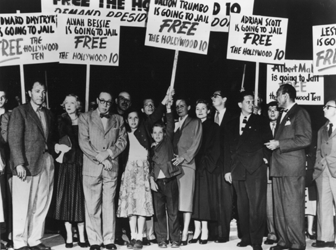
The Hollywood blacklist was a practice in the American film and entertainment industries, most active in the 1940s and 1950s, that resulted in many people being denied employment because of suspected or alleged political or social associations. Those affected included actors, performers, producers, screenwriters and directors, as well as technicians and other staff. Targets were often judged on the basis of presumed political loyalties, real or imagined Communist sympathies, or private lives thought to include homosexual relationships.
Image gallery
7 Images




Scope and mechanisms
Blacklisting operated informally and formally: studios and networks maintained lists of people to avoid hiring, while government inquiries and congressional hearings pressured employers. Common mechanisms included refusal to hire, demands for loyalty oaths, publication of names, and use of "front" writers or pseudonyms so work could continue without public credit. The process relied on testimony, rumors, and dossiers kept by investigators, and it often made rehabilitation difficult even after formal accusations died down.
History and context
The blacklist is associated with the broader Red Scare and the activities of congressional committees that investigated alleged subversion in government and the arts. Well-known episodes include the 1947 hearings that produced a set of cited screenwriters and other professionals who refused to cooperate with investigators; several of those figures were subsequently denied steady work. The climate was shaped by wartime anxieties, Cold War politics, and a culture of institutional fear that extended beyond Hollywood.
Common targets and effects
- Targets: writers, actors, directors, producers, editors and others suspected on political or moral grounds.
- Consequences: loss of income, damaged reputations, exile from mainstream work, and use of fronts or alternative names to circumvent bans.
- Long-term results: some careers were permanently altered; others gradually recovered as attitudes changed in the late 1950s and 1960s.
Legacy and notable facts
The blacklist left a lasting mark on American culture and industry practices. It prompted debates about free expression, civil liberties, and the proper role of political inquiry in private employment. Some blacklisted artists continued to produce influential work under assumed names; others were later credited or publicly rehabilitated. The episode is often studied as a cautionary example of how political fear can reshape creative industries and civil rights.
For further context on individuals, institutional responses, and subsequent reinterpretations, consult historical accounts and primary documents that examine hearings, studio records, and personal testimonies. Perspectives on the blacklist continue to evolve as archives and memoirs provide more detail about how the policy was enforced and resisted.
Related articles
Author
AlegsaOnline.com Hollywood blacklist Leandro Alegsa
URL: https://en.alegsaonline.com/art/44781