
House of Hohenzollern‑Sigmaringen
A Swabian cadet branch of the Hohenzollern dynasty that ruled the County (later Principality) of Hohenzollern‑Sigmaringen and provided monarchs for Romania and other European dynastic ties.
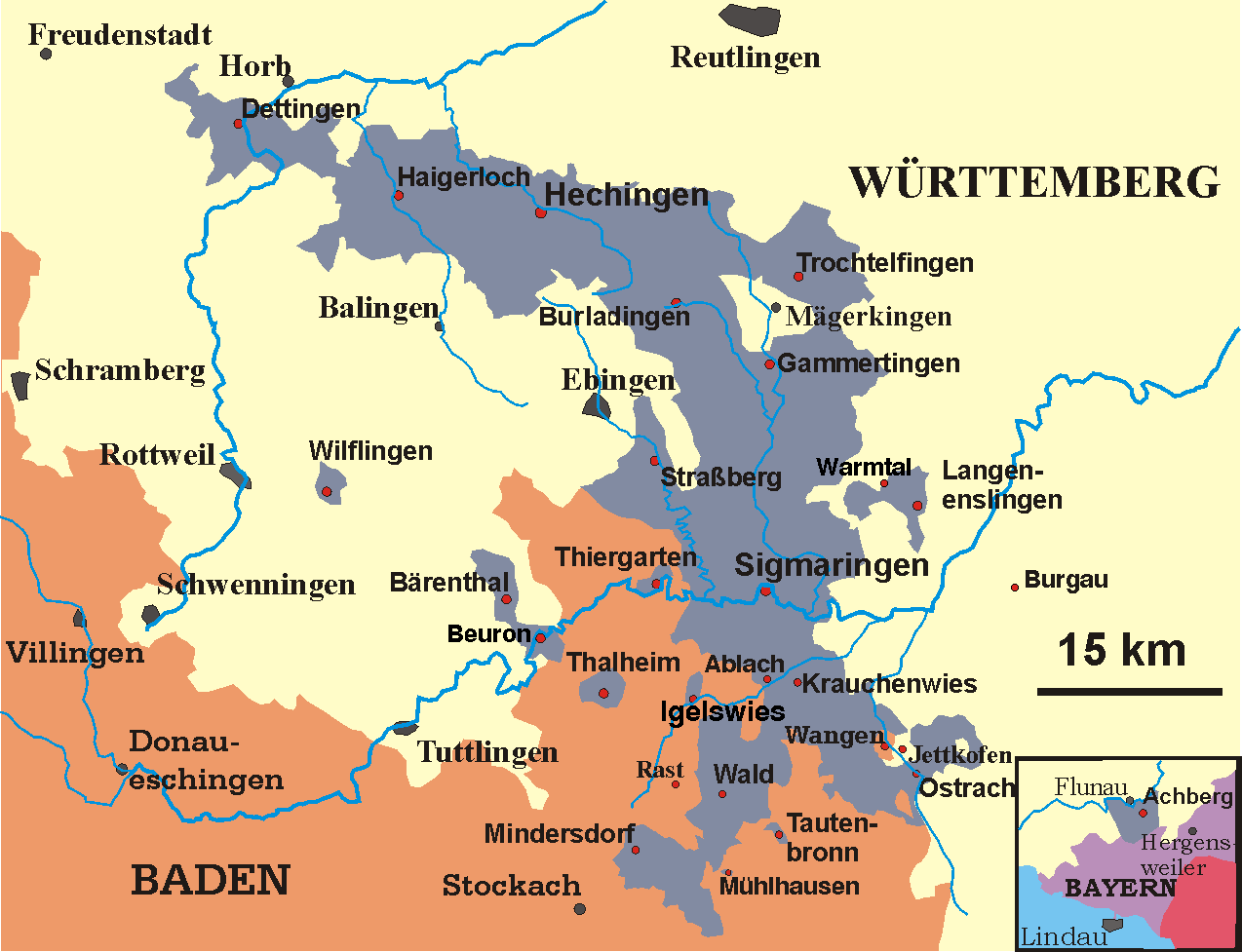
The House of Hohenzollern‑Sigmaringen is the Swabian cadet branch of the wider Hohenzollern dynasty. It is distinct from the better‑known Franconian line that rose to rule Brandenburg, Prussia and ultimately the German Empire. The Sigmaringen family took its name from the town of Sigmaringen and ruled a compact territory in southwestern Germany, initially as counts and later as princes. The lineage preserved regional identity and dynastic continuity even as the political map of central Europe changed around it.
Image gallery
10 Images






Origins and territorial identity
The branch descends from the medieval Hohenzollern noble family and developed separately in the Swabian lands. Its principal seat was Sigmaringen Castle, which served as the family residence and administrative center. The territory governed by the family is commonly referred to in German sources as the Grafschaft Hohenzollern‑Sigmaringen; over time the status of the ruling house evolved, and historians describe both a county and a later principality bearing the Sigmaringen name.
Political development and mediatization
Like many small German states, Hohenzollern‑Sigmaringen experienced growing pressure from larger neighbors during the Napoleonic and post‑Napoleonic eras. The princes retained dynastic rank and local authority for centuries, but the mid‑19th century brought financial constraints and political upheaval. In the aftermath of revolution and negotiation, the ruling family ultimately transferred sovereignty of its small territory to the Kingdom of Prussia. The former lands were thereafter administered within Prussia, though the family continued as a recognized princely house.
Notable members and wider significance
The Sigmaringen line achieved its greatest international prominence when a family member became ruler of a foreign state. In the 19th century a prince of Hohenzollern‑Sigmaringen was chosen to head the Romanian state and later became its king, marking a rare example of a small German princely house furnishing a European throne. Members of the family also married into other royal and noble houses, serving as diplomats, soldiers and statesmen in the broader German and European context.
Distinctive features and legacy
Hohenzollern‑Sigmaringen is often discussed in contrast to the Franconian (Brandenburg‑Prussian) Hohenzollerns: the former remained a regional Swabian dynasty with limited territorial resources, while the latter became a great power dynasty. Despite this, the Sigmaringen branch maintained dynastic prestige and left a cultural legacy in its ancestral lands, including architecture, local archives and patronage of churches and institutions around Sigmaringen Castle. Contemporary interest focuses on genealogy, regional history and the family's role in 19th‑century European statecraft.
- See general dynasty overview: Hohenzollern dynasty.
- Compare with the Franconian branch: Franconian Hohenzollerns.
- Context on German unification and empire: German Empire.
- German-language designation: Grafschaft Hohenzollern‑Sigmaringen.
The House of Hohenzollern‑Sigmaringen thus illustrates how a regional dynasty could retain importance through service, marriage and occasional accession to distant thrones, even while the major political currents of 18th‑ and 19th‑century Europe centralized power in larger states.
Related articles
Author
AlegsaOnline.com House of Hohenzollern‑Sigmaringen Leandro Alegsa
URL: https://en.alegsaonline.com/art/44689