
House of Commons of Canada
The elected lower chamber of Canada’s federal Parliament: its composition, powers, history, procedures, committees, and role within the constitutionally divided federal system.
Overview
The House of Commons (French: Chambre des communes) is the elected chamber of the Parliament of Canada. Commonly described as the lower house, it is the principal forum where Members of Parliament debate legislation, scrutinize the government, represent constituents and determine supply. Because the Commons controls confidence and financial matters, it provides the foundation of responsible government: the Prime Minister and the Cabinet must retain its support to remain in office.
Image gallery
9 Images

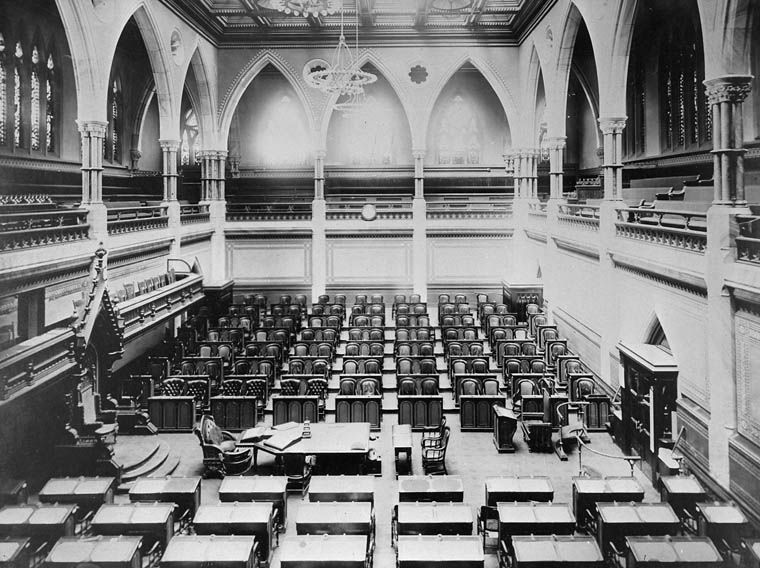


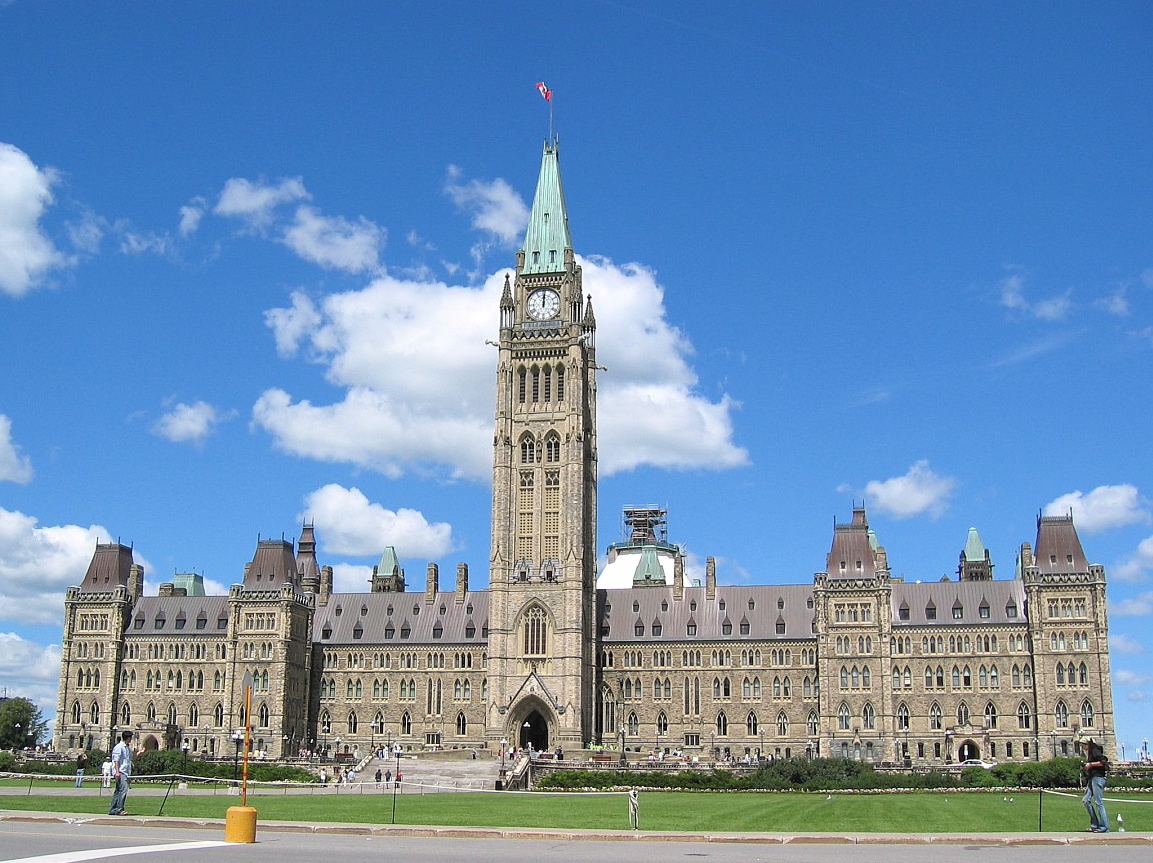
History and constitutional development
The House of Commons was established in 1867 by the British North America Act when the Dominion of Canada was formed from the former British colonies. It was modelled on the British House of Commons, adapting Westminster conventions to a federal, bilingual country. The constitutional framework evolved over time, culminating in the patriation of the constitution in 1982 and the renaming of the founding statute as the Constitution Act. These changes transferred final authority over constitutional amendment to Canadian institutions while preserving the division of powers between federal and provincial legislatures.
Composition and elections
The Commons consists of 338 Members of Parliament (MPs), each elected to represent a single federal constituency, often called a riding or electoral district. Members are chosen in general elections and in by-elections when seats become vacant. The chamber is an elected body: its partisan balance decides which party (or coalition) forms the government and whose leader serves as Prime Minister. General elections are held at least every four years, though conventions and confidence votes can shorten that period.
Powers, functions and conventions
The House of Commons initiates and passes most federal legislation, particularly money bills concerning taxation and public spending. It examines government policy, debates public issues, and holds ministers accountable through oral questions, debates and committee studies. The practical supremacy of the Commons over the appointed Senate flows from democratic legitimacy and control of supply; the Senate may review and suggest amendments but rarely defeats government measures. The head of government—the Prime Minister—remains in office only while able to command the Commons' confidence.
Legislative process
Proposed laws (bills) typically undergo several stages: introduction, debate on principle, committee review, report stage and a final House vote. Committee scrutiny is a crucial element: bills and estimates are examined in detail, amendments are proposed and evidence from experts and officials is heard. After passage by the Commons, most bills must also receive Senate approval and royal assent to become law; financial measures conventionally originate in the Commons.
Committees and detailed work
A substantial portion of parliamentary work is entrusted to committees, which allow MPs to study issues at length, call witnesses, analyze departmental spending and produce reports with recommendations. Standing committees, special (ad hoc) committees and legislative committees each have defined mandates. Committees contribute to transparency and the technical improvement of legislation by enabling sustained, focussed inquiry that would not be possible in full sittings.
Officers, rules and decorum
The Speaker of the House presides over debates, enforces the rules of order and represents the Commons in its relations with the Crown, the Senate and external institutions. Parliamentary procedure draws on written rules, precedents and traditions; these guide how questions are posed, how votes are taken and how privileges and immunities are exercised. Other officers — including the Clerk and parliamentary secretariats — support the chamber’s business and record its proceedings.
Relationship with provinces and limits of federal power
Canada’s federal system assigns specific powers to the federal Parliament and to provincial legislatures; the House of Commons exercises only those powers granted to the Parliament of Canada. Provincial legislatures have exclusive authority over many areas such as education and certain aspects of property and civil rights. This division shapes the scope of federal lawmaking and frames political debates about jurisdiction and cooperation among orders of government.
Location and public access
The House of Commons meets in the Centre Block of the Parliament Buildings on Parliament Hill in Ottawa, Ontario. The chamber and committee rooms are open to the public and to visitors subject to security arrangements; many proceedings are also published in official records and increasingly available through digital channels to promote public engagement.
Contemporary issues and reform debates
Debate continues over matters such as electoral reform, parliamentary transparency, committee powers and the balance between party discipline and constituency representation. Proposals range from changes to the voting system to measures aimed at strengthening oversight, diversity of representation and the capacity of MPs to scrutinize complex public policy. Such discussions reflect ongoing public interest in how representative institutions adapt to changing democratic expectations.
Summary
The House of Commons is the central democratic institution of Canada’s federal system: an elected assembly that legislates, controls public finances, and sustains responsible government through confidence conventions. Its work combines plenary debate with detailed committee examination, and it functions within a constitutional framework that balances federal authority with provincial jurisdiction. For further background on terminology, procedure and its historical roots, consult primary parliamentary sources and authoritative histories of Canadian government.
Questions and answers
Q: What is the House of Commons?
A: The House of Commons is the lower house of the Parliament of Canada. It is an elected body consisting of 338 members, known as Members of Parliament (MPs).
Q: How long are MPs elected for?
A: MPs are elected for a maximum period of four years at a time.
Q: How were members elected to the House of Commons?
A: Members are elected by one of Canada's federal electoral districts, which are usually called ridings.
Q: When was the House of Commons established?
A: The House of Commons was established in 1867 when the British North America Act 1867 created the Dominion of Canada and was modelled on the British House of Commons.
Q: What is the relationship between the Senate and the House Of Commons?
A: Both Houses must agree to new laws but the Senate very rarely rejects bills passed by the Commons (though it does occasionally amend them). The Government is responsible only to the Lower House and Prime Minister stays in office only as long as they have its support.
Q: Where is Canadian House Of commons located?
A: The Canadian House Of commons is located in Centre Block on Parliament Hill in Ottawa, Ontario.
Q:What powers does Parliament Of Canada have ?
A:The powers that Parliament Of Canada has are limited because provincial legislatures have sole right to pass laws about some things. Until 1982 only Parliament Of United Kingdom had power to change British North America Act, this was done to protect rights and powers given to provincial legislatures . This changed with passing off Canada Act , where British North America Act became Constitution Act .
Related articles
Author
AlegsaOnline.com House of Commons of Canada Leandro Alegsa
URL: https://en.alegsaonline.com/art/45304
Sources
- statutelaw.gov.uk : "The British North America Act, 1867 c.3"
- parl.gc.ca : "Party Standings in the House of Commons"
- cbc.ca : "Erin Weir declares himself a member of the CCF - a party that no longer exists"