
Annie Edson Taylor: First Person to Survive Niagara Falls in a Barrel
Annie Edson Taylor (1838–1921) was an American schoolteacher and adventurer who became the first person to survive going over Niagara Falls in a barrel on her 63rd birthday, October 24, 1901.
Overview
Annie Edson Taylor was an American teacher and thrill seeker best known for surviving a descent over Niagara Falls inside a specially prepared barrel. Born in 1838, she undertook the stunt on October 24, 1901 — her sixty-third birthday — intending to gain publicity and secure financial stability in her later years. The feat made her an international curiosity and established her place in the history of daredevilry.
Image gallery
4 Images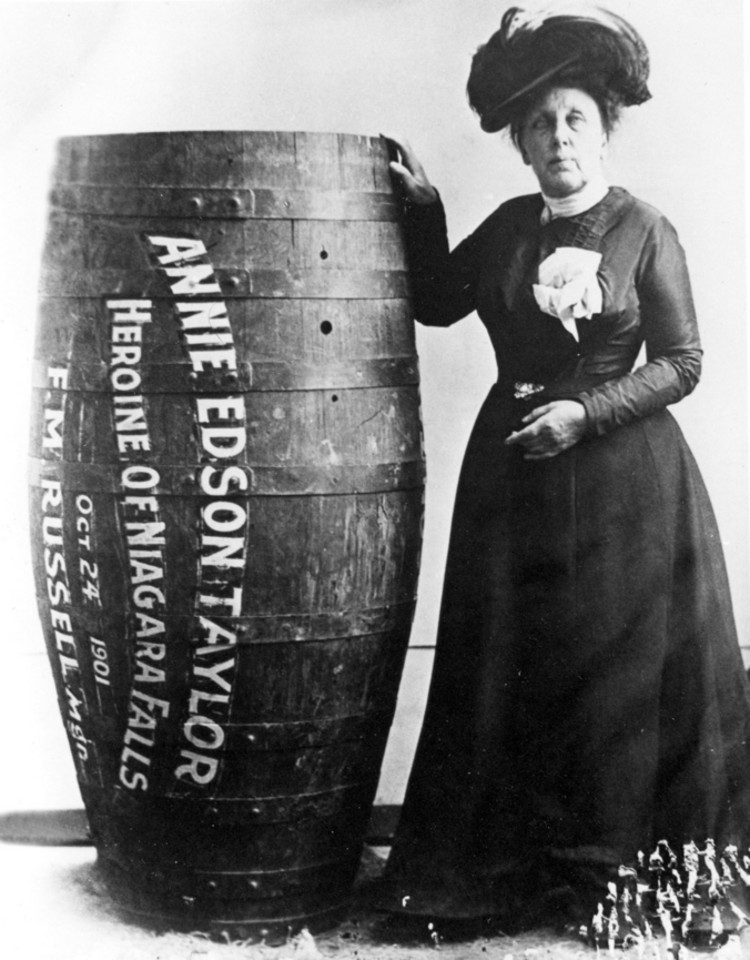


The Niagara descent
Taylor's voyage down the falls was carefully planned for the circumstances of the era. She entered a reinforced, padded barrel and was launched over the crest. When the barrel emerged below the falls she was alive, having escaped major injury despite the violent drop and turbulent waters. Contemporary reports describe only relatively minor injuries, and the successful run distinguished her as the first person known to survive such a passage in a barrel.
Background and motives
Before the stunt Taylor had worked as a schoolteacher and held various occupations. Like many performers and stunt participants of the time, she sought to convert notoriety into income through public appearances and exhibits. Her decision to attempt the descent at an advanced age reflected both the limited options facing many women then and a calculated bid for lasting fame.
Aftermath and legacy
After the descent she attempted to profit from her notoriety through speaking engagements, photographs and exhibitions. Although she drew attention and became part of popular culture, she did not secure enduring wealth and faced financial difficulties later in life. Her survival encouraged others to attempt dangerous stunts at waterfalls and contributed to an ongoing fascination with extreme spectacles.
Notable facts
- Her successful descent on October 24, 1901, is the key reason she remains historically notable.
- She was one of the earliest recorded daredevils to use protective padding and a sealed container for a waterfall stunt.
- Taylor's story highlights both the risks of public spectacle and the limited social supports available to many performers of her time.
Related articles
Author
AlegsaOnline.com Annie Edson Taylor: First Person to Survive Niagara Falls in a Barrel Leandro Alegsa
URL: https://en.alegsaonline.com/art/4456
Sources
- niagarafallslive.com : "Daredevils of Niagara Falls"