
Anke Fuchs: German lawyer, Social Democrat politician and public servant
Anke Fuchs (1937–2019) was a German lawyer and SPD politician who held ministerial office in 1982, served as Vice President of the Bundestag (1998–2002) and led the Friedrich Ebert Foundation (2003–2010).

Overview
Anke Fuchs (5 July 1937 – 14 October 2019) was a German lawyer and long-serving politician affiliated with the Social Democratic Party (SPD). Her career combined legal training, parliamentary leadership and work in party-linked institutions. She is remembered for occupying several senior public roles and for representing social-democratic positions on family, health and social policy.
Image gallery
2 Images
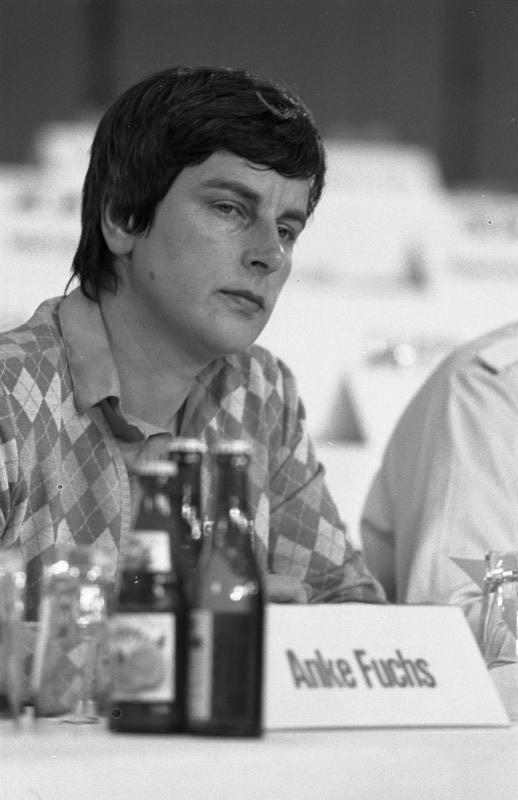
Career and positions
Fuchs trained as a lawyer and moved into politics with the SPD, where she became a prominent figure in the party's post-war generation. Among her principal offices were a federal cabinet post, a senior parliamentary leadership role and the presidency of a major political foundation. Key positions she held include:
- Federal Minister for Youth, Family and Health in 1982, a portfolio dealing with social welfare, family policy and public health concerns (federal ministry).
- Vice President of the German Bundestag from 1998 to 2002, where she helped preside over parliamentary debates and represented the legislature in formal functions.
- President of the Friedrich Ebert Foundation from 2003 until 2010, overseeing research, political education and international cooperation related to social democracy.
Contributions and significance
Throughout her public life, Fuchs emphasized social justice, family support measures and the importance of democratic political education. As a woman in high-level offices during periods when female representation was growing but still limited, she was part of a broader shift toward greater gender balance in German politics. At the Friedrich Ebert Foundation she steered activities linking policy research and civic engagement, reinforcing the foundation's role in shaping debates on labour, welfare and international social-democratic networks.
Life and legacy
Born in Hamburg, Fuchs combined professional legal expertise with a long commitment to public service. She died on 14 October 2019 in Wilhelmshaven, Germany, aged 82. Obituaries and retrospectives noted her steady parliamentary leadership, her stewardship of a major political foundation and her role in advancing social policy within the SPD. Her career is often cited in discussions of post-war German social democracy and the expanding presence of women in national political life.
Tags
Related articles
Author
AlegsaOnline.com Anke Fuchs: German lawyer, Social Democrat politician and public servant Leandro Alegsa
URL: https://en.alegsaonline.com/art/4319
Sources
- panorama : Trauer um SPD-Politikerin und Ex-Gesundheistsministerin Anke Fuchs