
Heat sink — passive and active devices for thermal management
A heat sink is a component that transfers and dissipates heat from hot parts (like CPUs or power devices) into the surrounding medium. Designs balance materials, surface area, airflow and mounting.
A heat sink is a device that draws heat away from a heated component and releases it to the surrounding environment. In electronics it is often used together with a fan or blower (an active cooling system) but many heat sinks operate passively by relying on conduction and natural convection. Heat movement inside a heat sink occurs mainly by conduction from the hot part into the sink material and then by convection and radiation from the sink surfaces into the air.
Image gallery
10 Images


Design and components
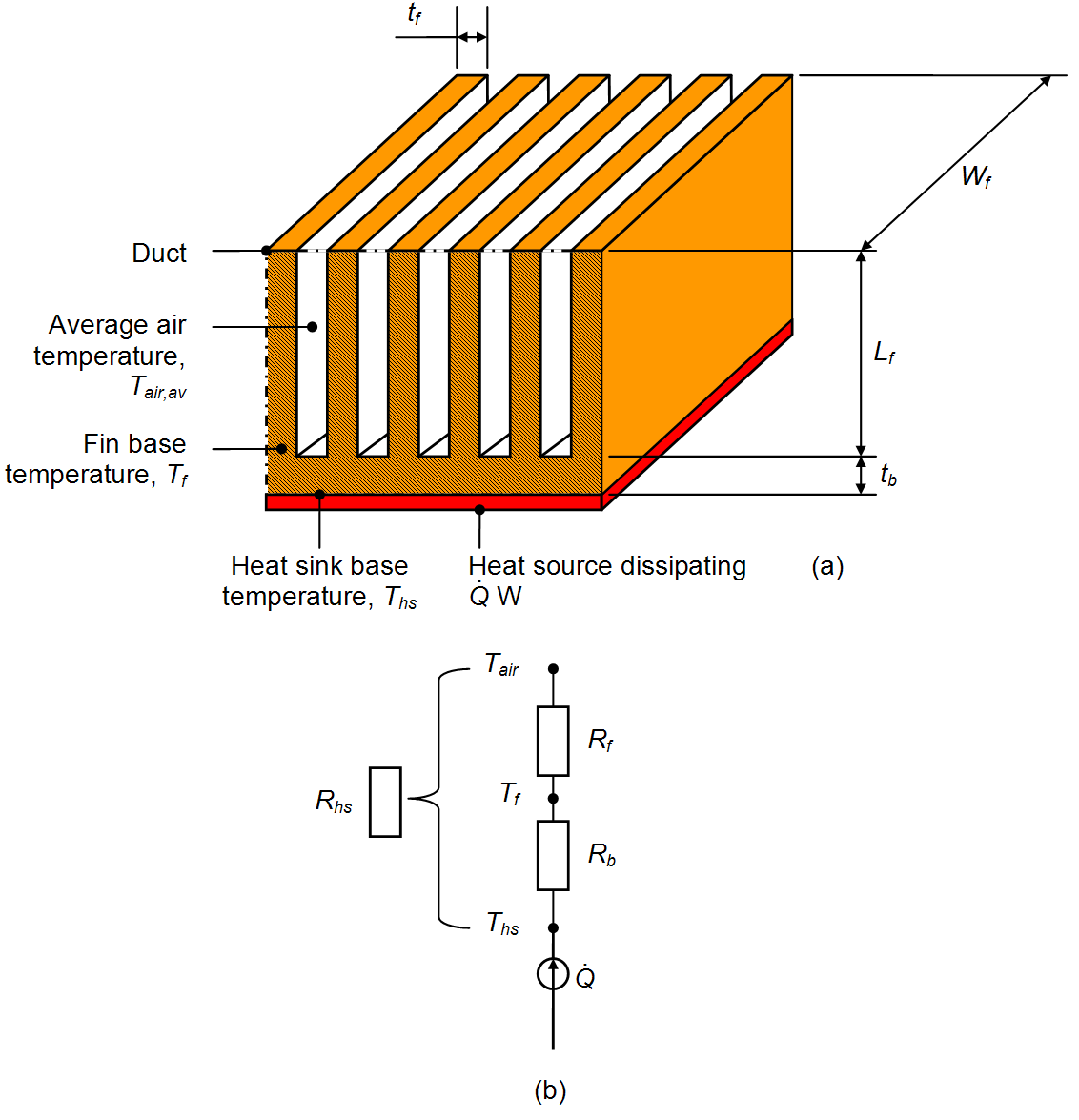
A typical heat sink has a flat base that contacts the heat source and a finned area that increases surface area for cooling. Common materials are aluminum, prized for low cost and light weight, and copper, valued for higher thermal conductivity. Modern designs may also include heat pipes or vapor chambers to spread heat more evenly, and a thermal interface material (TIM) such as thermal paste or a pad to reduce interface resistance between the component and the sink.
- Base: transfers heat from the component.
- Fins: increase surface area to improve convective cooling.
- Heat pipes / vapor chambers: move heat across the sink.
- Fastening and TIM: ensure good thermal contact.
Manufacturing methods include extrusion, CNC machining, stamping, bonded-fin assembly and skiving. Designers optimize fin spacing, thickness and orientation to match expected airflow and minimize pressure drop. Thermal performance is often expressed as thermal resistance (°C/W), which indicates how much temperature rise occurs per unit of power dissipated; lower values denote better cooling.
History, applications and practical considerations
Heat sinks became widespread as electronic components grew smaller and more powerful. Early cooling needs arose with vacuum tubes and later intensified with semiconductors and CPUs. Today heat sinks appear in personal computers, graphics cards, LED lighting, power amplifiers, automotive electronics and industrial power modules. In many consumer PCs a heat sink paired with a fan cools the central processor, while high-power LEDs often use large passive sinks.
Choosing or designing a sink requires attention to available airflow, permissible size and weight, and the operating environment (dust, orientation, and ambient temperature). Compared with liquid cooling, heat sinks are simpler, more reliable and less costly, though liquid systems can move heat away more effectively for very high power densities. Routine maintenance—removing dust and ensuring secure mounting and good TIM—helps retain performance over time.
For an introductory technical overview see heat sink basics. Further details on thermal transfer principles are discussed at heat transfer resources. Historical development and early cooling solutions are summarized at historical notes. Practical guides for computer cooling selection appear at PC cooling guides, and application notes for audio and power electronics are available from manufacturers and engineering sites such as application notes.
Related articles
Author
AlegsaOnline.com Heat sink — passive and active devices for thermal management Leandro Alegsa
URL: https://en.alegsaonline.com/art/43105