
Harsha (Harshavardhana) — 7th-century Indian emperor
Harsha (c. 590–647 CE) was a North Indian ruler who united large parts of the Gangetic plain in the early 7th century, famed for patronage of Buddhism, literature, and records by Banabhatta and the Chinese pilgrim Xuanzang.
Harsha, also called Harshavardhana, was an influential Indian ruler of the early 7th century (reigning roughly c. 606–647 CE) who brought several states of northern and eastern India under a single authority. Born into the Vardhana family, he succeeded his elder brother Rajyavardhana and expanded his influence across large parts of the Gangetic plain as the power vacuum left after the decline of the Gupta empire reconfigured regional politics. Contemporary accounts and later histories credit him with establishing a court noted for learning, religion, and public works.
Image gallery
7 Images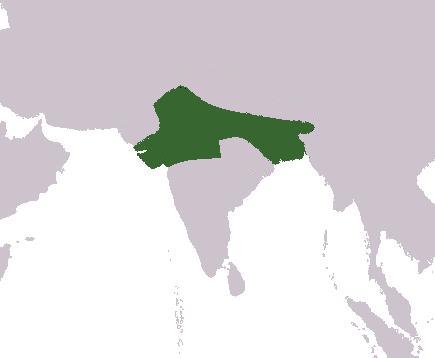



Territory and administration
At the height of his authority Harsha exercised control or suzerainty over regions that now form parts of north-central and eastern India. His campaigns and alliances extended influence into areas such as Gujarat, Bengal and Orissa, and across the Gangetic plain north of the Narmada, though his power was not uniformly centralised. He moved his political centre to Kannauj and ruled through a combination of direct governance and subordinated local rulers. The structure of his administration reflected contemporary practices: military retainers, local chieftains, and court officials carrying out fiscal and judicial duties.
Religion, culture and patronage
Though born into a Hindu milieu, Harsha is best known for his strong patronage of Buddhism and for convening large assemblies that encouraged religious debate and charity. He supported monasteries and educational centres, including institutions frequented by foreign pilgrims. His court promoted Sanskrit literature: the poet Banabhatta composed the biographical work Harshacharita in his honour. The Chinese pilgrim Xuanzang (Hsuan Tsang) spent several years at Harsha's court and left one of the most valuable contemporary descriptions of the king, his benevolence, public works, and religious activities.
Military activity and decline
Harsha led numerous campaigns to secure and expand his influence, though he faced significant resistance from regional powers. A notable check to southern expansion came from the Chalukya ruler Pulakeshin II, who prevented sustained control south of the Narmada. After Harsha's death the political unity he had achieved proved short-lived and the territories he controlled fragmented into smaller states once again.
Sources and legacy
- Primary literary source: Harshacharita by Banabhatta, a panegyric life of the king.
- Foreign account: the travelogue of Xuanzang provides a detailed outsider's portrait of Harsha's court and works.
- Historical significance: remembered for promoting religion and learning, for diplomatic contacts, and for temporarily restoring large-scale political unity in North India after the Gupta decline.
Modern scholarship treats Harsha as a pivotal figure of the early medieval subcontinent — a ruler whose cultural and religious patronage left a trace in literature and monastic records even though his political empire dissolved soon after his death. For further reading see summaries of his reign and the accounts by contemporaries and near-contemporaries in classical Indian and Chinese sources (regions, Gujarat, Bengal, Orissa, North India).
Related articles
Author
AlegsaOnline.com Harsha (Harshavardhana) — 7th-century Indian emperor Leandro Alegsa
URL: https://en.alegsaonline.com/art/42655