
Anhalt-Bitterfeld (district in Saxony-Anhalt, Germany)
An administrative district in Saxony-Anhalt, Germany, centered on Köthen; known for its industrial heritage around Bitterfeld, reclaimed mining landscapes, and links to the historic region of Anhalt.
Overview
Anhalt-Bitterfeld is an administrative district in the state of Saxony-Anhalt in central Germany. The district seat and largest town is Köthen. It combines urban, industrial and rural areas and forms part of the historic territory commonly referred to as Anhalt.
Image gallery
1 Image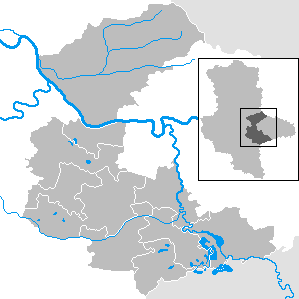
Geography and subdivisions
The landscape of Anhalt-Bitterfeld ranges from flat agricultural plains to former brown-coal mining zones that have been reshaped into lakes and recreational areas. Administratively the district contains a number of towns and municipalities; among the better-known settlements are Köthen, Bitterfeld-Wolfen and Zerbst. Local transport links connect the district with regional centers and economic corridors in central Germany.
History and development
The present district was created as part of a state-level administrative reform in the early 21st century that merged several smaller districts. The area has a layered history: parts of it belonged to various Anhalt duchies, while Bitterfeld developed as an industrial and chemical center in the 19th and 20th centuries. Recent decades have seen economic restructuring and environmental remediation of former industrial sites.
Economy, environment and culture
Industry, agriculture and services all play roles in the local economy. Bitterfeld's legacy includes chemical plants and lignite mining; many former mining pits have been flooded and converted into lakes used for tourism, leisure and nature conservation. Köthen is notable in cultural history for its association with composers and regional heritage, and several castles, churches and museums document local traditions.
Notable facts and attractions
- Historic connection to the Anhalt principalities and regional identity.
- Industrial heritage around Bitterfeld and ongoing landscape restoration projects.
- Recreated lake districts and local cultural sites, including palaces and music-related landmarks in Köthen.
Anhalt-Bitterfeld offers a mixture of industrial history, environmental recovery and cultural landmarks, making it a district of both historical depth and contemporary change within Saxony-Anhalt and Germany.
Related articles
Author
AlegsaOnline.com Anhalt-Bitterfeld (district in Saxony-Anhalt, Germany) Leandro Alegsa
URL: https://en.alegsaonline.com/art/4248