
Harare — capital city of Zimbabwe
Harare is Zimbabwe's largest city and administrative, commercial and cultural centre, noted for its suburbs, universities, agricultural trade and sporting venues.
Overview
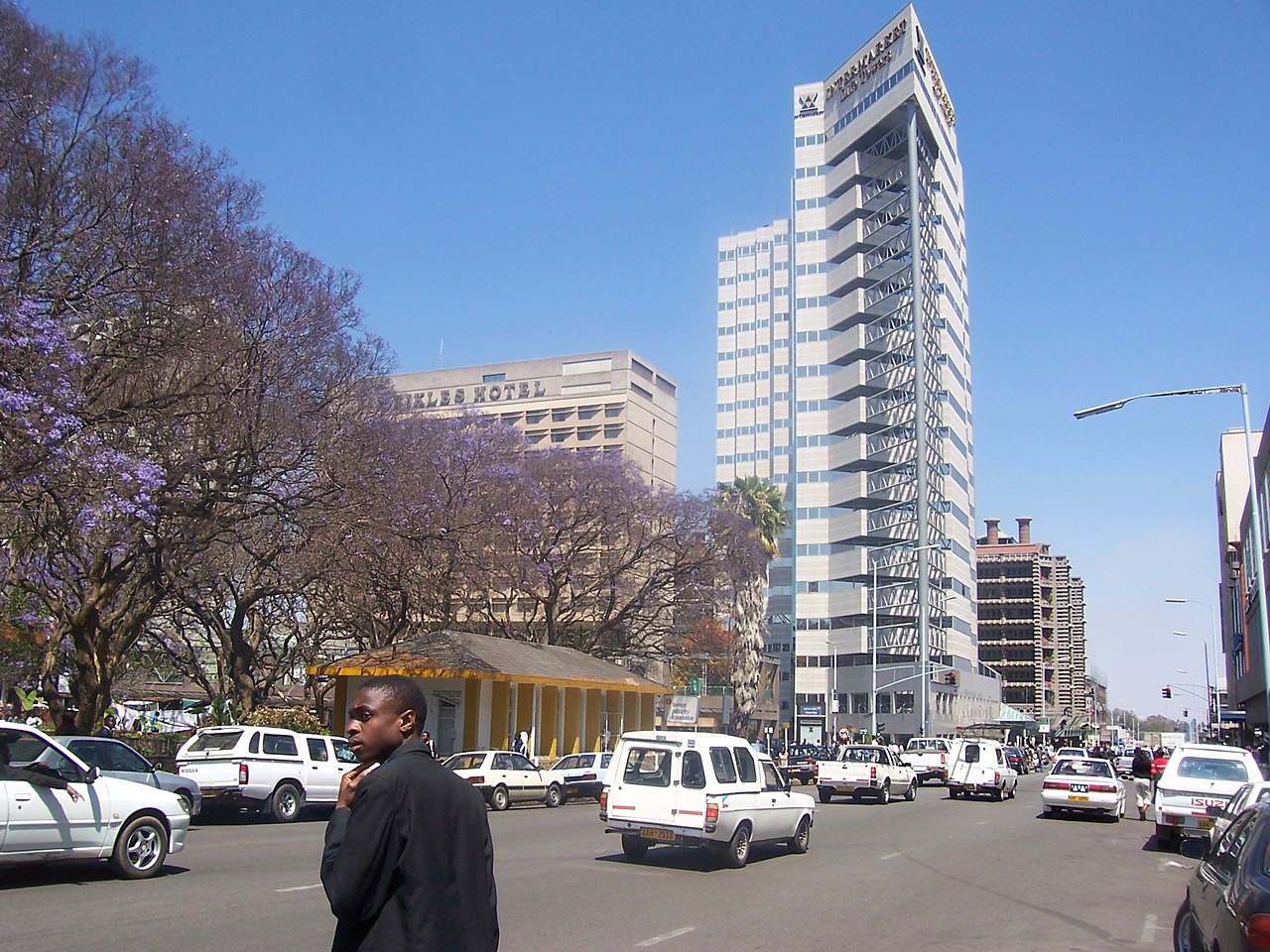
Harare is the capital of Zimbabwe and its largest city, serving as the country's political, commercial and communications hub. Often described as a city of gardens and broad avenues, Harare is home to a diverse urban population numbering over 1.6 million people. Its municipal functions, national institutions and many foreign missions make it the primary centre for government and public administration in the country; see more about its civic role via Harare's status as capital.
Image gallery
10 Images




Geography and districts
The city sits on a high plateau in northeastern Zimbabwe and is organized around a central business district with residential suburbs spreading outward. Wealthier neighbourhoods and leafy suburbs are mainly to the north; notable residential areas include:
- Borrowdale
- Mount Pleasant
- Avondale
Mount Pleasant is home to the University of Zimbabwe, the country's oldest university, and several cultural institutions. The combination of urban parks, institutional campuses and commercial corridors gives Harare a mixture of civic, residential and light industrial zones.
History and development
Founded in 1890 as Salisbury during the colonial period, the city was renamed Harare in 1982 following Zimbabwe's independence. Over the 20th century it grew from a small administrative outpost into a regional capital, expanding through waves of migration and economic change. Urban planning has kept a grid of streets around a central business core, while newer suburbs and commercial centres have emerged with post-independence development.
Economy and trade
Harare is the nation's principal financial and trade centre. The surrounding region is an important agricultural zone and the city functions as a collection and distribution point for crops and commodities. Key agricultural products traded and processed in and around Harare include tobacco, maize and cotton, alongside citrus and horticultural produce. Industrial activity within the metropolitan area includes textile manufacturing, steel and chemical production, as well as services related to banking, retail and transport. Mining activity in the broader region contributes to the local economy, with gold among the minerals of significance.
Education, sport and culture
Harare hosts major educational institutions, most prominently the University of Zimbabwe (established in 1952), which anchors academic and research life in the city. Cultural life includes museums, theatres, markets and annual events that reflect Zimbabwe's ethnic and artistic diversity. Sport is widely followed: the city's main international cricket venue is the Harare Sports Club, frequently used for Test and limited-overs matches (cricket), and association football is popular with clubs such as Dynamos F.C. forming an important part of local identity (football).
Notable facts and distinctions
Harare is notable for the concentration of national institutions and for being a trade hub for both agricultural commodities and manufactured goods. Its northern suburbs are among the most affluent in the city, while other areas show rapid urban growth and changing land use patterns. Visitors and researchers often note the combination of colonial-era layout, post-independence modernization and the role of Harare as the main gateway to Zimbabwe's political, economic and cultural life.
Related articles
Author
AlegsaOnline.com Harare — capital city of Zimbabwe Leandro Alegsa
URL: https://en.alegsaonline.com/art/42372
Sources
- hararecity.co.zw : "Mayor 2013–2018"
- demographia.com : "Demographia World Urban Areas PDF (March 2013)"
- commons.wikimedia.org : Harare