
Happisburgh (Norfolk): coastal village and earliest human site in the UK
Coastal village in Norfolk, England, known for dramatic erosion and major archaeological finds: flint tools over 800,000 years old and early human footprints revealed by storms in 2013.
Overview
Happisburgh (pronounced "Hazeborough") is a small village and civil parish on the North Norfolk coast of England. It lies beside the B1159 coastal road and has a resident population of under 1,000. The settlement is compact but notable for its exposed shoreline and the way coastal processes shape local life. For practical information about the village and parish services, see the local information page: Happisburgh parish. General county-level background is available from Norfolk resources: Norfolk overview.
Image gallery
9 Images


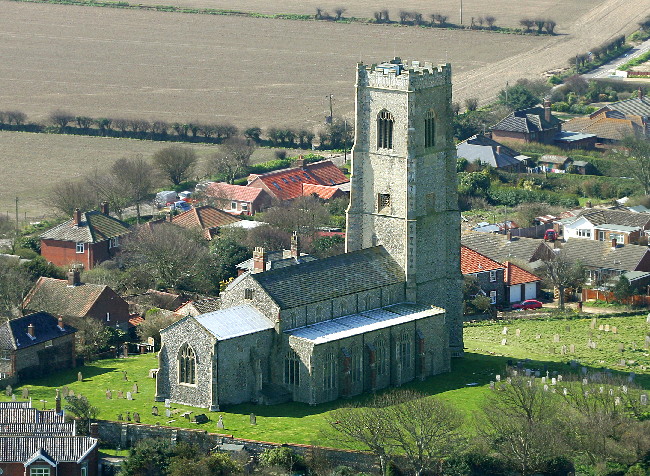

Location and character
Happisburgh occupies a low-lying, shingle-and-sand coastline that faces the North Sea. The village sits to the east of the north–south B1159, a road that runs along much of the Norfolk coast. The shoreline includes sandy beaches and cliffs composed of glacial and river sediments that are readily undercut by waves. The landscape and the sea combine to make Happisburgh visually distinctive: an exposed coast, a scattering of cottages, and a prominent lighthouse and other local landmarks that are visible from the inter-tidal zone. For maps and coastal information see the regional coastal page: coastal map.
Archaeological importance
Happisburgh gained national and international attention when ancient tools and traces of early humans were found by archaeologists and local volunteers. Flint artefacts recovered from beach and foreshore deposits have been dated to more than 800,000 years ago, making them the oldest known evidence of human activity in what is now the United Kingdom. In May 2013, storm-driven erosion exposed a pattern of elongated hollows in compacted sands at low tide that were recorded as early human footprints. Those hollows were surveyed and studied by archaeologists, providing rare direct traces of people rather than just worked flint. Further details on the research and discoveries are summarized at an archaeological resource: archaeology report.
Coastal erosion and management
Active coastal erosion is a defining feature of Happisburgh. Waves, tides and storm surges regularly remove beach and foreshore material, exposing archaeological deposits but also threatening buildings, infrastructure and farmland. Local and national agencies have debated and pursued a mix of responses, including hard sea defences, managed retreat and community protection measures. The erosion that revealed prehistoric material also poses ongoing challenges for conservation and public safety. For policy and hazard information see the relevant coastal authority guidance: coastal authority.
Notable facts and significance
- Happisburgh provides the earliest secure evidence of human activity in Britain through stone tools and footprint traces dating to the Early Pleistocene.
- Finds at Happisburgh have expanded understanding of early human dispersal into northern Europe and adaptations to cooler, variable climates.
- The village illustrates the trade-off between natural heritage value and the risks of living on an actively eroding coast.
Visitors and students of prehistory often come to Happisburgh to observe the dynamic shoreline and to learn about how coastal processes can reveal ancient sites. Academic teams, local groups and volunteers continue to monitor the foreshore when conditions permit, balancing archaeological recording with public safety and the realities of an ever-changing coastline.
Questions and answers
Q: Where is Happisburgh located?
A: Happisburgh is a village and civil parish in the English county of Norfolk, located on the coast.
Q: What is the name of the road that runs north-south near Happisburgh?
A: The name of the road that runs north-south near Happisburgh is the B1159.
Q: How many people live in Happisburgh?
A: Happisburgh has a population of under 1,000 people.
Q: What is the significance of Happisburgh in terms of archaeology?
A: Happisburgh became a site of national archaeological importance in 2010 when flint tools over 800,000 years old were unearthed. This is the oldest evidence of human occupation anywhere in the UK.
Q: What was uncovered on the beach at Happisburgh in May 2013?
A: In May 2013, a series of early human footprints were discovered on the beach at Happisburgh, providing direct evidence of early human activity at the site.
Q: What caused the discovery of the early human footprints on the beach at Happisburgh?
A: The early human footprints were discovered on the beach at Happisburgh due to rough seas eroding the sandy beach, which uncovered some elongated hollows.
Q: How old are the flint tools that were found in Happisburgh?
A: The flint tools that were found in Happisburgh are over 800,000 years old.
Related articles
Author
AlegsaOnline.com Happisburgh (Norfolk): coastal village and earliest human site in the UK Leandro Alegsa
URL: https://en.alegsaonline.com/art/42341
Sources
- nature.com : "Early Britons could cope with cold : Nature News"
- bbc.co.uk : bbc.co.uk/news/science-environment-26025763