
Hand (unit of length)
A traditional unit of length equal to 4 inches (10.16 cm), historically based on the breadth of a human hand and still used to state the height of horses; abbreviated h or hh.
Overview
The hand is a small, historic unit of length that has been used for millennia. It is a non-metric measure now fixed at exactly four inches, or 10.16 centimetres, and is principally retained today for describing the height of horses and ponies. The term appears in discussions of traditional measures of length and anatomy-related units; see more on its classification as a unit of measurement here and its relation to length units here.
Image gallery
3 Images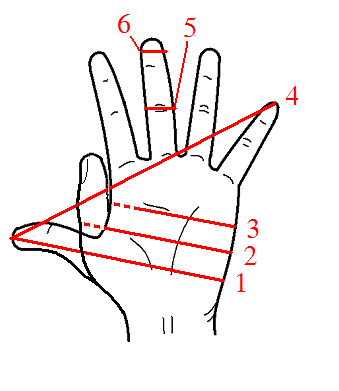


Definition and notation
One hand equals 4 inches (10.16 cm). Heights of horses are normally quoted in whole hands and additional inches: for example, "15.2 hands" means 15 hands and 2 inches (not a decimal fraction of a hand). The unit is commonly abbreviated as h or, in the plural form used in equestrian contexts, as hh (historically read as "hands high"). Practical measurement is taken from the ground to the highest point of the shoulders (the withers) while the animal stands square.
History and origin
The concept of the hand as a measure traces back to ancient cultures that used readily available parts of the body for rough measurement. It is often associated with ancient Egyptian practice and other early systems that based units on human anatomy; for historical background see early origins and the derivation from the width of a human hand here. Over time the hand became standardized in English-speaking countries so that it served as a consistent unit for equestrian and agricultural purposes.
Contemporary use and examples
Today the hand survives almost exclusively in the equestrian world. Countries that commonly use the hand for horse height include Australia Australia, Canada Canada, the United Kingdom United Kingdom and the United States United States. Horse registries, sale listings and show classes frequently state heights in hands; the same measurement may be applied to show the size of various equine types such as ponies, hunters and sport horses.
Practical notes and distinctions
- Measurement point: always to the withers rather than the head, to provide a consistent vertical reference.
- Notation conventions: the figure after the hands counts inches (0–3); some writers use a period, others a dash or space.
- Scope: the hand is largely ceremonial or traditional today; scientific and most commercial contexts use metric or imperial linear measures instead.
For a concise summary of rules and usage conventions consult authoritative equestrian references and measurement guides linked above; these explain common practice, examples and registry standards relevant to buyers, breeders and competitors.
Related articles
Author
AlegsaOnline.com Hand (unit of length) Leandro Alegsa
URL: https://en.alegsaonline.com/art/42169
Sources
- omafra.gov.on.ca : "The "Hand" Measurement for Horses"