
Halmstad Municipality
Halmstad Municipality in Halland County, southern Sweden: geography, administration, history, economy, culture and transport of the coastal municipality centered on the city of Halmstad.
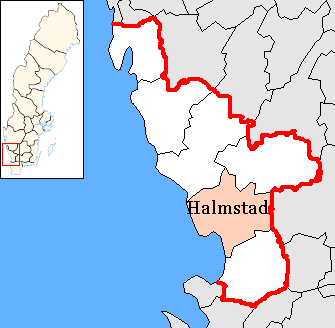
Overview: Halmstad Municipality (Halmstads kommun) is an administrative area on Sweden's west coast. It lies within Halland County and is part of southern Sweden. The municipal seat and largest urban centre is Halmstad, a coastal city that gives the municipality its name. Information about local services and governance is typically presented on the municipality's official pages and wider regional portals (municipal information).
Image gallery
3 Images
Geography and layout
The municipality covers coastal shoreline on the Kattegat, a river valley, and mixed agricultural and forested inland areas. A notable river runs through the city and into the sea, and sandy beaches and small islands attract both residents and visitors. The built environment centres on Halmstad city, with surrounding smaller communities, recreational areas and protected natural sites.
History and development
The area has medieval origins as a trading and maritime hub and later developed under changing Scandinavian sovereignties before becoming part of the modern Swedish state. Over the 19th and 20th centuries the town and surrounding parishes industrialized, expanded transport links, and were reorganized into today’s municipal structure during nationwide local government reforms in the 20th century.
Economy, culture and institutions
Local economic activity is diverse: maritime trade and fishing historically mattered, while manufacturing, services, education and tourism are important today. The municipality hosts a university campus, cultural institutions, galleries and music scenes. Halmstad has a noted artistic heritage and active sports clubs, with coastal beaches and festivals contributing to its tourism appeal.
Transport and governance
Halmstad Municipality is served by regional and national road and rail connections that link it to major Swedish cities, supporting commuting and freight. The municipal council administers local services, planning, schools and infrastructure, working within the framework of county and national government.
Notable facts
- Coastal beaches and a river estuary define much of its recreational geography.
- The municipality balances urban services with rural and natural areas, attracting both permanent residents and seasonal visitors.
- Local cultural traditions and contemporary institutions make it a regional centre in Halland.
Related articles
Author
AlegsaOnline.com Halmstad Municipality Leandro Alegsa
URL: https://en.alegsaonline.com/art/41963
Sources
- scb.se : "Statistiska centralbyrån den 1 januari 2010"
- scb.se : "SCB, Befolkningsstatistik 30 juni 2012"