
Haider al-Abadi
Iraqi politician and former prime minister (2014–2018), known for leading Iraq’s government during the campaign against ISIS and for pursuing political and economic reforms.
Overview
Haider Jawad Kadhim al-Abadi (Arabic: حيدر جواد كاظم العبادي, born 25 April 1952) is an Iraqi politician who served as Prime Minister of Iraq from September 2014 until October 2018. He rose to national prominence amid political infighting and the territorial advance of the Islamic State (ISIS), and his premiership focused on restoring state control, stabilizing security, and proposing governance reforms.
Image gallery
6 Images
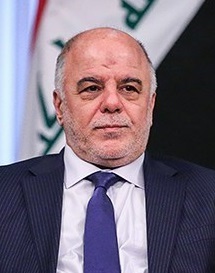


Background and education
Al-Abadi comes from Baghdad and belongs to a generation of Iraqi politicians who spent part of their lives abroad during decades of upheaval. Broadly reported accounts indicate he was educated in the United Kingdom and trained as an electrical engineer. Before assuming the premiership, he was a long-standing member of the Islamic Dawa Party and served in Iraq’s Council of Representatives.
Political career and time as prime minister
He succeeded a predecessor whose leadership had become controversial and was tasked with forming a more inclusive government. As prime minister he led national efforts to defeat ISIS, working with Iraqi security forces and international partners. Late in his term the Iraqi government declared major combat operations against ISIS to be over, and his administration shifted attention to reconstruction, returning displaced persons, and re-establishing state institutions.
Policies, challenges and reforms
Al-Abadi presented himself as a moderate reformer. His program emphasized anti-corruption measures, fiscal restraint amid falling oil revenues, and administrative changes intended to decentralize some decision-making. His government also faced public discontent over services, unemployment, and persistent corruption. Relations with regional and local powers, including the Kurdistan Regional Government, required negotiation during contested elections and budget disputes.
Legacy and later developments
Observers note that al-Abadi’s tenure is defined by the military campaign against ISIS and by attempts to begin political and economic reform. He remained an influential figure after leaving office following the 2018 parliamentary elections and the formation of a successor administration. Critics and supporters alike view his record as mixed: credited with helping to restore territorial integrity while judged by some as having limited success addressing longer-term governance and economic problems.
Positions and notable facts
- Longtime member of the Islamic Dawa Party and representative in the Iraqi parliament (party link).
- Prime Minister from September 2014 to October 2018 (office link), succeeding a controversial predecessor and preceding a new coalition government.
- Led national efforts against ISIS and oversaw initial reconstruction and stabilization policies within Iraq.
Further reading and contemporary reporting provide more detail on specific policies, timelines, and assessments of his premiership for readers seeking deeper context.
Related articles
Author
AlegsaOnline.com Haider al-Abadi Leandro Alegsa
URL: https://en.alegsaonline.com/art/41766