
Gummy bear
Small, chewy fruit-flavored candy shaped like a bear. Typically made from gelatin (or pectin), sugar and flavoring; invented in Germany and now produced worldwide in many varieties.
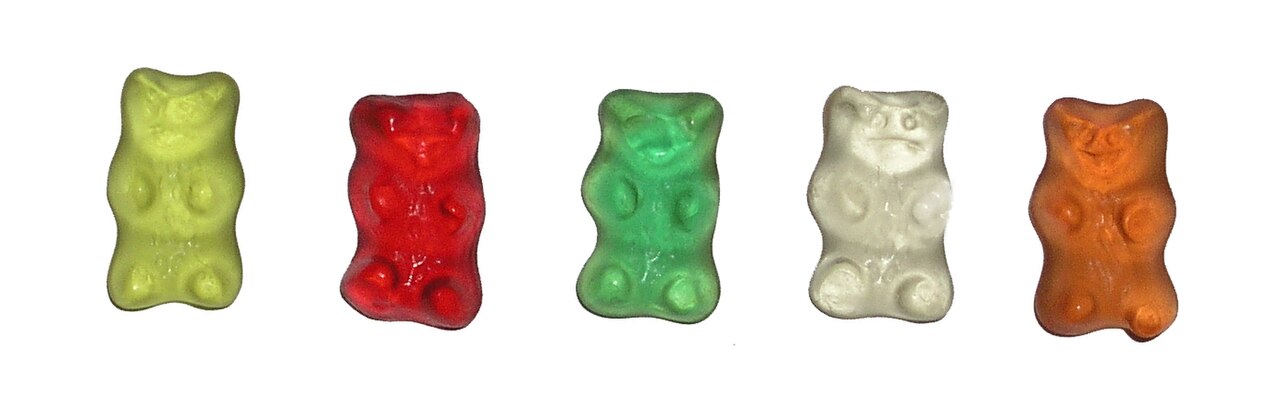
A gummy bear is a small, fruit-flavored chew candy formed in the outline of a standing bear. Originally sold as a soft, gelatin-based treat, gummy bears are known for their springy, chewy texture and often slightly sticky surface. They are produced in many colors and flavors and have become a widely recognized confection in confectionery assortments worldwide. For more on the category, see fruit gum candies.
Image gallery
4 Images


Composition and characteristics
Typical gummy bears are made from a base of sugar and a gelling agent. Common ingredients include:
- sugar (sucrose) and glucose/corn syrup to provide sweetness and body;
- gelatin (animal-derived) or plant alternatives such as pectin or agar for the chewy texture;
- flavorings (natural or artificial), fruit concentrates in many recipes;
- colorings, citric or tartaric acid for brightness, and glazing agents (carnauba wax or beeswax) to reduce stickiness.
Origin and development
Gummy bears trace their commercial origin to early 20th-century Germany. A confectioner developed a small bear-shaped gel candy that fit the era's tastes for molded sweets; these confections spread across Europe and later to other continents. Over decades the basic concept evolved into many variations—different sizes, flavors, and textures—while remaining defined by its bear shape and chewy structure.
Manufacture and varieties
Production commonly uses a molding process: a warm candy mass is poured or deposited into bear-shaped molds, then cooled and demolded. After setting, pieces may be dusted or coated with a shiny finish. Beyond the classic small bear, manufacturers produce gummy worms, rings, cola bottles, and oversized novelty bears. Gummy vitamins and themed promotional shapes are other widespread variants.
Nutrition, safety and distinctions
Gummy bears are calorie-dense and high in sugars; they offer minimal vitamins or dietary fiber unless fortified. Because many contain gelatin, traditional gummies are not vegetarian or kosher/halal unless specifically formulated. They can pose a choking risk for young children and may contribute to tooth decay when consumed frequently. Vegan and reduced-sugar versions use pectin or alternative sweeteners. For guidance on food safety and dietary concerns, see health and safety notes.
Notable facts: the simple silhouette of a bear made these confections instantly recognizable, and their flexible recipe allows large-scale industrial production and artisanal variations alike. For cultural and historical context, consult a confectionery history resource: origins of the gummy bear.
Related articles
Author
AlegsaOnline.com Gummy bear Leandro Alegsa
URL: https://en.alegsaonline.com/art/41408