
Hamburger: definition, history, variations, and cultural impact
A hamburger is a hand-held sandwich built around a cooked patty, traditionally beef, served in a split bun. This entry covers composition, origins, preparation, variations, nutrition and cultural role.
Overview
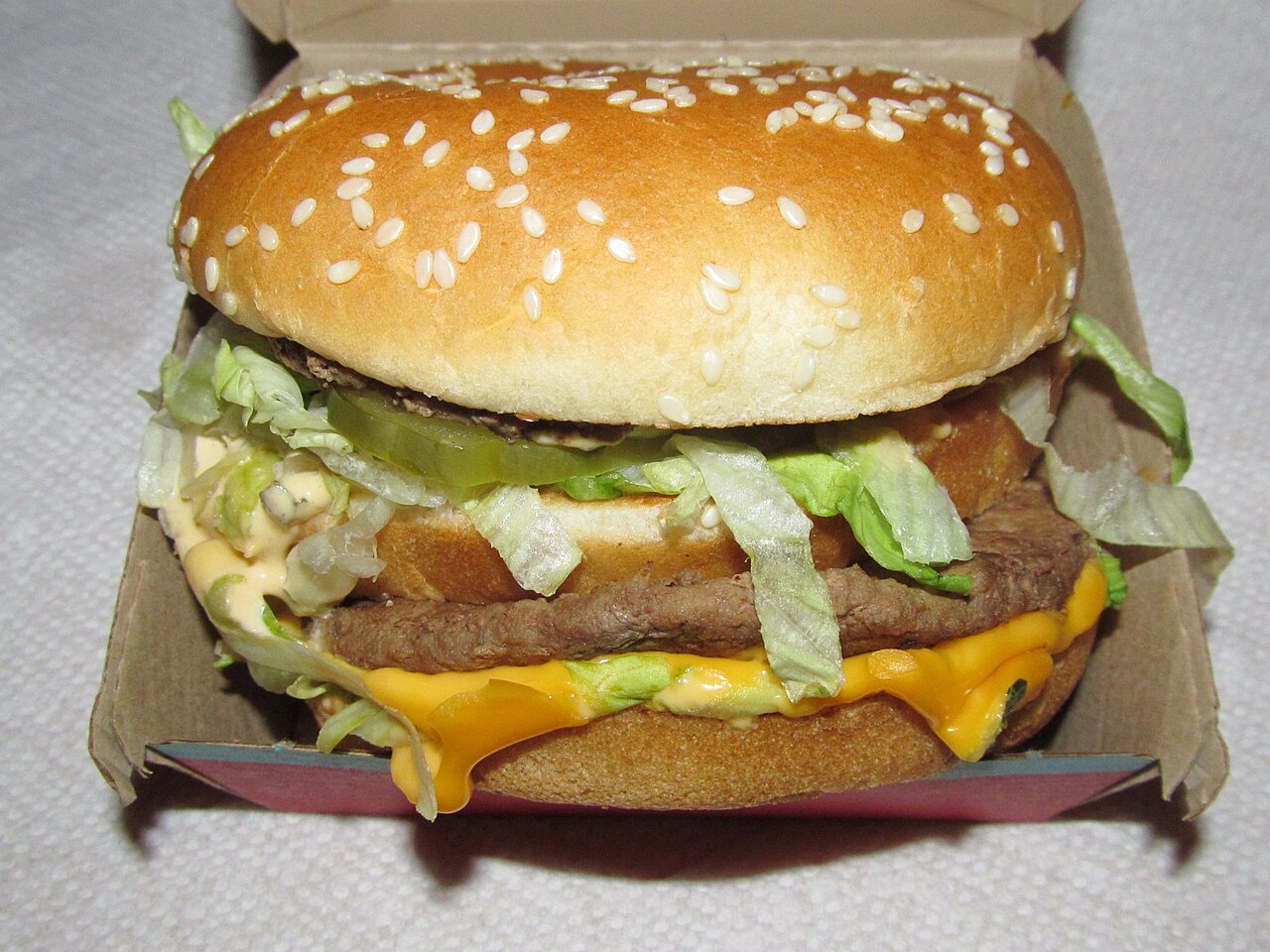
A hamburger, commonly shortened to "burger," is a type of sandwich featuring a cooked patty of ground or minced protein placed between the two halves of a bun. Classic toppings include tomato, onion and lettuce, while condiments and sauces—for example ketchup, mustard or mayonnaise—are commonly added. Because it is designed to be eaten with the hands, often without a knife or fork, the hamburger is closely associated with fast-food culture and portable meals.
Image gallery
10 Images



Composition and common variations
The defining component of a hamburger is the patty. While traditional patties are made from ground beef (ground meat), modern variations include pork, poultry, lamb and plant-based substitutes such as soy- or pea-protein blends. A cheeseburger simply adds cheese; other popular additions are pickles, bacon, fried egg, avocado or chili. Burgers range from simple home-cooked versions to gourmet preparations using specialty breads, artisanal cheeses and house-made sauces.
History and etymology
The word "hamburger" derives from the German city of Hamburg, where a minced beef preparation was known in the 19th century. Immigrants and culinary exchange carried Hamburg-style meat dishes from Germany to the United States; the modern hand-held sandwich form developed in North America in the late nineteenth and early twentieth centuries and became more widely adopted after public events and fairs, including exposure at the 1904 World's Fair. Early printed menus in Europe and North America from the same period show related items and evolving names (early menus), while historians trace the process of adaptation as part of broader American culinary development.
Preparation, safety and nutrition
Cooking methods include grilling, pan-frying and broiling. Food-safety guidance for meat handling recommends cooking ground proteins to safe internal temperatures and avoiding cross-contamination during preparation. Nutritionally, a hamburger's profile varies widely depending on patty size, meat type, cooking fat and toppings; leaner proteins and whole-grain or smaller buns reduce calories and saturated fat, while plant-based patties can lower saturated fat and remove cholesterol.
Commercialization and cultural impact
Chain restaurants and diners played a major role in standardizing burgers and spreading them globally. Many notable chains built identities around burgers, including Burger King, Wendy's and McDonald’s. The hamburger also became a symbol of casual dining, convenience and adaptation to local tastes: international markets often modify toppings, bread types and portion sizes to suit regional preferences.
Regional and specialty forms
- Sliders: small, often served in multiples as a snack or appetizer.
- Stacked burgers: multiple patties layered with cheese and condiments.
- Regional variations: some areas favor spicy condiments, others different cheese or bread styles; local ingredients shape the final presentation.
- Vegetarian and vegan options: use legumes, mushrooms or engineered plant proteins as primary patties.
Terminology and common misunderstandings
The term contains the element "ham," but a hamburger usually contains no cured ham; the name relates to the city of Hamburg rather than the meat ham. A cheeseburger denotes the addition of cheese, and burgers served with chili, specialty sauces or other toppings may be described with compound names (for example, "chili burger").
Serving, sides and etiquette
Burgers are commonly served with side dishes such as fries, salads or onion rings and accompanied by soft drinks or other beverages. In more formal settings a burger may be cut and eaten with utensils, but its portability and hand-held nature are central to its identity. Guidance on table manners and utensil use remains a personal or cultural choice, sometimes addressed in discussions of table etiquette and casual dining practices.
Further reading and resources
Readers interested in broader context may consult sources on sandwich classification (sandwich types), food safety and meat handling (meat safety), produce care (produce handling), salad and garnish variations (salad variations), and the fast-food industry (fast food). Historical perspectives often reference European origins, American development and items found on early menus. Commercial and brand case studies can be found relating to major chains such as Burger King, Wendy's and McDonald’s, while focused entries discuss the cheeseburger (cheeseburger) and cheese varieties (cheese).

Etymology
The exact origin of the word "hamburger" has not been handed down. It is certain that the first syllable "ham" has nothing to do with the English "ham" (German Hinterschinken). Rather, it is derived from the short word for fried minced meat (English hamburger steak), which was introduced by Hamburg immigrants in the 19th century. This was also confirmed by an American etymology dictionary.
There are competing theories about the origin of the hamburger:
- Several hypotheses assume that the name is actually due to the German city of Hamburg. There is a traditional snack called Rundstück warm in Hamburg. This consists of a wheat roll ("Rundstück") with a slice of roast meat inside and gravy added on top. Another variation of this "hamburger patty" consists of a wheat roll with a ground beef patty made from beefsteak and egg yolk. This recipe, it is hypothesized, came to the United States with German immigrants. Moreover, meatballs with rolls were a popular dish on the emigrant ships that often sailed from Hamburg. At the 1904 World's Fair in St. Louis, such minced meat rolls - still without an "er" ending - were demonstrably sold as "Hamburg".
- In a US cookbook from 1842, the term hamburger steak appears for a steak made from ground beef (American English ground beef, British English minced meat). The minced steak was also called "Hamburg-style steak", named after the northern German city.
- Another theory, however, is that the name originated in 1885 at a fair in Erie County near the American town of Hamburg, near Buffalo in the US state of New York. There, the Menches Brothers had a snack stand where they experimented with beef as a substitute due to a shortage of roast pork (Hot Pork in English). They named their creation hamburger, in keeping with their birthplace. This theory is officially promoted by New York State with the slogan New York's Gift to World Cuisine, The Hamburger, but is widely disputed.
- Another theory is that in the early years of U.S. settlement (before cattle ranching was established), imported beef (primarily through the port of Hamburg, chilled with stick ice) was a luxury item; the slang word Hamburg generally denoted beef of superior quality; thus, this was to be emphasized.
The English word "hamburger" can stand for the type of minced meat used (lean ground beef) as well as for the naked meat structure without a bun or other ingredients. If this meat was placed in bread or a bun, it was called a hamburger sandwich. In the mid-20th century, both terms were shortened to hamburger or just burger. In German, hamburger or burger always refers to the entire snack of meat and bun; in GDR cuisine, the term grilletta was common.
History
The first "burger-like" dish comes from Chinese cuisine and is called Roujiamo (also Rougamo). It was invented during the Qin Dynasty (about 2200 years ago) in Shaanxi and is still a popular street food today.
The first hamburger was probably served in 1900 as a "steak sandwich" at the "Louis' Lunch" of the German immigrant Louis (Ludwig) Lassen in New Haven. It consisted of ground beef covered by two slices of toast. The lunch counter still stands today in downtown NewHaven (261 Crown Street). The hamburger is still served there in its original form - with onions, tomatoes and cheese, but without mustard or ketchup. Louis Lassen reportedly served a hurried guest with these ingredients topped with grilled ground beef made in-house from unsold steaks between two slices of toast in 1900. The guest was delighted, and a new form of American sandwich was born, so the story goes.
According to a decision by the Wisconsin legislature, Charlie Negrin, who is said to have been known as Hamburger Charlie, first sold hamburgers in Seymour, Wisconsin, in 1885. The Governor of Oklahoma, on the other hand, decided in 1995 that Oscar Bilby first sold hamburgers in Tulsa in 1891.
As recently as 1925, the hamburger landed in 19th place in a survey of favorite foods in New York restaurants.
In 1948, the Speedee system was introduced in McDonald's grill restaurant in Los Angeles, this laid the foundation for the worldwide success of system gastronomy with the hamburger as its core product; the hamburger became a cheap snack consumed en masse worldwide. McDonald's Deutschland GmbH started in September 1971, and on December 4, 1971, the first German branch opened on Martin-Luther-Strasse in Munich's Obergiesing district; it is still in operation today. The first branch in the new German states was opened on 21 December 1990 in Plauen, Saxony.


Questions and answers
Q: What is a hamburger?
A: A hamburger is an American fast food that consists of a cooked ground meat patty between two halves of a bun.
Q: Where did the name hamburger come from?
A: Hamburgers are named for a city in Germany called Hamburg.
Q: How is a hamburger commonly eaten?
A: A hamburger may be eaten without a knife and fork, so it is a fast food which can be eaten anywhere.
Q: When did hamburgers become popular?
A: Hamburgers became a popular food after the 1904 World's Fair.
Q: Do all hamburgers have cheese?
A: No, not all hamburgers have cheese. A cheeseburger is a hamburger that also has cheese.
Q: Is ham a necessary ingredient in a hamburger?
A: No, even though the name has the word ham in it, it doesn’t need to have ham.
Q: What are some fast food restaurants that serve hamburgers?
A: Many American fast food restaurants, such as Burger King, Wendy's and McDonald's, serve hamburgers.
Related articles
Author
AlegsaOnline.com Hamburger: definition, history, variations, and cultural impact Leandro Alegsa
URL: https://en.alegsaonline.com/art/42012
Sources
- commons.wikimedia.org : Hamburgers
- geography.ccsu.edu : Atlas of Popular Culture in the Northeast United States, John Harmon
- texasmonthly.com : "The World's First Hamburger"