
Angels & Demons — novel by Dan Brown
A concise encyclopedia entry on Dan Brown's thriller Angels & Demons: overview, plot outline, themes, art and science motifs, controversies, and its adaptation into film.
Overview
Angels & Demons is a bestselling thriller novel by American writer Dan Brown. It introduced the Harvard symbologist Robert Langdon as a protagonist and combines elements of art history, secret societies, and modern scientific danger. The novel is paced as a race against time and uses real locations, famous artworks, and historical references as a backdrop for a fictional conspiracy.
Image gallery
2 Images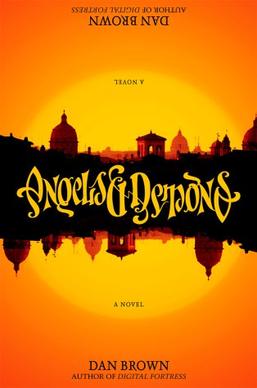

Plot summary
The plot follows Robert Langdon, who is summoned to investigate the apparent murder of a leading scientist and the theft of an experimental substance often described in the book as antimatter. Teaming with a research scientist, Langdon hunts through churches and monuments in Rome to decode clues left by a purported Illuminati operative. The action centers on a papal conclave and the abduction of high-ranking church officials; Langdon and his ally attempt to prevent a catastrophe while unravelling symbolic puzzles tied to the city’s baroque art and architecture.
Structure, characters and motifs
The novel interleaves fast-moving contemporary action with exposition about symbols, sculpture, and scientific terms. Prominent characters include Robert Langdon and his scientific partner, who provide contrasting perspectives on faith and reason. A recurring device is the so-called "Path of Illumination," a trail linked to sculptures by Gian Lorenzo Bernini and other artists, each connected to classical elements such as earth, air, fire and water.
Themes and notable aspects
- Science vs. religion: The story dramatizes tensions between scientific inquiry and religious authority, often in stark, sensational terms.
- Symbolism and art history: Readers encounter decoding of iconography, sculptures, maps and architectural details as keys to the mystery.
- Secret societies: The book reimagines the historical Illuminati as an active modern force, using a blend of documented history and fiction.
Reception, controversies and adaptations
The novel achieved wide commercial success but also provoked criticism. Some reviewers and commentators disputed historical or scientific claims and objected to its portrayal of the Catholic Church. Debates about the accuracy of the scientific elements—chiefly the depiction of antimatter—and the liberties taken with art-historical facts were common in contemporary coverage. The story was adapted into a major motion picture; the film version altered several plot elements and character details, which led to further discussion among fans and critics. For more on the author and related works see author resources and for background on the historical Illuminati see contextual reference.
Legacy and distinctions
Angels & Demons helped popularize a genre that mixes scholarly puzzles with suspenseful plotting. It launched a franchise centered on Langdon and influenced other novels and films that combine cultural history, cryptography, and conspiracy. While the novel takes artistic license with many details, its blending of real art and locations with fictional narrative encouraged renewed public interest in baroque Rome, Bernini’s sculptures, and the interplay between faith and science in modern storytelling.
Related articles
Author
AlegsaOnline.com Angels & Demons — novel by Dan Brown Leandro Alegsa
URL: https://en.alegsaonline.com/art/4139