
Angry Birds Space
Angry Birds Space is a 2012 physics-based puzzle game by Rovio that reimagines the series in orbital settings, introducing gravity wells, curved trajectories and new space-themed bird behaviors.
Overview
Angry Birds Space is a spin-off of the original Angry Birds series developed by Rovio Entertainment. The game relocates the franchise’s familiar bird-and-pig conflict into outer space and retools core gameplay around orbital mechanics. For official information see Rovio's site, and for context within the series consult a general franchise overview. The setting and visual design emphasize planets, moons and floating structures rather than the flat terrain of earlier entries.
Image gallery
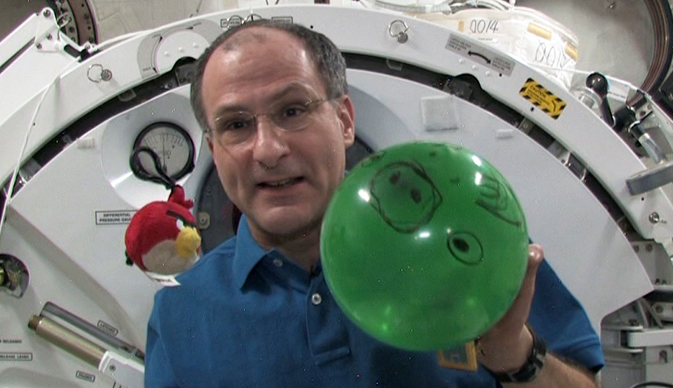
3 Images

Gameplay and mechanics
The central objective remains the same: launch birds with a slingshot to destroy all pigs on a level. The space theme changes how projectiles move and how players plan shots. Key mechanics include:
- Localized gravity wells around planetoids that bend trajectories and can capture birds into temporary orbits.
- Curved flight paths and transfer maneuvers that require anticipating changes in direction rather than aiming along straight lines.
- Levels composed of multiple small bodies and gaps that encourage multi-stage shots, ricochets and use of gravity assists.
Players set angle and force using a virtual slingshot control and choose between different bird types that retain recognizable traits adapted to the space setting. Many characters appear as stylized, wingless avatars to match the franchise's aesthetic while fitting new movement rules. A tutorial and visual cues help players learn the effects of gravity and plan orbital approaches.
Birds, abilities and power-ups
The game supplies a mix of familiar bird behaviors and new space-specific effects. Abilities that once produced straight-line destruction were adjusted to interact with curved flight, and some levels add temporary power-ups or environmental hazards (for example, zones that alter speed or destroy certain materials). The interplay of distinct bird abilities with gravity wells is a major source of puzzle variety.
Levels and visual design
Levels are typically arranged around small planets or asteroids so that structures wrap around convex surfaces and gravity is a local influence. Visual design balances cartoon style with clear readouts of gravitational boundaries and projected trajectories so players can predict or experiment without needing advanced physics knowledge. Background art and sound design draw on space motifs while keeping the game light and accessible.
Development, release and ports
Released as a major follow-up to the original mobile hit, the title first appeared on mobile platforms in 2012 and was subsequently adapted for other devices. Rovio redesigned collision geometry and physics routines to simulate attraction between objects and to render smooth curved paths. Marketing and documentation highlighted the novelty of gravity-centered puzzles; for technical or explanatory material see general references on gravity mechanics.
Reception and legacy
Critics and players praised the inventive reimagining of the series’ mechanics, noting how gravity wells expanded puzzle possibilities while retaining simple, accessible controls and the franchise’s trademark humor. Angry Birds Space demonstrated how altering a single underlying rule—the behavior of projectiles under gravity—can refresh a casual formula. It influenced later levels and spin-offs to experiment with environment-driven mechanics and remains a commonly cited example of adapting mobile gameplay to a new conceptual theme.
Tags
Related articles
Author
AlegsaOnline.com Angry Birds Space Leandro Alegsa
URL: https://en.alegsaonline.com/art/4225