
Animal Farm: George Orwell's Political Fable
A concise encyclopedia entry on George Orwell's Animal Farm: its plot, characters, allegorical meaning, historical context, reception and enduring themes.
Animal Farm is a short novel by George Orwell, first published in 1945 after being written during World War II. The work tells of a community of farm animals that stage a rebellion against their human owner in hopes of creating a fairer society. What begins as an experiment in equality gradually devolves into a new tyranny, and the narrative ends with the animals unable to distinguish their new rulers from the old.
Image gallery
7 Images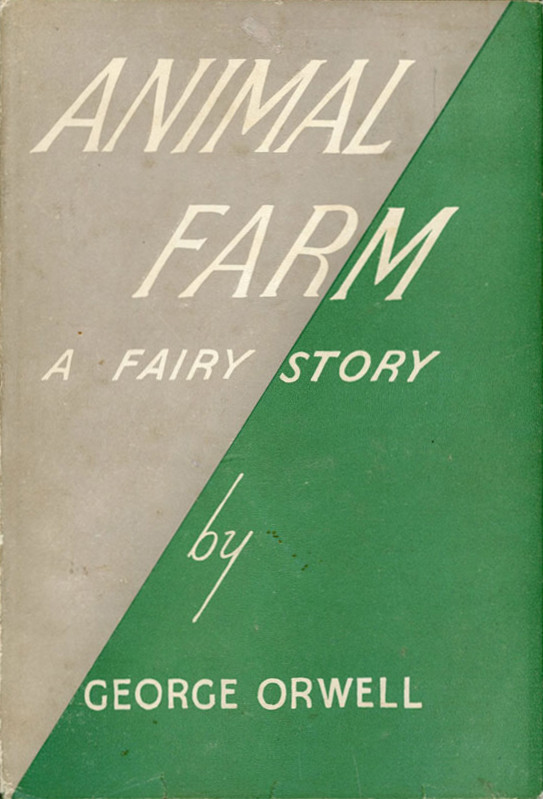




Overview
Presented in clear, economical prose, the book functions on two levels: a straightforward fable about animals and an extended political allegory. Orwell compresses complex historical developments into a brief, focused story that highlights how ideals can be undermined by power, propaganda and corruption. The tone mixes satire, tragedy and moral warning.
Structure and principal characters
The plot follows a modest arc: the rebellion, the adoption of guiding principles, internal disputes and the consolidation of authority. Central figures include:
- Old Major — an elder boar whose ideas inspire the initial uprising.
- Napoleon — a pig who becomes the dominant leader and represents the rise of a dictatorial elite.
- Snowball — an intelligent pig whose rivalry with Napoleon drives key events.
- Boxer — a hardworking cart-horse whose loyalty and strength become a tragic symbol of exploited labor.
Historical context and allegory
Orwell wrote the book as a pointed critique of twentieth-century totalitarianism. He drew broadly understood parallels between characters and events in the story and figures and moments in the history of the Soviet Union; readers commonly connect the narrative to Joseph Stalin and the Russian Revolution. Themes of manipulation, revision of principles and the betrayal of revolutionary hopes are foregrounded. The novel is often discussed in relation to other political events and used as a case study in how rhetoric and institutions can be used to centralize authority.
Reception and influence
Although it faced initial publishing obstacles, the book reached a wide audience and quickly became a bestseller. It remains one of Orwell's best-known works alongside Nineteen Eighty-Four. Over the years it has received notable recognition and awards, including a retrospective Hugo Award, and appears frequently on lists of significant twentieth-century novels. Critics and teachers continue to recommend it as an accessible introduction to political satire and to debates about power, truth and propaganda.
Themes, use and notable facts
Animal Farm is valued both as literature and as a pedagogical tool. Common themes include the corruptive influence of power, the malleability of language and history, class stratification and the tension between ideals and practice. The novel is often taught in schools, cited in political commentary and adapted into stage and screen versions. Its allegorical clarity makes it a durable reference when discussing how revolutions can be subverted and how popular slogans can be used to justify abuses.
For readers seeking further information, this entry touches the primary elements of plot and meaning without attempting exhaustive detail; many introductions and critical studies expand on the book's symbolism, publication history and varied interpretations across cultures. For an exploration of Orwell's life and other writings, see works that examine his journalism, essays and the relationship between his fiction and the political currents of his time.
Questions and answers
Q: Who is the author of Animal Farm?
A: The author of Animal Farm is George Orwell.
Q: When was Animal Farm written and published?
A: Animal Farm was written during World War II and published in 1945.
Q: What is Animal Farm about?
A: Animal Farm is about a group of farm animals who rebel against their farmer, hoping to create a place where the animals can be equal, free, and happy.
Q: What is the story of Animal Farm based on?
A: The story of Animal Farm is based on Joseph Stalin's betrayal of the Russian Revolution.
Q: Was Animal Farm a best-seller?
A: Yes, although rejected by several publishers, Animal Farm became a best-seller when it was published.
Q: What is Animal Farm considered?
A: Animal Farm is widely viewed as a classic and is one of Orwell's two best-known books (the other is Nineteen Eighty-Four).
Q: Has Animal Farm won any awards?
A: Yes, Animal Farm won a Retrospective Hugo Award in 1996 and is included in the Great Books of the Western World selection.
Related articles
Author
AlegsaOnline.com Animal Farm: George Orwell's Political Fable Leandro Alegsa
URL: https://en.alegsaonline.com/art/4267
Sources
- litencyc.com : "Literary Encyclopedia: Animal Farm"
- britannica.com : "Animal Farm (novel by Orwell) -- Britannica Online Encyclopedia"
- bbc.co.uk : "BBC - History - Historic Figures: George Orwell (1903 - 1950)"
- entertainment.time.com : entertainment.time.com/2005/10/16/all-time-100-novels/
- orwell.ru : "George Orwell: Preface to the Ukrainian Edition of 'Animal Farm: A Fairy Story'"
- netcharles.com : "Preface to the Ukrainian Edition of Animal Farm - Written by George Orwell - Charles' George Orwell Links"
- query.nytimes.com : "Ideas and Trends - Orwell's 2-Legged Message - NYTimes.com"
- shmoop.com : "The Fall of Mister Jones and the Russian Revolution of 1917"
- sparknotes.com : "SparkNotes " Literature Study Guides " Animal Farm " Chapter VIII"
- shmoop.com : "The Scheming Frederick and how Hitler Broke the Non-Aggression Pact"