
Guba–Khachmaz Economic Region
Northern Azerbaijani economic region between the Caspian Sea and the Greater Caucasus, known for diverse landscapes, horticulture, tourism and traditional crafts.
Overview
The Guba–Khachmaz economic region is one of the ten official economic regions of Azerbaijan. Located on the country’s northern flank, it stretches from the shoreline of the Caspian Sea up into the foothills and peaks of the Greater Caucasus. Because much of the region lies on the northern side of the main Caucasus ridge, it is commonly described as occupying a European-facing zone of Azerbaijan. The area combines coastal lowlands, river valleys and mountainous terrain, producing a variety of microclimates and land uses.
Image gallery
2 Images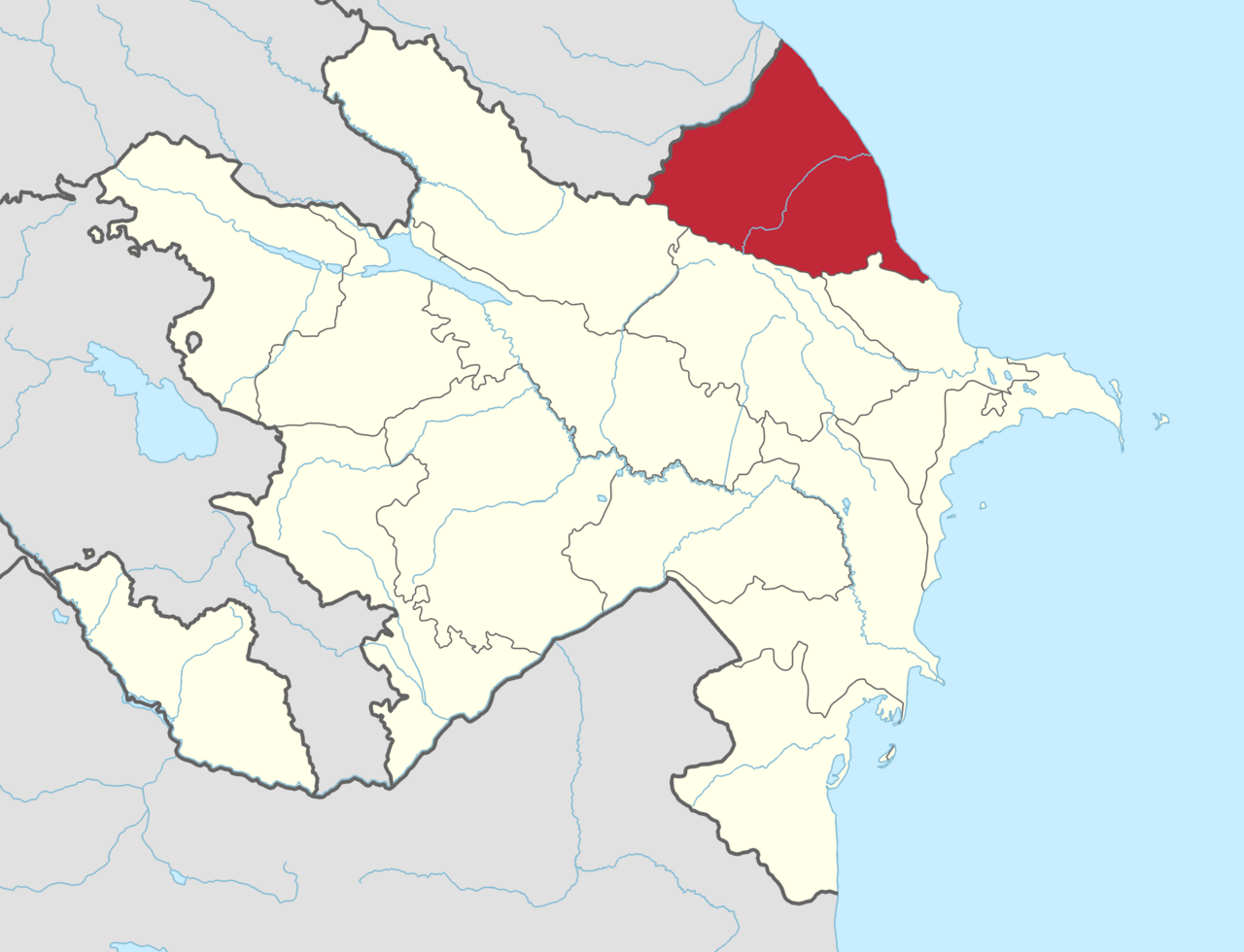

Geography and climate
The region’s geography ranges from sandy and muddy coastal strips to steep alpine slopes. Lowland sections along the sea and river plains have milder, more humid conditions that favour orchards and vegetable cultivation. Higher elevations show cooler temperatures, extensive pastures and seasonal snowfall. Rivers descending from the Greater Caucasus carve valleys used for transport corridors as well as irrigation.
Administrative divisions
These districts form the core of the economic region and host a mix of urban centres, agricultural villages and mountain communities.
Economy and uses
Agriculture is a major activity: the lowlands support fruit orchards, vegetables and greenhouse production, while upland areas are used for grazing. Coastal fisheries and small-scale processing industries are present along the Caspian shore. The region has developed a tourism sector based on coastal resorts, summer retreats in the foothills and winter sports facilities near mountain resorts. Traditional crafts—especially carpet weaving associated with Guba—remain culturally and economically significant.
History, culture and notable facts
The Guba–Khachmaz area has long been a crossroads for different peoples and cultures, reflected in its languages, architecture and festivals. One well-known local community is the Mountain Jewish settlement near Guba, a cultural landmark noted in guidebooks and histories. The region’s villages preserve traditional crafts and culinary specialties that attract cultural tourism. Its landscape and role as a link between coastal and mountain zones give it strategic importance for commerce and seasonal mobility.
Transport and development
Major road links and regional railways connect the area to Azerbaijan’s capital and to neighbouring regions, facilitating the movement of agricultural products and visitors. Development planning emphasises sustainable tourism, modernization of horticulture and improvement of infrastructure to balance economic growth with preservation of natural and cultural resources.
Questions and answers
Q: What is the Guba-Khachmaz economic region?
A: The Guba-Khachmaz economic region is one of ten regions of Azerbaijan, located between the Caspian Sea and the Greater Caucasus mountains.
Q: Where is the Guba-Khachmaz economic region located?
A: The Guba-Khachmaz economic region is located to the north of the Absheron Peninsula, technically in Europe.
Q: What are some of the administrative districts of the Guba-Khachmaz economic region?
A: Some of the administrative districts of the Guba-Khachmaz economic region include Shabran, Khachmaz, Guba, Gusar, and Siyazan.
Q: What is the significance of the Greater Caucasus mountains in relation to the Guba-Khachmaz economic region?
A: The Greater Caucasus mountains are a prominent geographical feature that border the Guba-Khachmaz economic region.
Q: What is the significance of the Caspian Sea in relation to the Guba-Khachmaz economic region?
A: The Caspian Sea is another prominent geographical feature that borders the Guba-Khachmaz economic region.
Q: Is the Guba-Khachmaz economic region in Europe or Asia?
A: The Guba-Khachmaz economic region is technically located in Europe.
Q: How many regions does Azerbaijan have?
A: Azerbaijan has ten regions, one of which is the Guba-Khachmaz economic region.
Related articles
Author
AlegsaOnline.com Guba–Khachmaz Economic Region Leandro Alegsa
URL: https://en.alegsaonline.com/art/41204
Sources
- books.google.com : Azərbaycan İqtisadiyyati
- britannica.com : "Azerbaijan | History, People, & Facts"
- economy.gov.az : "Quba-Xaçmaz iqtisadi rayonu 2017 - The Republic of Azerbaijan Ministry of Economy"