
Green pheasant (Phasianus versicolor)
A medium-sized, ground-dwelling bird endemic to Japan, noted for the male's iridescent green plumage and long tail. It is recognized as Japan's national bird and is commonly found near fields and woodlands.
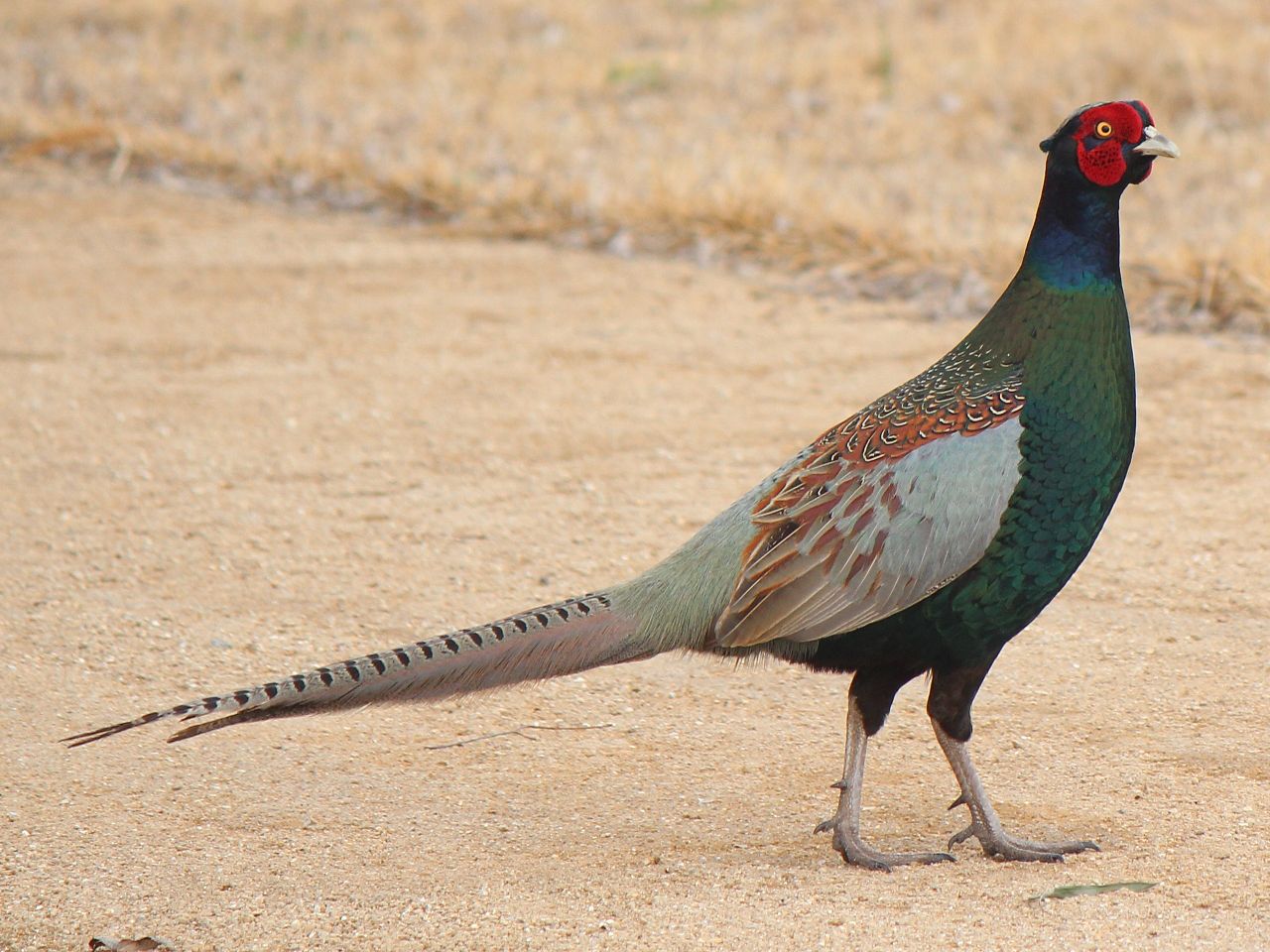
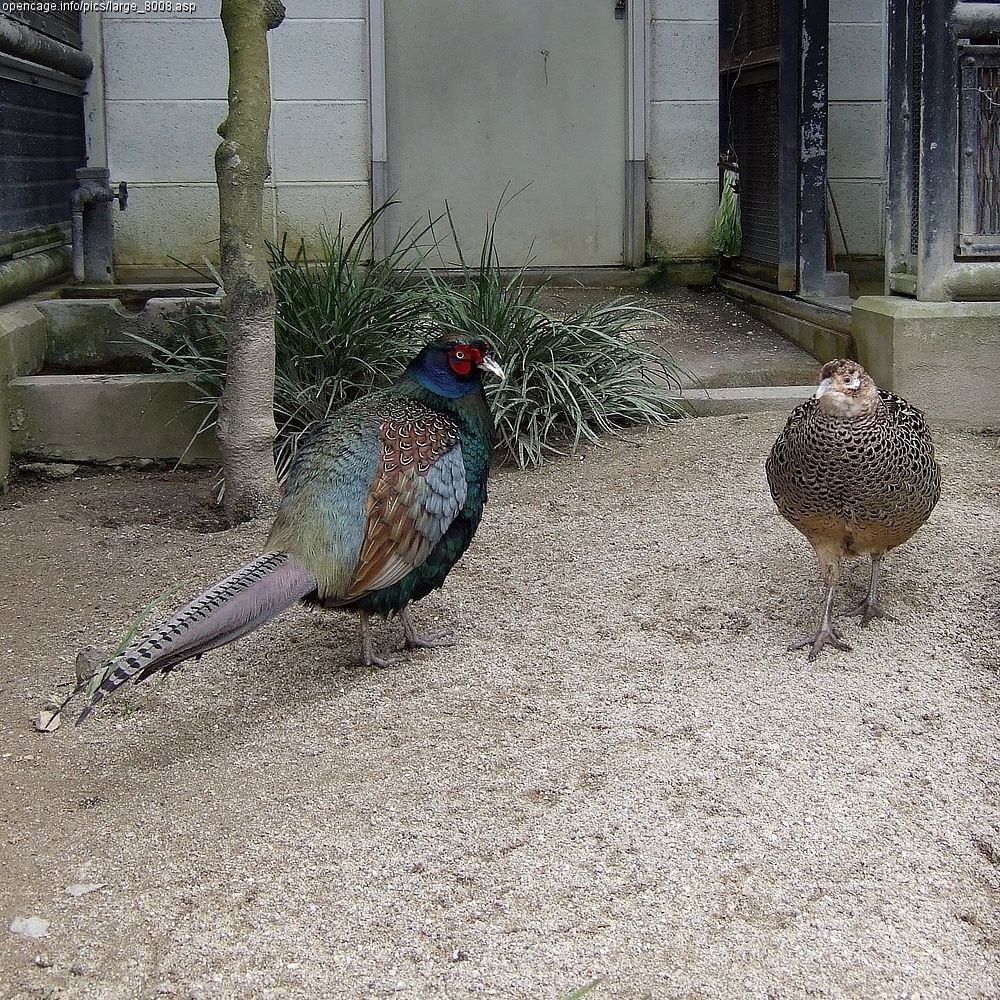
The green pheasant (Phasianus versicolor) is a gamebird native to the Japanese archipelago and is officially recognised as Japan's national bird. It belongs to the pheasant family (Phasianidae) and is best known for the male's iridescent green and bronze body, long tail, and red facial wattles. Females are cryptically coloured in mottled browns and buff tones, which helps conceal nests on the ground.
Image gallery
6 Images



Physical characteristics
- Males: Glossy green and bronze plumage, often with a pale collar or nape markings in some populations, bare red skin around the eyes, and a long, graduated tail.
- Females: Duller, mottled plumage for camouflage; shorter tails and less conspicuous facial skin.
- Flight and locomotion: Strong-legged, primarily terrestrial birds that run to escape danger and take short, explosive flights when startled.
Distribution, habitat and diet
Endemic to Japan, the green pheasant occupies farmland, grassland, scrub, hedgerows and edges of woodland across many of the main islands. It forages mainly on the ground for seeds, grains, berries and a variety of invertebrates, adjusting its diet seasonally. Birds are commonly seen at field margins, rice paddies and lowland countryside near human settlements.
Behaviour and reproduction
Green pheasants are generally polygynous, with males advertising by calling and performing displays to attract females during the breeding season. Nests are simple scrapes on the ground, lined with vegetation. The species is vocal, with loud crowing calls often heard at dawn and dusk. Family groups and loose coveys may form outside the breeding season.
Taxonomy, status and cultural importance
Taxonomically treated as Phasianus versicolor, the green pheasant has sometimes been regarded as closely related to or a subspecies of the common pheasant (Phasianus colchicus), but many authorities recognise it as distinct. It is widely distributed and established in its range; while not considered globally threatened, local populations can be affected by habitat change, hunting and agricultural practices. The species features in Japanese art, folklore and symbolism and is referenced in national iconography and nature guides. For further species information see species profile, for distribution and habitat details consult range and habitat resources, and for cultural references see national symbols.
Related articles
Author
AlegsaOnline.com Green pheasant (Phasianus versicolor) Leandro Alegsa
URL: https://en.alegsaonline.com/art/40697