
Gravity (2013 film)
Gravity is a 2013 British–American 3D space drama and science-fiction thriller directed by Alfonso Cuarón, noted for its technical achievements, visual effects, and award-winning cinematography.
Gravity is a 2013 British–American film that blends elements of space drama and science-fiction with tense thriller pacing. Released in 3D, the picture places emphasis on immersive visuals and extended single-shot sequences to convey the isolation and peril of orbital travel. The production drew international attention for both its technical ambition and its emotional focus on a small cast.
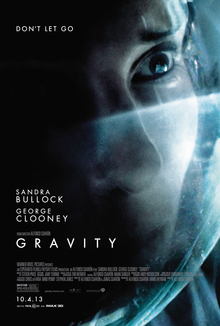
The story follows the aftermath of a catastrophic collision that destroys a space shuttle and strands two crew members in low Earth orbit. Dr. Ryan Stone, a medical engineer, must survive and find a way back to Earth while paired with veteran astronaut Matt Kowalski. The performances are anchored by Sandra Bullock and George Clooney, whose characters are portrayed as resilient but vulnerable astronauts coping with loss and the hostile environment created by high-speed orbital debris.
Direction and visual approach are central to the film's identity. Alfonso Cuarón, who also co-wrote, produced and edited the movie, engineered long continuous takes and tightly choreographed camera movements to create a sense of real-time danger and claustrophobia in open space. Key collaborators helped realize that vision: the film's cinematography, lighting and effects work combine practical rigs, motion-controlled camera systems and extensive computer-generated imagery to simulate weightlessness and spatial disorientation. Cuarón's role behind the camera drew significant attention from critics and filmmakers alike; his involvement is often cited as a major factor in the film's stylistic cohesion (Alfonso Cuarón).
On release, the movie earned widespread critical praise for its technical mastery and emotional intensity. It performed strongly at awards season, most notably at the 86th Academy Awards where it won multiple prizes including Best Director and several technical Oscars for cinematography, sound and visual effects. Reviewers highlighted the film's ability to balance blockbuster spectacle with human-scale drama, and its sound design and score were frequently singled out for enhancing the sensation of silence and danger in vacuum.
Image gallery
8 Images




Legacy and importance
Gravity is often referenced in discussions about modern filmmaking because it pushed the integration of live-action performance, digital environments and stereoscopic presentation. Film schools and special-effects studios study its methods for simulating microgravity and coordinating extended camera moves with actor performance. Its success helped renew mainstream interest in realistic portrayals of spaceflight and inspired subsequent projects to explore similar technical challenges.
Key aspects
- Direction: A unified creative vision emphasizing long takes and tight staging.
- Performance: Intense, intimate acting by a small principal cast (Bullock, Clooney).
- Cinematography: Award-winning approach to light, movement and depth perception in 3D.
- Visual effects & sound: Advanced CGI and sound design that convey both spectacle and silence.
- Genre: A cross between space drama and thriller with broad science-fiction elements (science fiction).
Though it tells a narrowly focused survival story, Gravity's influence extends beyond its plot: it is recognized as a technical milestone in how mainstream films can represent outer space while maintaining emotional immediacy. The production itself was an international collaboration, reflecting its status as both a British and American cinematic achievement.
Related articles
Author
AlegsaOnline.com Gravity (2013 film) Leandro Alegsa
URL: https://en.alegsaonline.com/art/40409