
Golden Valley County, North Dakota
Overview of Golden Valley County in western North Dakota — its geography, history, communities, economy, government and notable distinctions.
Golden Valley County is a rural county in the western portion of the state of North Dakota. According to the 2010 census, the county had 1,680 residents, making it one of the least populous counties in the state; the county seat and principal town is Beach. The county should not be confused with the city named Golden Valley in Mercer County, which is a separate place from the county itself and is sometimes a source of confusion with the county name Golden Valley.
Image gallery
5 Images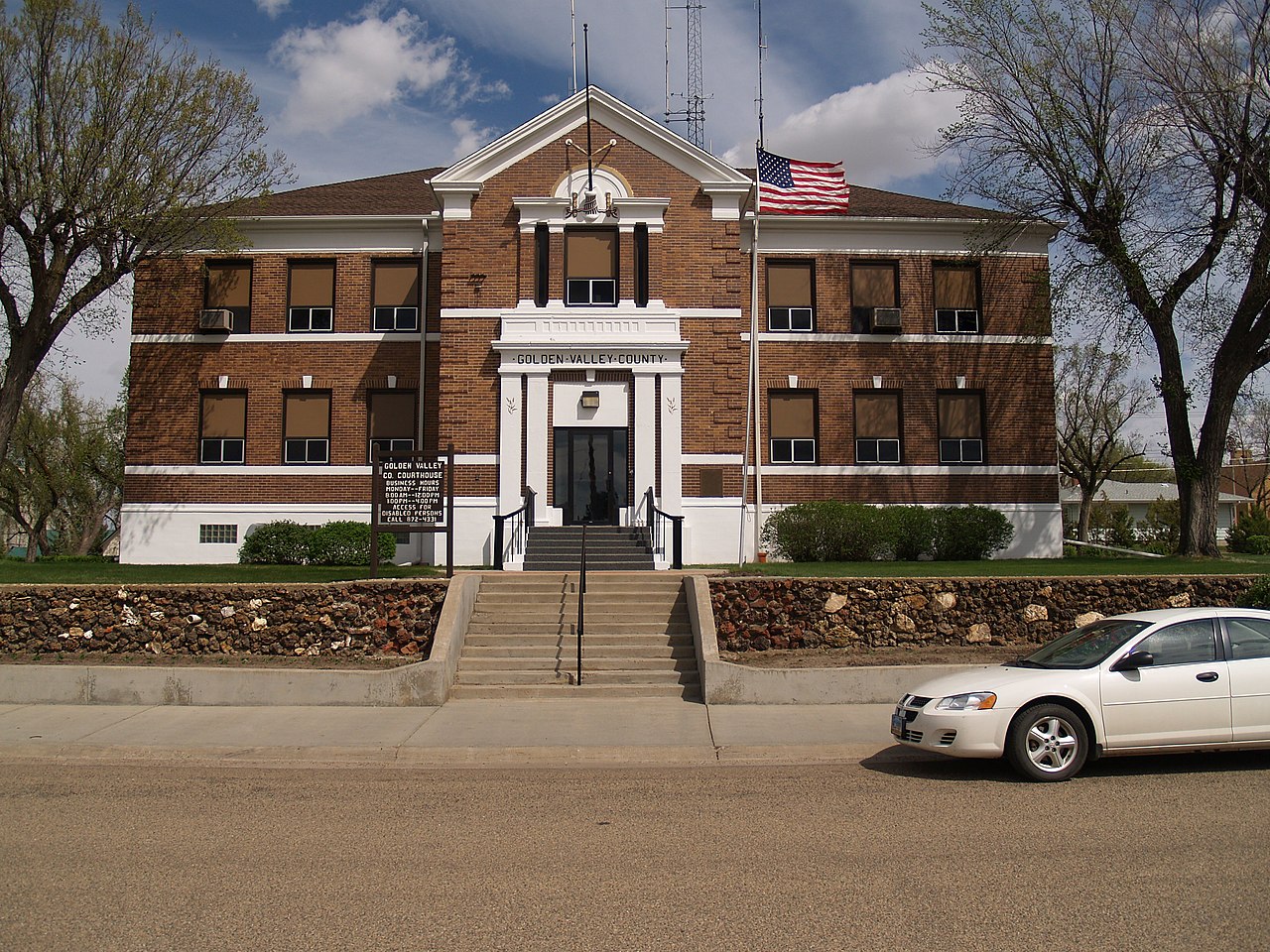


Geography and environment
The county lies near the Montana border and is typical of the northern Great Plains: mixed-grass prairie, rolling plains, intermittent badlands and broad horizons. The climate is continental, with cold winters and warm summers, and precipitation is relatively low. Soils and terrain favor cattle ranching, grazing and dryland farming rather than intensive irrigation agriculture. Much of the county is open land, with limited forest cover and scattered riparian corridors along seasonal streams.
History and settlement
Euro-American settlement increased in the late 19th and early 20th centuries as homesteaders and ranching operations established on the plains. Small service towns developed to support agriculture and transportation, and rail lines and highways helped concentrate population in a few centers. Like many rural counties on the Great Plains, Golden Valley County has experienced long-term population fluctuation tied to agricultural economics, mechanization and regional demographic trends.
Communities and population
Beach is the county seat and the primary center for local government, schools and commerce. Other small communities and census places include towns and unincorporated settlements that serve ranching districts and local residents. The county’s low population density means that school districts, health services and emergency response are organized to cover large geographic areas with relatively few people.
Economy and infrastructure
The local economy is dominated by agriculture: cattle ranching and dryland cultivation of hardy cereal crops are common. Small businesses in the towns provide retail, repair, medical and professional services. Transportation infrastructure emphasizes county roads, state highways and seasonal maintenance; long distances to major medical centers and freight hubs are typical challenges for residents and planners.
Government, services and education
County government manages roads, law enforcement, public records and local courts from the county seat. Public education is provided through consolidated rural school districts serving broad areas. Local government priorities commonly include maintaining rural infrastructure, supporting emergency services and promoting economic stability for ranching and small businesses.
Recreation and natural resources
Open landscapes offer opportunities for hunting, birding, scenic drives and other outdoor recreation. Prairie habitats support native grassland species and seasonal wildlife. Conservation efforts and land stewardship by private landowners contribute to maintaining habitat and supporting agricultural production.
Notable distinctions
Golden Valley County is notable for its sparse population, wide open terrain and agricultural heritage. Its small population and remote character reflect broader patterns of settlement on the northern Great Plains. Distinguishing the county from the separate municipal place named Golden Valley in Mercer County helps avoid confusion between the county and that city of similar name.
Related articles
Author
AlegsaOnline.com Golden Valley County, North Dakota Leandro Alegsa
URL: https://en.alegsaonline.com/art/39521
Sources
- historical-county.newberry.org : "Dakota Territory, South Dakota, and North Dakota: Individual County Chronologies"
- quickfacts.census.gov : "State & County QuickFacts"
- naco.org : "Find a County"