
André Breton — founder and principal theorist of Surrealism
French writer and poet André Breton (1896–1966) led the Surrealist movement, authored the 1924 Surrealist Manifesto, practiced automatic writing, opposed fascism, and influenced 20th‑century art and literature.
Overview
André Breton (1896–1966) was a French writer, poet and cultural organizer best known as a founder and the principal theorist of Surrealism. Trained in the period surrounding World War I, he brought together artists and writers around an avant‑garde program that sought to explore the unconscious, chance, and the dream state as sources of artistic creation. Breton remains associated with the movement’s emphasis on imagination over rational constraints and on techniques intended to bypass conscious control.
Image gallery
5 Images


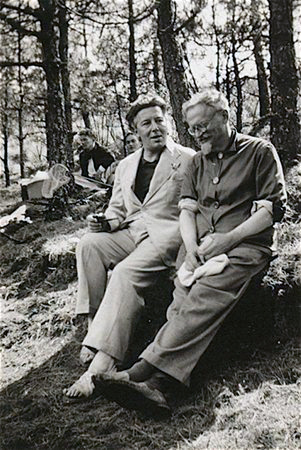
Principles and methods
Breton articulated Surrealism’s aims in the 1924 Surrealist Manifesto, defining the movement as “pure psychic automatism.” He advocated methods such as automatic writing, free association, dream analysis, and unexpected juxtapositions to let subconscious material surface. Surrealist practice valued collage, chance encounters, found objects, and the poetic juxtaposition of images as ways to disrupt ordinary perception.
History and influence
Breton played a central role in forming a network of collaborators that included poets and visual artists. Under his leadership the group published manifestos and journals, organized exhibitions, and debated the social and political role of art. He was outspoken in his opposition to authoritarian and reactionary movements, and his politics included an anti‑fascist orientation that informed later polemics and alliances. The Surrealists influenced painting, literature, cinema, and later artistic movements across Europe and the Americas.
Notable works and legacy
Beyond the manifestos, Breton’s major writings blend theory, poetry and narrative. Works often cited include collaborative experiments in automatic writing and the semi‑autobiographical novel "Nadja," which explores meeting a mysterious figure and the interplay of reality and dream. Breton’s insistence on the value of the unconscious shaped 20th‑century aesthetics and continues to be studied in art history, literary criticism and cultural theory.
Distinctive facts
- He moved Surrealism from a loose set of practices into an organized movement with journals and exhibitions.
- Breton both welcomed and expelled figures over ideological and aesthetic disagreements; his leadership was decisive and sometimes controversial.
- Surrealist techniques he championed—automatism, collage, dream imagery—remain influential in contemporary art and literature.
Related articles
Author
AlegsaOnline.com André Breton — founder and principal theorist of Surrealism Leandro Alegsa
URL: https://en.alegsaonline.com/art/3941
Sources
- books.google.com : Manifestoes of Surrealism