
Gibson SG: design, history, and influence of the solid-body electric guitar
The Gibson SG is a lightweight, double-cutaway solid-body electric guitar introduced in 1961. Known for its thin mahogany body, fast neck and use in rock music, it remains a core Gibson model with many variants.
Overview
The Gibson SG is a solid-body electric guitar first introduced by Gibson in the early 1960s. It is recognized for its aggressive double-cutaway shape, slim profile and tone associated with mahogany construction. The instrument rapidly found favor among rock and blues players and remains in production in multiple configurations. For general product information see Gibson SG.
Image gallery
10 Images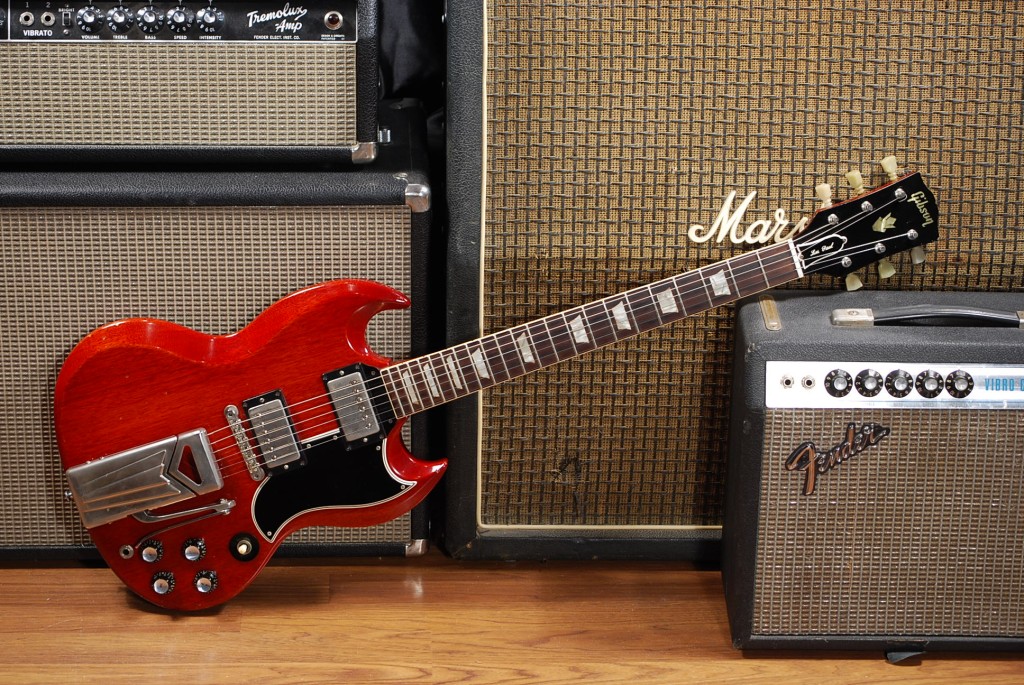




Design and characteristics
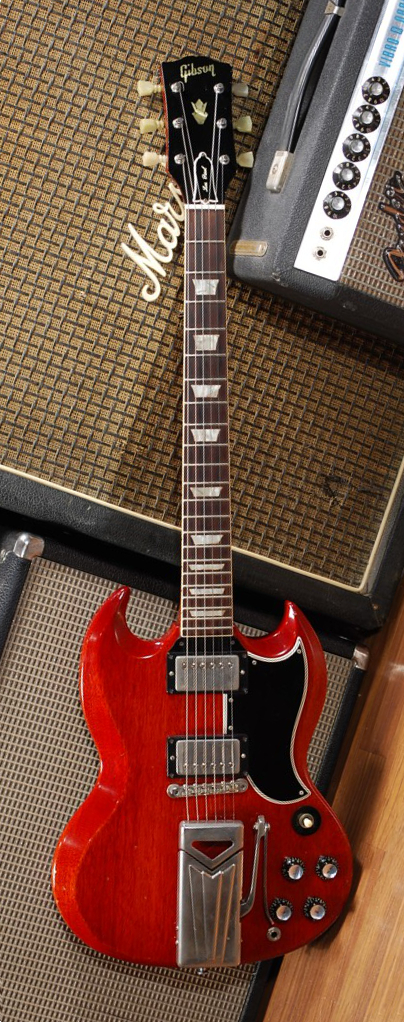
The SG's core features define its playing feel and sound. Typical elements include a thin, contoured mahogany body, a set neck (glued-in), two humbucking pickups or simpler single-coil arrangements on some models, and a Tune-O-Matic or wrap-around bridge. The deep cutaways give unusually easy access to high frets and the narrow neck profile contributes to quick fretting and soloing.
- Body: thin mahogany, usually without a maple cap
- Neck: set-in, often mahogany with rosewood or ebony fingerboard
- Pickups: commonly dual humbuckers; variations include P-90s or single coils
- Hardware: Tune-O-Matic or wrap-around bridge, stopbar tailpiece on many models
- Visuals: distinctive pointed horns and beveled edges; classic finishes include cherry red
History and development
The SG emerged from a redesign of Gibson's existing solid-body models in the early 1960s. Initially marketed in association with the Les Paul name, the new shape and lighter construction marked a clear departure from the thicker, single-cut Les Paul standard. Within a few years Gibson adopted the SG name to distinguish the line. Since then the SG has undergone many revisions and reissues, with both vintage-correct and modernized versions offered.
Models and notable variants
Gibson has produced a wide range of SG variants to suit different players and budgets. Common versions include the SG Standard, SG Special, SG Custom, SG Junior and simplified Melody Maker-style models. Reissue editions attempt to replicate historic specifications, while contemporary SGs may include modern electronics, different woods or alternative finishes.
Uses, tone and cultural impact
The SG's voice is often described as warm with strong midrange presence and clear upper harmonics; its lighter body makes it more comfortable for extended playing. These qualities helped the SG become a staple of rock, hard rock and heavy metal, though it is also used in blues and punk. Its silhouette and sound have made it one of Gibson's most recognizable and enduring designs.
Players and legacy
Many prominent guitarists have associated their sound and image with the SG, and those associations helped cement its status in popular music. Because of its distinctive playability and looks, the SG remains a common choice for players seeking a vintage-inspired instrument or a stage-ready rock guitar. Variations continue to appear as Gibson adapts the model for contemporary tastes while preserving the features that define the SG.
Related articles
Author
AlegsaOnline.com Gibson SG: design, history, and influence of the solid-body electric guitar Leandro Alegsa
URL: https://en.alegsaonline.com/art/38745