
Geysir: Iceland's iconic geothermal fountain
Geysir is a historic hot spring in Iceland's Haukadalur valley that gave its name to all geysers. Its eruptions are irregular; nearby Strokkur is more active and a major tourist draw.
Overview
Geysir, sometimes called the Great Geysir, is a large hot spring and geyser located in the Haukadalur valley of southwestern Iceland. It is one of the best known geothermal features in the world and lent its name to the English word "geyser." The site lies on the slopes of Laugarfjall and is part of a broader geothermal field that includes several hot springs and bubbling pools.
Image gallery
9 Images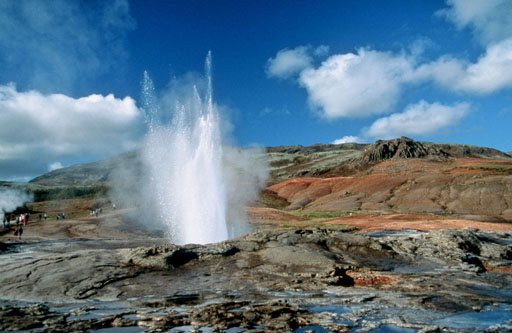




Geology and behavior
Geysir erupts when superheated groundwater flashes to steam, forcing a column of boiling water upward through a constricted conduit. Eruptions can reach heights up to around 60 metres at peak activity, but the feature is notoriously unpredictable. Periods of dormancy lasting years have been recorded, and the geyser's activity has changed in response to earthquakes, shifting underground channels, and human interventions.
History and name
The feature has been known for centuries and appears in early travel accounts and local lore. The Icelandic name "Geysir" derives from the verb gjósa, meaning "to gush." That name was adopted into English as the generic term for similar eruptive hot springs. Over time, travelers and scientists have monitored Geysir as an example of geothermal behavior and as a source of scientific vocabulary.
Tourism, research, and nearby features
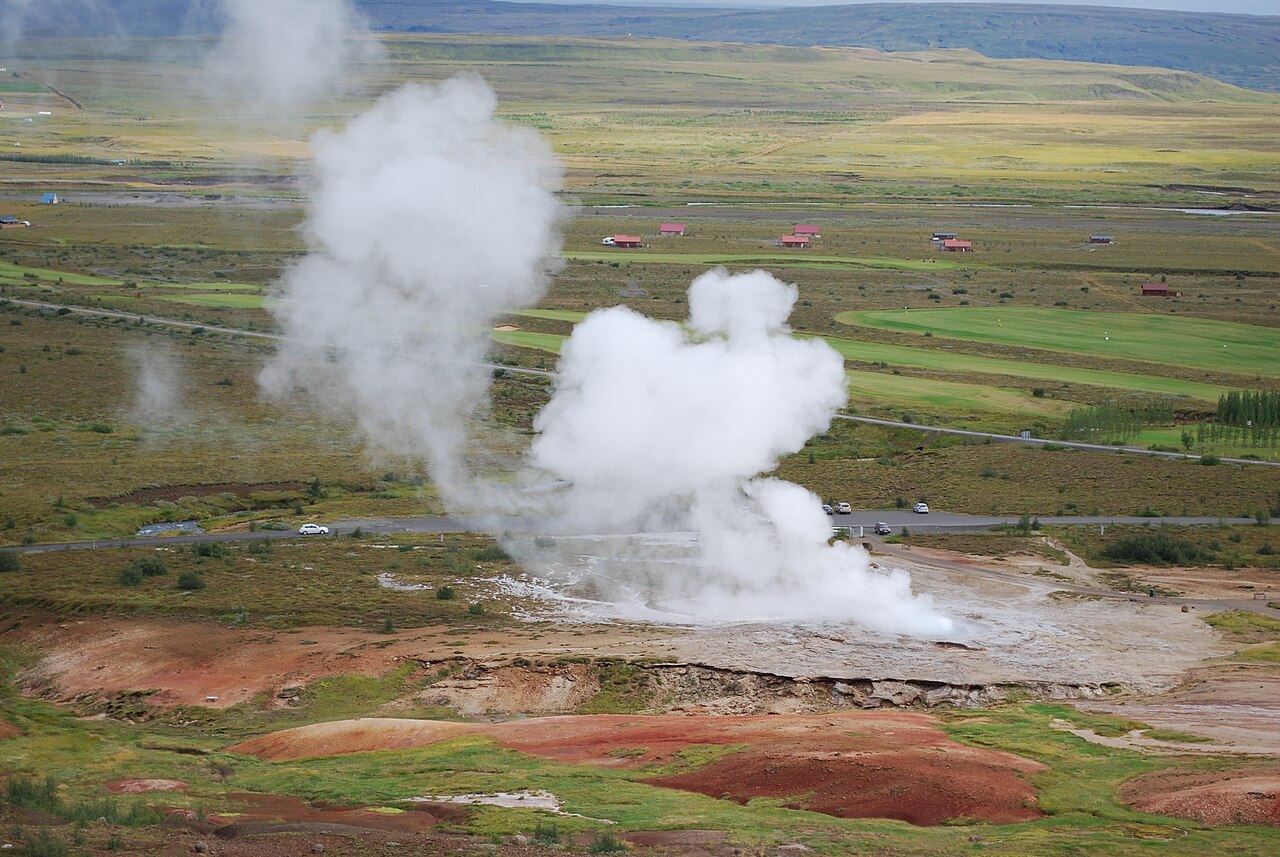
Geysir lies within a popular tourist area often visited as part of Iceland's Golden Circle route. Visitors also see nearby active geysers such as Strokkur, located roughly 400 metres to the south, which erupts far more regularly and is the more reliable spectacle for most tourists. Scientists study Geysir and its neighbours to learn about geothermal systems, hydrothermal chemistry, and the effects of seismic events on subterranean plumbing.
Notable facts and distinctions
- Geysir is regarded as one of the world's oldest recorded geysers and the etymological source of the word "geyser" (etymology).
- It is situated in Iceland's Haukadalur valley, a geothermal area accessible to visitors (Iceland).
- Activity has varied greatly: eruptions have been powerful but intermittent, and human and natural events have altered its pattern (geothermal features).
Practical notes
When visiting, follow boardwalks and posted safety instructions; hot springs and geysers can be hazardous. For a dependable display, many visitors watch Strokkur, while Geysir remains a key historical and geological landmark illustrating the dynamic nature of geothermal landscapes.
Related articles
Author
AlegsaOnline.com Geysir: Iceland's iconic geothermal fountain Leandro Alegsa
URL: https://en.alegsaonline.com/art/38607