
Gertrude Bell: Explorer, Archaeologist and Middle East Adviser
British archaeologist, traveller and diplomat whose exploration, scholarship and contacts shaped British policy and helped form the modern state of Iraq in the early 20th century.
Overview
Gertrude Bell (1868–1926) was a British writer, archaeologist, traveller and diplomatic adviser. She combined scholarly training with extended fieldwork across the Middle East and became one of the most visible British women involved in imperial administration and cultural preservation there. Her writings, maps and personal network made her a respected source of information for officials and scholars.
Image gallery
10 Images


Early life and education
Born into a well-to-do English family, Bell received a rigorous education that encouraged languages, history and independent study. After university she pursued interests in history and archaeology, preparing herself for long journeys that required linguistic skill, cultural knowledge and scholarly methods. Her academic background helped her publish observations that appealed to both popular and specialist readers.
Travels, archaeology and scholarship
Over several decades she travelled extensively in what is now the Middle East, combining survey work with archaeological investigation. Bell recorded inscriptions, sketched sites and compiled routes used by local communities. Her field notes and maps were valued for their level of detail, and she corresponded with museums and academic institutions about finds and conservation.
Political role and influence
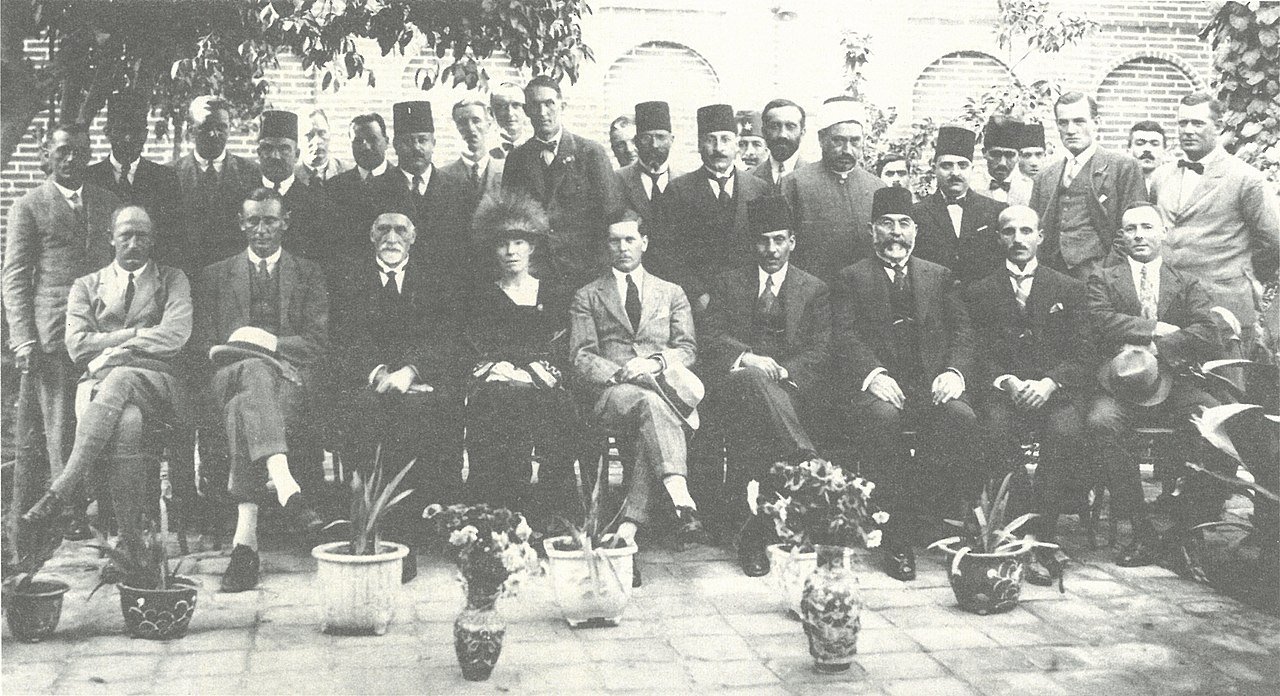
During and after the First World War Bell worked closely with British officials and military figures in the region. She advised on local politics and tribal relations and contributed to discussions about postwar administration. Her practical knowledge and relationships aided British decisions on governance; she is especially noted for her involvement in shaping the new Iraqi administration and for supporting the selection of a monarchy under British oversight. For many contemporaries her work bridged scholarly research and on-the-ground diplomacy.
Legacy, institutions and publications
Bell promoted the preservation of antiquities and institutions for local museums; her efforts helped establish collections and curatorial practices that later formed the core of national cultural repositories. She wrote travel books and articles that conveyed regional history and ethnography to a European audience. Her activities left a mixed legacy: admired for deep regional knowledge and criticized by some as part of imperial policy-making. Many modern scholars study her papers to understand both archaeological practice and colonial-era governance.
Key contributions and notable facts
- Fieldwork: extensive surveys, maps and site records in areas including Greater Syria and Mesopotamia.
- Cultural preservation: advocacy for museums and artifact conservation in the cities where she worked.
- Diplomacy: close advisory role in British decision-making about the region's postwar administration, often cited in discussions of British imperial policy.
- Writings: travel literature and reports that influenced public and official understanding of the region; she remains a frequent subject for biographers and historians of the era concerned with both cultural exchange and colonial power structures.
Her life and career are documented in contemporary correspondence and archives, which continue to be consulted by historians, archaeologists and policy scholars interested in the interactions of scholarship, travel and governance during a pivotal period in Middle Eastern history. For more biographical and contextual material see selected resources and archival guides linked here: biographical overview, collected papers, and regional studies at Middle East research centers.
Related articles
Author
AlegsaOnline.com Gertrude Bell: Explorer, Archaeologist and Middle East Adviser Leandro Alegsa
URL: https://en.alegsaonline.com/art/38535