
German idealism
Philosophical movement originating in late 18th–early 19th century Germany that emphasized the role of mind or spirit in shaping reality, developing from Kant and leading to Fichte, Schelling, and Hegel.
Overview
German idealism is a cluster of philosophical doctrines that emerged in late eighteenth‑ and early nineteenth‑century Germany. It grew out of a debate about the limits and conditions of human thought and knowledge. Proponents argued that the human mind plays an active role in structuring experience rather than simply registering a preexisting world. For a general introduction see philosophical movement accounts and histories tied to Germany.
Image gallery
10 Images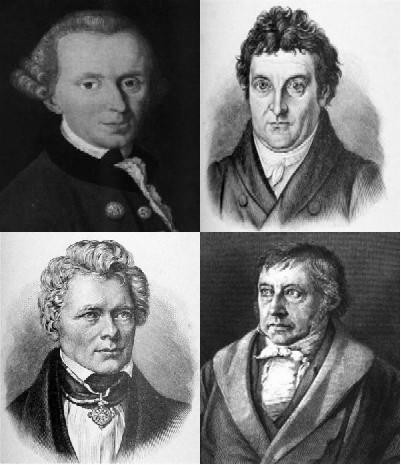


Core ideas
At the center of these views is a critique of naive realism and an insistence on the primacy of the subject or spirit. Immanuel Kant’s claim that the mind contributes necessary forms and categories to perception led to a position often labeled transcendental idealism. Later thinkers extended and transformed this idea into systems that stressed the absolute or holistic character of reality. Themes include the role of the mind, the conditions of knowledge, and the interpretive importance of experience.
Key figures and distinctions
Major figures usually associated with the movement are listed below. Their work marks different directions within idealism:
- Immanuel Kant, Johann Gottlieb Fichte, Friedrich Wilhelm Joseph Schelling, Georg Wilhelm Friedrich Hegel — Kant proposed limits on what we can know; Fichte emphasized the self‑positing activity of the ego; Schelling explored nature and identity philosophy; Hegel advanced a comprehensive dialectical system often called absolute idealism.
Historical context and development
The movement developed during the intellectual aftermath of the Enlightenment and in the political and cultural climate shaped by the French Revolution and its consequences. Thinkers reacted both to empiricism and to mechanistic accounts of nature, seeking philosophical systems that could account for freedom, moral agency, and historical change.
Influence and criticism
German idealism influenced aesthetics, political theory, theology, and later philosophical currents such as existentialism, Marxism, and phenomenology. Critics have accused aspects of idealism of obscurantism or of collapsing the distinction between thought and the world; defenders point to its resources for explaining meaning, normativity, and historical development.
Further notes
For accessible introductions and detailed treatments consult standard references and collections of texts (Enlightenment histories), editions of primary works, and contemporary scholarship available through academic guides and annotated translations (mind studies). Additional encyclopedia entries and bibliographies can be found via general overviews (knowledge resources), specialized surveys (experience studies), and compendia of authors (movement).
Related articles
Author
AlegsaOnline.com German idealism Leandro Alegsa
URL: https://en.alegsaonline.com/art/38456