
Gerhard Schröder — Chancellor of Germany (1998–2005)
German Social Democratic leader and chancellor from 1998 to 2005, architect of Agenda 2010 reforms, former Minister‑President of Lower Saxony, later active in the private sector and the subject of debate over Russia ties.

Overview
Gerhard Schröder (born 7 April 1944) is a German politician from the Social Democratic Party who served as Chancellor of Germany from 1998 until 2005. He led a centre‑left federal government in coalition with the Green Party and presided over major domestic reforms while also taking distinctive stances in foreign policy. His time in office and his post‑political career have made him a prominent and sometimes controversial public figure.
Image gallery
9 Images


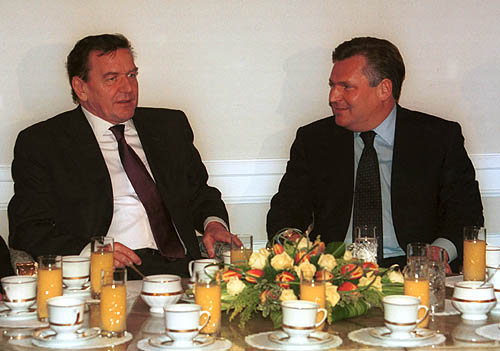
Early life and education
Schröder was born in the village of Mossenberg in the region of North Rhine‑Westphalia. After leaving school he completed an apprenticeship in retail and later gained his Abitur in Bielefeld. He went on to study law at the University of Göttingen and qualified to work as a lawyer. His early professional life combined legal work with growing activity inside the SPD.
Political career and offices
Schröder joined the SPD as a young man and rose through party ranks, including leadership roles in youth organisations. He entered regional politics in Lower Saxony and was elected Minister‑President of that state in 1990. In the 1998 federal election he led the SPD to victory and became Chancellor, heading a coalition government that lasted until 2005, when he was succeeded by Angela Merkel.
Major policies and legacy
As Chancellor, Schröder is best known for a set of labor‑market and welfare reforms commonly grouped under the name "Agenda 2010". These reforms aimed to reduce unemployment and modernise the social state by changing benefits, job placement rules and employment contracts. He also pursued pragmatic fiscal policy and supported European integration while opposing the 2003 invasion of Iraq, a stance that shaped Germany's international profile during his second term.
Notable actions and controversies
Key actions attributed to his government include:
- Introduction of comprehensive labor‑market reforms and welfare adjustments.
- A foreign policy that combined strong support for the European Union with a pragmatic approach to Russia and energy cooperation.
- Public debate over the social effects of reform and criticism from parts of his own party and labour movement.
Later life and assessment
After leaving office Schröder moved into the private sector and advised or accepted positions with firms involved in energy and international business, which provoked discussion about the relationship between former heads of government and commercial interests. Assessments of his record are mixed: supporters credit him with modernising Germany's economy and restoring competitiveness, while critics argue some reforms imposed social costs and that certain post‑government roles raised questions about judgment and independence.
Quick timeline
- 1963: Joined the SPD and became active in party youth work.
- 1990–1998: Minister‑President of Lower Saxony.
- 1998–2005: Chancellor of Germany, leading a coalition with the Greens.
- Post‑2005: Active in private sector and international advisory roles, remaining a public figure of note.
For further reading on his government and policies, consult accessible biographies and contemporary analyses of late 20th‑ and early 21st‑century German politics via reputable sources. Detailed archival material and primary documents provide deeper insight into specific laws and diplomatic events from his tenure.
Related articles
Author
AlegsaOnline.com Gerhard Schröder — Chancellor of Germany (1998–2005) Leandro Alegsa
URL: https://en.alegsaonline.com/art/38433