
George's Secret Key to the Universe
A 2007 children's science-adventure by Stephen Hawking, Lucy Hawking and Christophe Galfard that combines fiction with clear explanations of cosmology and basic physics for middle-grade readers.
George's Secret Key to the Universe is a children's science-adventure book first published in 2007 and coauthored by physicist Stephen Hawking, his daughter Lucy Hawking and Christophe Galfard. Written for middle-grade readers, the book pairs an imaginative narrative about a curious young protagonist with accessible explanations of cosmology and fundamental physics. Its aim is to introduce big scientific ideas to children while keeping the tone entertaining and age-appropriate.
Image gallery
2 Images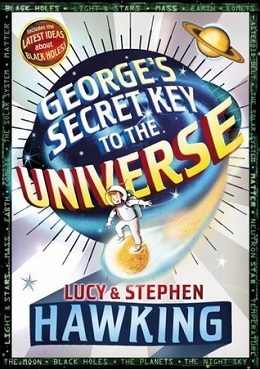

Overview
The story follows a young boy named George who becomes involved in an extraordinary series of events that lead him to explore space and learn about the universe. Rather than a purely factual textbook, the book blends adventure with short, non-fictional passages that explain topics such as the solar system, stars, black holes and the Big Bang in plain language. The combination helps readers encounter scientific concepts in context and encourages curiosity about how the universe works.
Structure and themes
The book alternates between chapters of fiction and explanatory sections that clarify the ideas raised by the plot. Themes include scientific wonder, the process of asking questions, and the role of observation and imagination in learning. The authors deliberately avoid heavy mathematics, focusing instead on visual metaphors and everyday analogies to make complex subjects approachable for young readers.
Educational approach
George's Secret Key is designed to make science accessible without oversimplifying key ideas. It illustrates basic principles of gravity, light, time and space and places those ideas inside a narrative framework to sustain attention. Teachers and parents have used it as an entry point for discussion about astronomy and physics, and the book encourages readers to follow up with hands-on activities and broader reading.
Sequels and legacy
The original book launched a small series that extended the cast and scientific topics:
- George's Cosmic Treasure Hunt (2009)
- George and the Big Bang (2010)
- George and the Unbreakable Code (2014)
Notable facts
The book credits its three authors for combining scientific expertise, narrative craft and a desire to reach a youthful audience. Readers seeking more background on the science can follow up with general astronomy and physics resources; the book itself provides signposts and simple explanations rather than exhaustive treatments. For further information about the authors and their work, see Stephen Hawking, introductory material on the universe and basic treatments of the laws of physics.
Related articles
Author
AlegsaOnline.com George's Secret Key to the Universe Leandro Alegsa
URL: https://en.alegsaonline.com/art/38323
Sources
- independent.co.uk : "George's Secret Key to the Universe, by Lucy and Stephen Hawking"
- worldcat.org : 0951-9467
- worldcat.org : 185201487