
Stephen Hawking (1942–2018) — theoretical physicist and popular science author
British theoretical physicist and mathematician known for work on black holes, cosmology, singularities, and bestselling popular science books; lived with motor neurone disease and used a speech synthesizer.
Overview
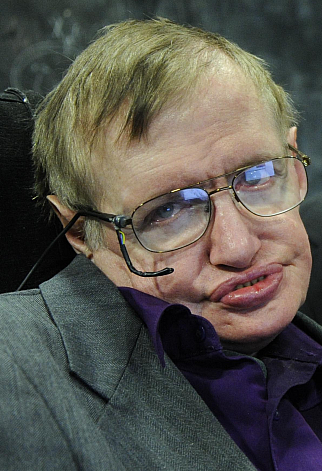
Stephen William Hawking (8 January 1942 – 14 March 2018) was a British theoretical physicist and mathematician who made major contributions to cosmology and the study of black holes. He combined rigorous mathematical work with efforts to explain complex scientific ideas to the public through books and lectures. Hawking served as the Lucasian Professor of Mathematics at the University of Cambridge, a chair once held by Isaac Newton, and he remained a prominent scientific figure worldwide.
Image gallery
10 Images



Scientific work and ideas
Hawking is best known for theoretical results about singularities and black holes. In collaboration with Roger Penrose he helped show how general relativity predicts singularities under certain conditions. He proposed that black holes can emit radiation—now called Hawking radiation—through quantum effects near the event horizon, a prediction that links quantum theory, thermodynamics, and gravity. His work influenced research on the early universe, information in black holes, and attempts to reconcile quantum mechanics with general relativity.
Life, education, and health
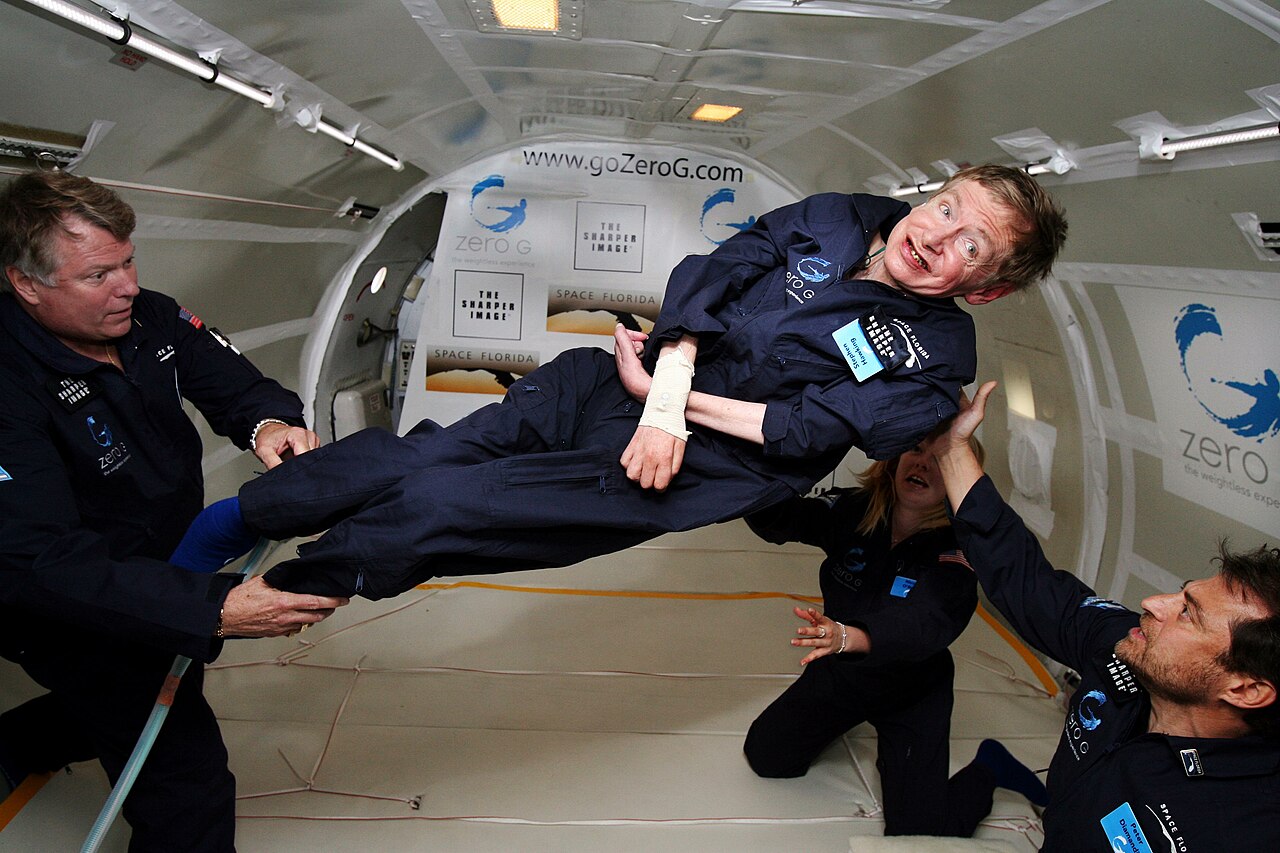
Born in Oxford and raised in England, Hawking studied physics and cosmology, earning recognition for his doctoral work. In his early twenties he was diagnosed with a motor neurone disease (amyotrophic lateral sclerosis), which slowly paralyzed him over decades. Despite progressive disability and near-total paralysis, he continued research, giving lectures and supervising students. He used a wheelchair and communicated through a computer-based speech system later adapted and supported by technology partners.
Public outreach and publications
Hawking wrote several books aimed at non-specialists. His best-known work, A Brief History of Time, became an international bestseller and introduced many readers to concepts such as the Big Bang, black holes, and the search for a unified theory. He also produced works that explored scientific ideas in accessible language and participated in documentaries, public talks, and cultural appearances that raised the public profile of cosmology.
Honors, distinctions, and legacy
Hawking received numerous awards and honors recognizing his scientific contributions and public engagement. Beyond specific medals and fellowships, his career became notable for bridging technical research and popular science communication. He inspired scientists and non-scientists alike, and his name is widely associated with efforts to understand the origin and fate of the universe.
Further reading and resources
- Biography and background
- Research overview
- Mathematical contributions
- Early life and education
- Childhood and family
- Home county and upbringing
- Popular books and media
- Academic positions held
- Mathematics profile
- University affiliation
- Connection to Isaac Newton
- Health and diagnosis
- Learning differences and education
- Accessibility and mobility
- Assistive technologies
- Technology partners
- Computing and communication systems
Note: This article summarizes broadly known aspects of Hawking's life and work. For detailed scientific papers and primary sources, consult academic publications and institutional archives.
Questions and answers
Q: When was Stephen Hawking born?
A: Stephen Hawking was born on 8 January 1942.
Q: Where did he move to in 1950?
A: In 1950, Stephen Hawking moved to St Albans, Hertfordshire.
Q: What position did he hold at the University of Cambridge?
A: Stephen Hawking held the position of professor of mathematics at the University of Cambridge.
Q: What illness did he have that affected his ability to move and talk?
A: Stephen Hawking had a motor neurone disease related to his dyslexia which worsened over time and eventually left him almost completely paralysed.
Q: How did he communicate when he could no longer speak or move well?
A: To communicate, Stephen Hawking used a wheelchair for mobility and an Intel computer to talk for him.
Q: What books has he written?
A: Stephen Hawking wrote many science books for people who are not scientists.
Q: When did he retire from the University of Cambridge?
A: Stephen Hawking retired from the University of Cambridge on 1 October 2009.
Author
AlegsaOnline.com Stephen Hawking (1942–2018) — theoretical physicist and popular science author Leandro Alegsa
URL: https://en.alegsaonline.com/art/131227