
Anatoly Gromyko: Soviet-Russian Diplomat and Scholar of American and African Affairs
Anatoly A. Gromyko (1932–2017) was a Soviet and Russian diplomat, academic and member of the Russian Academy of Sciences known for his work on US policy, African studies and international relations.
Overview
Anatoly Andreyevich Gromyko (15 April 1932 – 25 September 2017) was a prominent Soviet and Russian figure who combined careers in diplomacy and academic research. Born in Barysaw in the then Soviet Union, he became known for his expertise in American studies, African affairs and broader international relations. He served in diplomatic posts abroad while also holding senior roles in research institutes of the Russian Academy of Sciences and participating in cultural life as a member of the Union of Russian Artists. The Russian form of his name and spelling is available here, and his place of birth is recorded here.
Image gallery
1 Image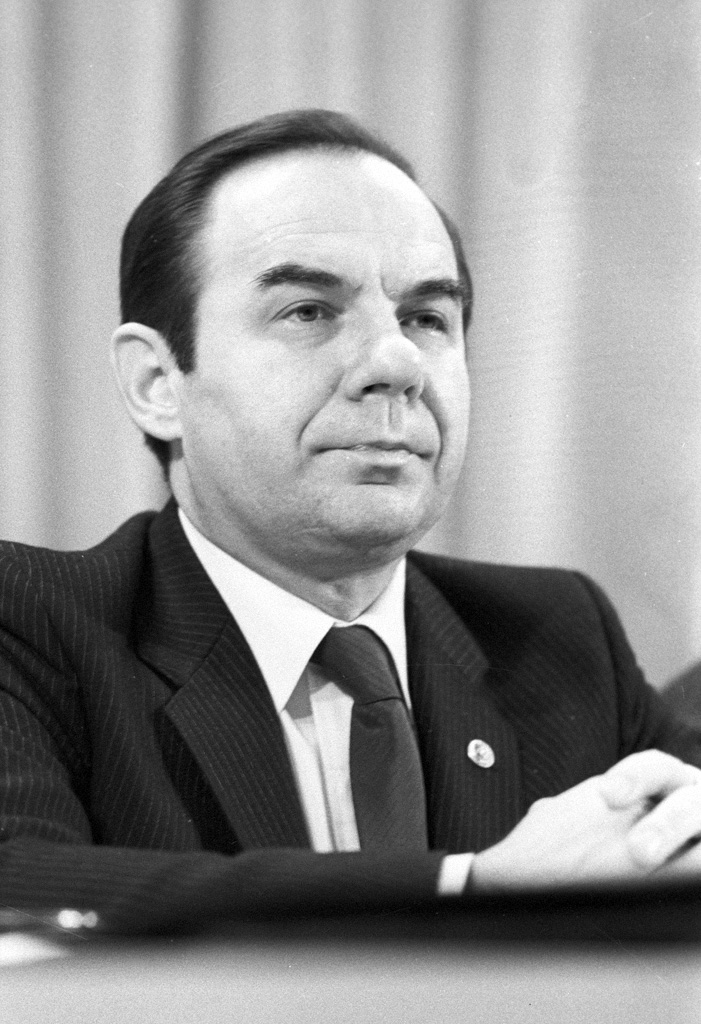
Career and positions
Gromyko's career alternated between service in the Soviet diplomatic corps and leadership in academic institutions. His work is often cited as an example of the close ties between area studies and foreign policy-making in the Soviet period. He served at foreign missions and held research posts, including senior appointments at institutes associated with the Russian Academy of Sciences (Russian Academy of Sciences).
- Early 1960s: posted to the Soviet Embassy in the United Kingdom (Soviet Embassy to the United Kingdom), where he worked on political reporting and bilateral questions.
- 1973–1974: deputy ambassador in the United States (Soviet deputy ambassador in the United States), a period that required close engagement with Cold War diplomacy.
- 1974–1975: deputy ambassador in East Germany (Soviet deputy ambassador in East Germany), a posting linked to Soviet relations with its Warsaw Pact ally.
- Between and after those diplomatic postings he led divisions of the Institute for African Studies and the Institute for US and Canadian Studies within the Academy of Sciences.
Research and contributions
Gromyko combined empirical research with practical experience. As a scholar of American and African politics he explored topics that were strategically important to Soviet foreign policy during the Cold War, including US foreign policy, transatlantic relations and the political development of newly independent African states. His writings, lectures and supervised studies contributed to training a generation of Soviet and later Russian specialists in area studies. In institutional terms, his leadership roles helped shape the research agendas of the institutes where he worked and strengthened connections between scholarship and diplomatic practice.
Background and context
Belonging to a well-known diplomatic family — his father, Andrei Gromyko, was a leading Soviet diplomat and foreign minister — Anatoly Gromyko's life illustrates the overlapping worlds of policy, scholarship and public service in the Soviet period. The combination of embassy service, research leadership and membership in the Russian Academy of Sciences positioned him to influence both analysis and implementation of foreign policy ideas. He was also an active participant in cultural circles, as indicated by his membership in the Union of Russian Artists.
Legacy and notable facts
Gromyko is remembered as a bridge figure between diplomacy and academia: a practitioner who drew on scholarly methods and a scholar who had direct experience of high-level international negotiations. His career spanned critical decades of Cold War history and the transition of Soviet institutions into the Russian Federation era. He left a body of published work, institutional reforms and students that continued to inform Russian studies of the United States and Africa after his death in 2017. For further biographical and institutional references see the linked records above.
Related articles
Author
AlegsaOnline.com Anatoly Gromyko: Soviet-Russian Diplomat and Scholar of American and African Affairs Leandro Alegsa
URL: https://en.alegsaonline.com/art/3803