
Fujiwara-kyō: Early Imperial Capital of Japan (694–710)
Fujiwara-kyō was Japan's imperial capital from 694 to 710 in present-day Kashihara, Nara. It was an early planned capital influenced by Chinese models and is important for archaeology and the formation of the ritsuryō state.
Overview
Fujiwara-kyō served as the seat of the Japanese court between 694 and 710. It was established under the rule of Empress Jitō and located in historical Yamato Province, the political heartland of early Japan. Today the site lies within modern Kashihara in Nara Prefecture. During its short life the city functioned as an administrative and ceremonial center while Japanese institutions were being reorganized along the lines of the emerging ritsuryō state.
Image gallery
10 Images




Layout and characteristics
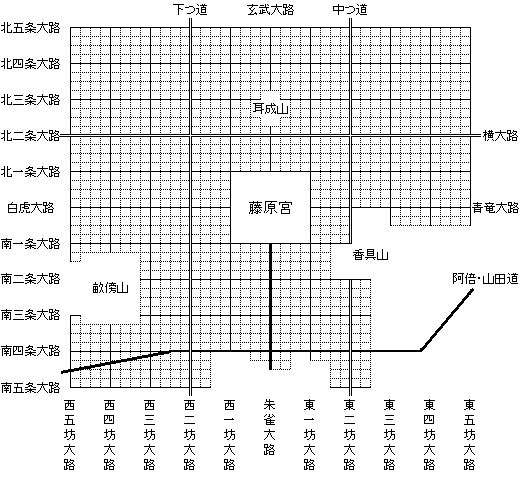
The plan of Fujiwara-kyō reflected a deliberate attempt to adopt continental urban models. The city was arranged on a rectilinear grid with a clearly defined palace precinct near the center. Buildings were primarily timber constructions on raised foundations, and the complex included formal gates, wide avenues and areas for government offices and ritual ceremonies.
- Grid-like street plan inspired by Tang Chinese capitals
- Central palace compound and administrative zones
- Wooden architecture with stone or earthen foundations
History and significance
Fujiwara-kyō marks an important phase in Japan’s transition from movable court sites to more permanent capitals. Its foundation is associated with efforts to centralize rule and to import governmental models, law codes and court practices from continental Asia. In 710 the capital moved to the newly established Heijō-kyō (Nara), and Fujiwara-kyō ceased to be the imperial seat.
Archaeology and modern legacy
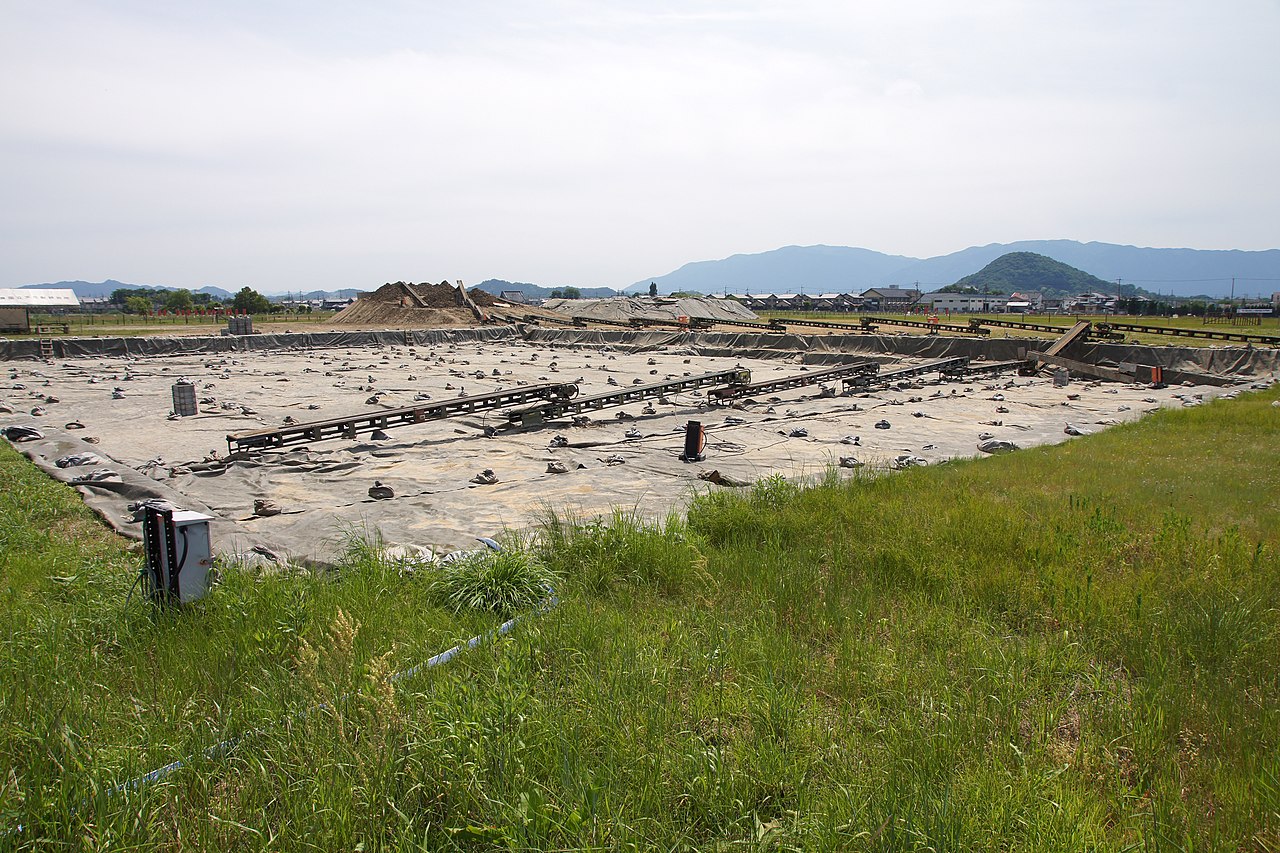
Excavations of the site in the 20th and 21st centuries have uncovered palace foundations, road traces and artifacts that illuminate urban planning and court life in the late seventh and early eighth centuries. These finds help historians trace the development of early Japanese governance and architecture and provide context for later capitals.
Notable distinctions
Although short-lived, Fujiwara-kyō is often cited as the first large-scale, planned capital in Japan, predating the long-standing Nara capital. For an introduction to its role among early Japanese capitals see studies of the imperial capital system and regional archaeology.
Related articles
Author
AlegsaOnline.com Fujiwara-kyō: Early Imperial Capital of Japan (694–710) Leandro Alegsa
URL: https://en.alegsaonline.com/art/36925
Sources
- books.google.com : "Fujiwara-kyō"