
Fukushima Daiichi Nuclear Power Plant
Japanese nuclear power plant in Ōkuma, operated by TEPCO, best known for the 2011 accident that caused reactor meltdowns, extensive contamination, and a long-term decommissioning and remediation program.
Overview
The Fukushima Daiichi Nuclear Power Plant (often called Fukushima I) is a thermal nuclear generating complex located near the town of Ōkuma in Fukushima Prefecture, Japan. It was built and has been operated by Tokyo Electric Power Company (TEPCO). The site contained multiple boiling water reactors commissioned in the 1970s and 1980s and supplied electricity to the regional grid until operations were suspended after 2011.
Image gallery
10 Images


Design and main components
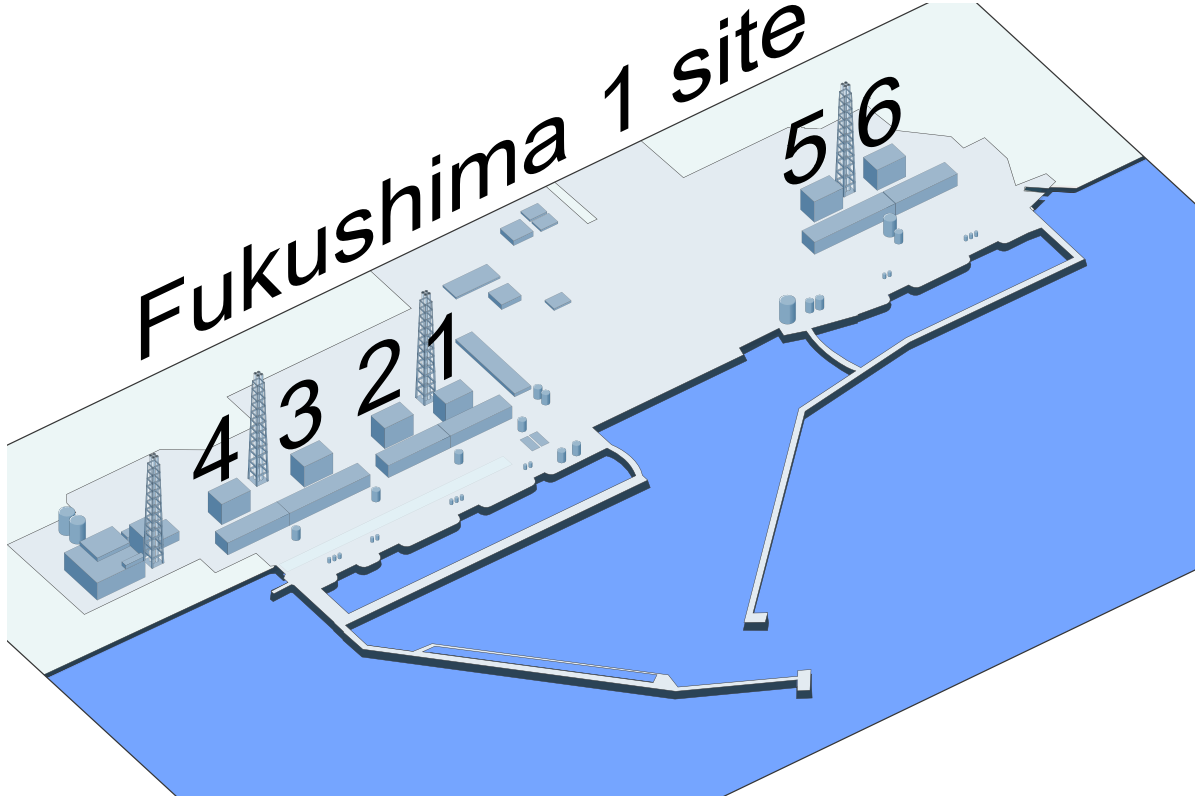
The plant comprised several separate reactor units, each with its own reactor building, containment structures, and systems for cooling, power supply and spent fuel storage. Like many commercial sites of its era, Fukushima Daiichi used boiling water reactor technology and maintained pools for spent fuel assemblies adjacent to each reactor. Redundant electrical and core-cooling systems were part of the original safety design.
2011 accident and immediate aftermath
In March 2011 a massive earthquake and subsequent tsunami severely damaged coastal infrastructure and disabled key onsite power and cooling systems. The resulting failures led to loss of adequate cooling in several reactors; three units experienced core meltdowns and reactor buildings were damaged, in part by hydrogen explosions. The series of events and releases of radioactive material are collectively referred to as the Fukushima nuclear disaster. Authorities ordered evacuations of nearby communities and emergency response focused on stabilizing reactors, limiting offsite contamination, and protecting public health.
Long-term cleanup and remediation
Stabilizing the site and decommissioning the reactors has been a multi-decade undertaking involving fuel removal from spent fuel pools, management of contaminated water, containment and cleanup of radioactivity, and extensive monitoring. Plans for controlled treatment and discharge of processed water, removal of melted fuel debris and dismantling of reactor structures are complex and proceed with national and international oversight. The operator and government agencies continue programs for environmental remediation, compensation for displaced residents, and rebuilding affected communities.
Impact on policy and safety
The accident prompted a major reassessment of nuclear safety, regulatory oversight and emergency preparedness in Japan and internationally. It led to shutdowns and reviews of other nuclear plants, changes in design requirements (especially for tsunami and station blackout scenarios), and influenced energy policy debates. International bodies and analysts reassessed forecasts for nuclear expansion; for example, the International Energy Agency revised its projections in the years after the accident.
Notable facts and distinctions
- Fukushima Daiichi became the focus of one of the most serious civil nuclear accidents and prompted wide-ranging public and technical responses.
- The site remains under long-term decommissioning and monitoring, with activities conducted by TEPCO and national authorities.
- The plant's experience has influenced international reactor safety standards, emergency planning and public policy discussions about the role of nuclear power in energy systems.
Questions and answers
Q: What is Fukushima Daiichi Nuclear Power Plant?
A: Fukushima Daiichi Nuclear Power Plant is a nuclear power plant located in the town of Ōkuma in Fukushima Prefecture, Japan.
Q: Who operated Fukushima Daiichi Nuclear Power Plant?
A: Tokyo Electric Power Company (TEPCO) was the only company that built and operated Fukushima Daiichi Nuclear Power Plant.
Q: What happened in March 2011 at Fukushima Daiichi Nuclear Power Plant?
A: There were nuclear emergencies at Fukushima Daiichi Nuclear Power Plant and some other nuclear facilities in Japan in March 2011.
Q: What impact did the nuclear emergencies at Fukushima Daiichi have on the future of nuclear power?
A: The nuclear emergencies at Fukushima Daiichi and other Japanese nuclear facilities led to questions about the future of nuclear power.
Q: What was the response of the International Energy Agency to the Fukushima nuclear disaster?
A: Following the Fukushima nuclear disaster, the International Energy Agency halved its estimate of additional nuclear generating capacity to be built by 2035.
Q: When was Fukushima Daiichi Nuclear Power Plant built?
A: Fukushima Daiichi Nuclear Power Plant was the first nuclear power plant to be built and run only by TEPCO.
Q: Where is Fukushima Daiichi Nuclear Power Plant located?
A: Fukushima Daiichi Nuclear Power Plant is located in the town of Ōkuma in Fukushima Prefecture, Japan.
Related articles
Author
AlegsaOnline.com Fukushima Daiichi Nuclear Power Plant Leandro Alegsa
URL: https://en.alegsaonline.com/art/36940
Sources
- bloomberg.com : Nuclear Renaissance Threatened as Japan’s Reactor Struggles · webcitation.org
- reuters.com : Analysis: Nuclear renaissance could fizzle after Japan quake · webcitation.org
- reuters.com : Japan nuclear woes cast shadow over U.S. energy policy
- marketwatch.com : Nuclear winter? Quake casts new shadow on reactors · webcitation.org
- channel4.com : Will China's nuclear nerves fuel a boom in green energy?
- economist.com : "Gauging the pressure" · webcitation.org
- nuctrans.org : "Nuclear Reactor Maps: Fukushima-Daiichi"
- nuclearstreet.com : "Fukushima to Restart Using MOX Fuel for First Time"
- world-nuclear-news.org : "Third Japanese reactor to load MOX"
- books.google.com : An Investigation of the Miyagi-ken-oki, Japan, earthquake of June 12, 1978
- icjt.org : "Nuke database system: fukushima daiichi-1"