
Empress Jitō — Reign and legacy of Japan's 41st sovereign
Empress Jitō (645–702) ruled Japan from 686 to 697. She secured imperial succession after Emperor Tenmu, promoted centralizing reforms and legal measures, and is one of the earliest female monarchs in Japanese tradition.
Overview
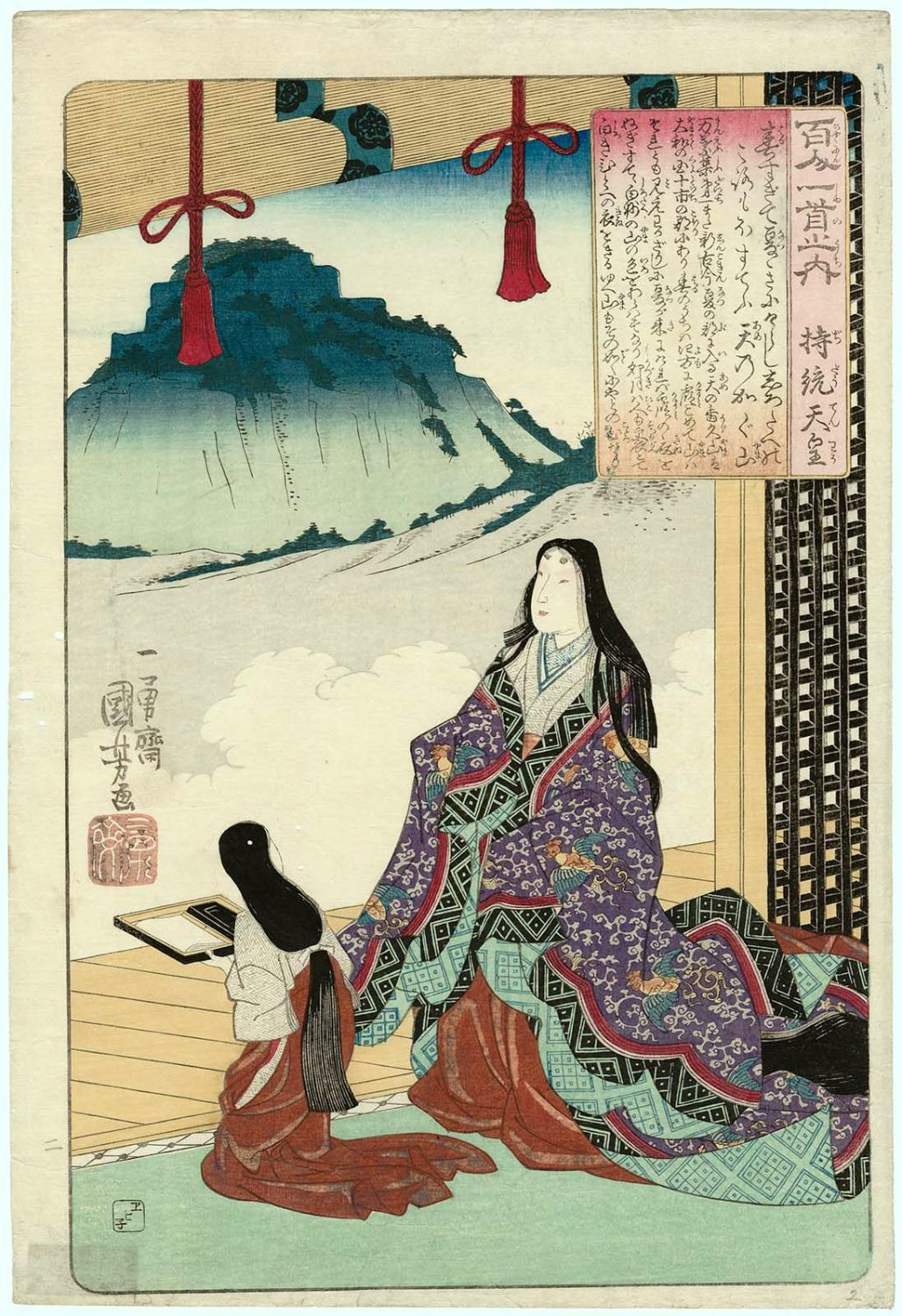
Empress Jitō (持統天皇, 645–702) is counted in the traditional lists as the 41st monarch of Japan. She reigned from 686 until her formal abdication in 697 and continued to influence court affairs afterward. Contemporary historians treat many biographical details as partly derived from later chronicles and oral tradition, so some specifics remain uncertain. For purposes of Japan's dynastic sequence and many historical narratives she is an important figure in the Asuka period and is typically introduced in summaries of the traditional order of succession.
Image gallery
5 Images


Family background and accession
Born into the imperial family, Jitō was a daughter of Emperor Tenji and became a principal consort of Emperor Tenmu. After Tenmu's death, she took the throne to stabilize succession and preserve the continuity of the ruling house. The name by which she is known today, Jitō-tennō, was assigned posthumously by later compilers of court histories; this practice of giving posthumous names is a characteristic feature of Japan's recorded imperial tradition posthumous titling. Scholars frequently note that accounts of early sovereigns mix documentary record and later interpretation, and some aspects of Jitō's life are described as only possibly historical by historians.
Reign and policies
During the late seventh century the Yamato court pursued policies to strengthen central control and standardize administration across provinces. Empress Jitō is commonly associated with a continuation of these centralizing reforms, including measures to consolidate tax and land management and to organize local government under stronger imperial oversight. Some legal and administrative developments of the Asuka period are linked to the government in which she played a central role. Because primary documents from the time are limited and later chronicles shaped the narrative, modern descriptions are careful to frame specific acts as part of broader reform efforts rather than as precisely documented lawmaking.
Abdication, retirement, and succession
In 697 Jitō formally abdicated in favor of her grandson, who became Emperor Monmu. Her decision followed a period of careful management of succession after the deaths of her husband and son, and it exemplifies the ways in which retired sovereigns and senior court figures could shape the choice of heir. The pattern of abdication followed by continued influence also appears in other transitions during this era of Japanese history, and later generations confirmed the order and names of early rulers during the reigns of subsequent monarchs as part of dynastic consolidation and the compilation of official court histories by later compilers.
Significance and legacy
Jitō is one of a small number of women who have served as reigning monarchs in Japan's recorded past. In the traditional sequence she was the third woman to sit on the throne, following earlier reigns such as Empress Suiko, and preceding later ruling empresses like Gemmei and Genshō. Her reign is frequently cited when discussing female rulership in Japan because it illustrates both the possibilities for women to assume supreme power and the political contexts—kinship ties, succession crises, and bureaucratic reform—that enabled such reigns historical context.
Notable facts and distinctions
- She ruled during the Asuka period, a formative time for early Japanese institutions and law.
- Her ascension followed the death of Emperor Tenmu and intervened to secure succession for her descendants.
- Her posthumous name and the chronology of early emperors were standardized by later court historians; this process is part of how Japan's early imperial list became the established sequence known to posterity.
- Jitō is commonly included among the group of eight female sovereigns recognized in traditional lists; other named female rulers in the sequence include Gemmei and Genshō, illustrating a recurring but exceptional pattern of female reigns.
For readers seeking more detailed study, Jitō's life is best approached through careful evaluation of both archaeological evidence and the major court chronicles compiled in later centuries; these sources together show how her reign was remembered and how it helped shape the evolving image of imperial authority in early Japan.
Questions and answers
Q: Who was Empress Jitō?
A: Empress Jitō was the 41st Emperor of Japan, according to the traditional order of succession.
Q: When did Empress Jitō reign?
A: Empress Jitō's reign started in 686 and ended in 697.
Q: What is the conventionally accepted name for Empress Jitō?
A: Empress Jitō's conventionally accepted name is Jitō-tennō.
Q: How do historians view details about Empress Jitō's life?
A: Historians consider details about the life of Empress Jitō to be possibly legendary, but probable.
Q: When were the names and sequence of the early emperors confirmed as "traditional"?
A: The names and sequence of the early emperors were confirmed as "traditional" during the reign of Emperor Kammu, who was the 50th monarch of the Yamato dynasty.
Q: How many women were empresses before Empress Jitō?
A: There were two women empresses before Empress Jitō.
Q: Who were the empresses that came after Empress Jitō?
A: The empresses that came after Empress Jitō were Gemmei, Genshō, Kōken/Shōtoku, Meishō, and Go-Sakuramachi.
Related articles
Author
AlegsaOnline.com Empress Jitō — Reign and legacy of Japan's 41st sovereign Leandro Alegsa
URL: https://en.alegsaonline.com/art/118537
Sources
- kunaicho.go.jp : 持統天皇 (41)
- books.google.com : Annales des empereurs du Japon, p. 59
- books.google.com : Gukanshō, pp. 269-270
- t-net.ne.jp : "Kofun Culture,"
- t-net.ne.jp : Japanese Archaeology.
- books.google.com : p. 270
- books.google.com : p. 60
- kunaicho.go.jp : Ceremony of Accession (Sokui-no-Rei)
- books.google.com : pp. 62