
Fraser Island (K'gari): Australia's World Heritage Sand Island
Fraser Island (K'gari) is the world's largest sand island off Queensland, Australia, noted for perched freshwater lakes, rainforest that grows on sand, coloured sand cliffs, dingoes and World Heritage status.
Overview
Fraser Island, also known by its Indigenous name K'gari, lies off the east coast of Queensland and is internationally recognised for its natural values. The island is listed by UNESCO as a World Heritage site and forms part of protected landscapes on the Queensland coast. European settlers known the place as Fraser Island, but the Butchulla people remain the Traditional Owners and K'gari is widely used today. The island is long, stretching roughly 122 km (about 76 miles), and the designated World Heritage area covers approximately 184,000 hectares (around 454,674 acres).
Image gallery
10 Images




Geology, sands and landforms
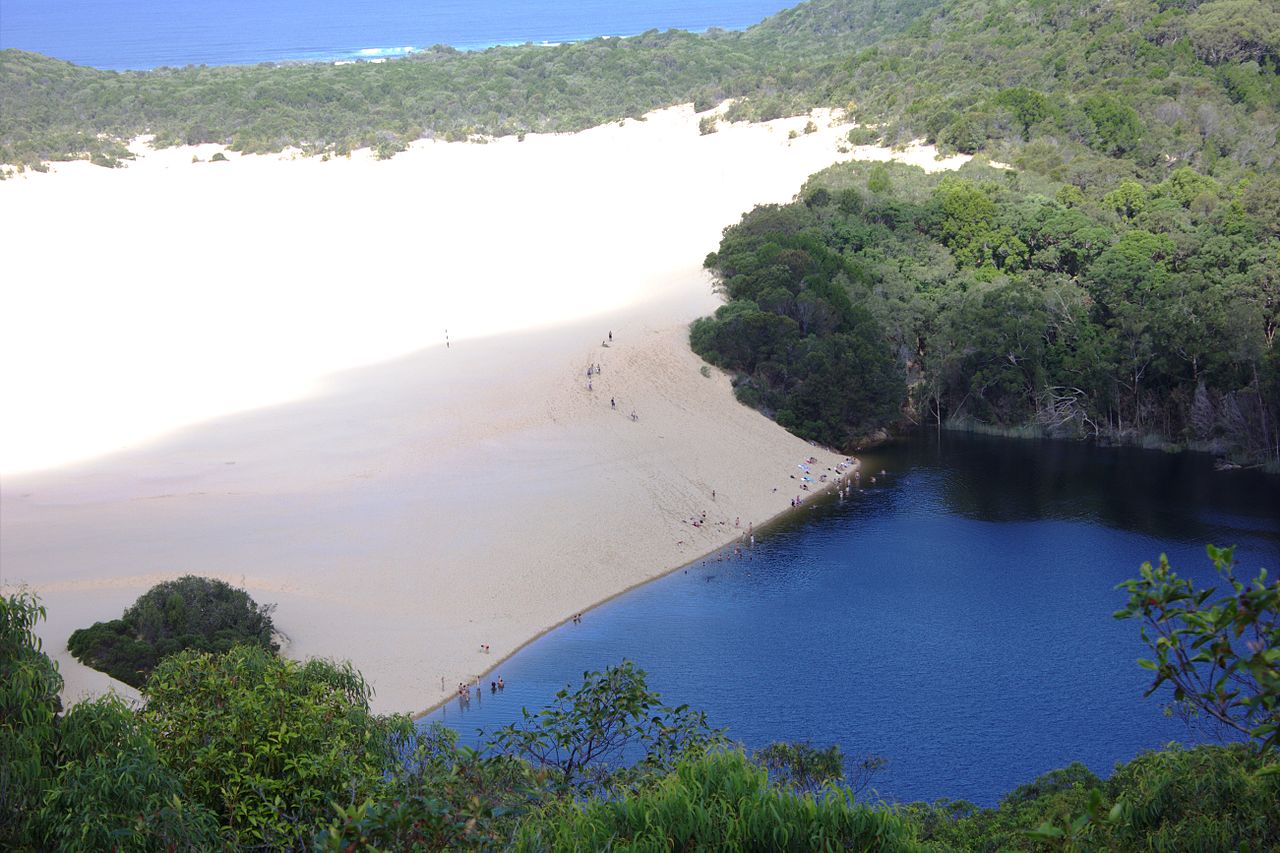
Fraser Island is the largest sand island in the world. Its landscapes are shaped by wind, waves and long-term sediment supply: mobile dunes, long sandy beaches and coloured sand cliffs are characteristic. Bands of iron-rich and organic-rich sands produce the distinctive red, orange and yellow colours visible in dunes and cliffs. Beneath the surface, layers of compacted sand and organic material can hold water in isolated basins, giving rise to perched lakes.
Perched lakes and freshwater ecology
The island is especially notable for its perched freshwater lakes — lakes that sit above the regional water table because their basins are lined with organic matter and compacted sand. Many of these lakes are clear, with low nutrient levels and tea-coloured water influenced by natural tannins. Fraser Island is often cited as having one of the largest collections of perched lakes in the world and is sometimes described as having about half of the planet's perched lake systems. These lakes, together with wetlands and swamps, support specialist aquatic plants and invertebrates.
Flora and fauna
Vegetation ranges from coastal heath and wallum to pockets of rainforest that have established directly on sand — an unusual ecological phenomenon. Mangroves fringe some sheltered bays and estuaries. The island supports diverse birds, reptiles and mammals adapted to sandy soils and coastal conditions. Notable wildlife includes the dingo, which plays an ecological role but also requires careful management because of interactions with visitors. Amphibians and other small vertebrates occupy riparian and wetland habitats; some species have limited distributions and are of conservation concern.
Cultural history
The Butchulla people have long cultural connections to K'gari; the island contains sites of cultural significance and traditional knowledge linked to the landscape. European arrival brought a different set of place names and uses, and over time the island has been the focus of logging, mining proposals and tourism. Recognition of Indigenous heritage and the use of the name K'gari reflect efforts to acknowledge Traditional Owners and their ongoing role in land management.
Access, recreation and safety
Fraser Island attracts visitors for camping, four-wheel driving, fishing, swimming and wildlife viewing. Much of the island is accessed by sandy tracks and beaches, so four-wheel-drive vehicles and experience on sand are typically required. Tides, soft sand, changing weather and strong surf make conditions potentially hazardous; visitors are advised to consult local authorities and park managers and to follow safety guidance. Interactions with dingoes should be cautious and responsible to reduce risks to people and wildlife.
Conservation and management
The island is managed to balance conservation, recreation and cultural values. State and regional authorities, together with Traditional Owners and community groups, work on protecting dune systems, maintaining water quality in lakes, monitoring native species and reducing visitor impacts. Threats include erosion, invasive species, pollution, unregulated access and pressure from tourism; active management and ongoing research aim to address these challenges and to conserve K'gari's ecological integrity.
Further reading and resources
For official and practical information consult government and conservation sources: World Heritage listings and site descriptions at site information, Queensland parks and visitor resources at Queensland resources, national environment pages at Australian government information. Practical visitor guidance, maps and transport notes are available from regional providers and travel planners at plant and habitat pages, distance and route information at distance notes and general overviews of island size and measures at length overview. Protected-area datasets and management summaries can be consulted via area details and acreage references at acreage notes.
- Key features: the world's largest sand island, extensive perched lakes and rainforest on sand.
- Primary concerns: visitor safety, dingo management, erosion and water quality.
- Best approach for visitors: plan ahead, use appropriate vehicles and respect cultural and ecological rules.
Related articles
Author
AlegsaOnline.com Fraser Island (K'gari): Australia's World Heritage Sand Island Leandro Alegsa
URL: https://en.alegsaonline.com/art/36320
Sources
- whc.unesco.org : "Fraser Island"