
Amorites: Ancient Semitic Peoples of Syria and Mesopotamia
The Amorites were a West Semitic population originating in Syria who migrated into Mesopotamia and the Levant in the late third and early second millennia BC, establishing dynasties such as Old Babylonian Babylon.
Overview
The Amorites were a group of West Semitic-speaking peoples associated with regions of modern Syria and the Levant who, over centuries, migrated into southern Mesopotamia and other parts of the Near East. Their movement and settlement played a major role in the political and cultural transformations of the late third and early second millennia BC. Ancient Mesopotamian sources used the name Amurru for the people and for a deity connected with them, while later literary traditions, including biblical texts, recall Amorite presence in Canaan Canaan.
Image gallery
8 Images


Origins, language and social organization
Evidence from personal names, legal and administrative texts, and occasional glosses shows the Amorites spoke varieties of Northwest Semitic speech related to other early West Semitic languages. Surviving material consists mostly of names and short lexical items preserved in Akkadian archives; no long continuous Amorite texts are known. Socially, Amorite groups ranged from nomadic and semi-nomadic clans to settled communities. They did not form a single centralized state but established ruling families and dynasties in multiple city-states.
Political expansion and principal centres
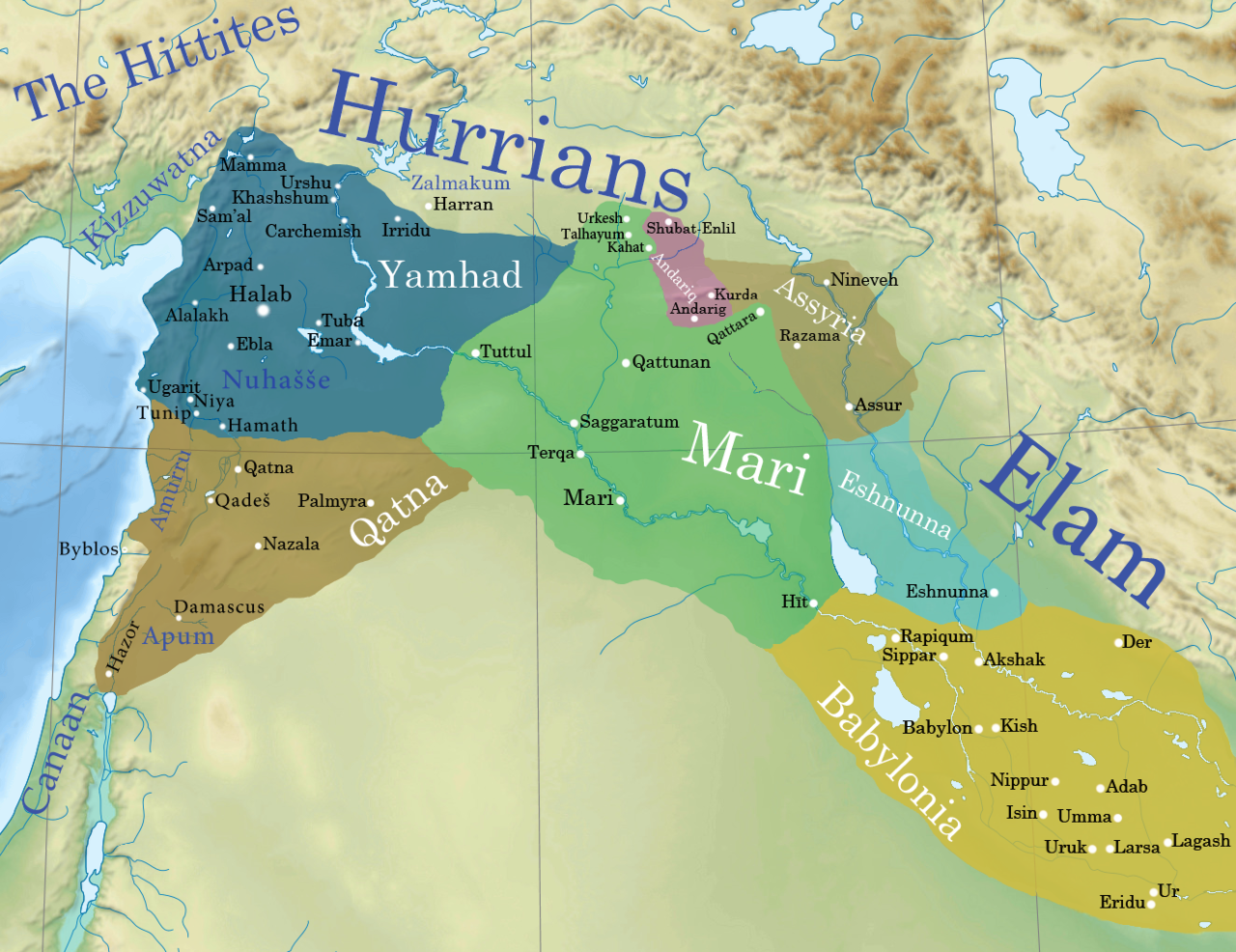
Beginning in the late third millennium and becoming especially prominent in the early second millennium BC, Amorite leaders founded or came to dominate important cities across the Levant and southern Mesopotamia. An Amorite dynasty transformed Babylon from a local town into a major political center during the Old Babylonian period; other key centres with strong Amorite involvement include Mari and several cities in the Syrian steppe. Archaeological strata and textual archives from these sites document administrative practices and royal correspondence associated with Amorite rulers Babylon and the broader region southern Mesopotamia.
Culture, economy and religion
Many Amorites retained pastoral and tribal traditions, but when they became urban rulers they adopted Mesopotamian bureaucratic systems, legal forms and religious institutions. Official inscriptions and correspondence were commonly written in Akkadian, the lingua franca of administration, while elements of Amorite speech persisted in private names. The term Amurru also names a western god in Akkadian and Sumerian texts, indicating the integration of Amorite religious identity into Mesopotamian theological categories.
Sources and archaeology
Our knowledge of the Amorites depends primarily on cuneiform archives (royal inscriptions, legal documents, letters) recovered at sites such as Mari and Babylon, and on later historical and biblical references. Archaeology provides evidence of settlement patterns, material culture and changing urban landscapes that reflect Amorite influence and assimilation. Linguistic study relies on the corpus of names and isolated words identified in these texts to reconstruct aspects of the Amorite tongue and its relationship to other Semitic languages Semitic languages.
Decline, assimilation and legacy
By the late second millennium BC Amorite identity as a distinct group had largely been absorbed into the broader populations of Mesopotamia and the Levant through processes of acculturation, intermarriage and political integration. Nevertheless, Amorite dynasties and rulers left a lasting imprint on legal, administrative and cultural traditions of the region. Their memory persisted in later historical and religious literature, where the Amorites were sometimes remembered as inhabitants of Canaan or as ancestral groups in the ancient Near Eastern worldview Canaan.
Notable facts
- Ancient Mesopotamian sources use Amurru both for the people and for an associated deity.
- Evidence for the Amorite language is limited and mainly survives in names and brief lexical items; scholars therefore classify it cautiously within the family of Semitic languages.
- Amorite rulers established or shaped important polities such as Babylon and the city-state networks of the Syrian steppe and southern Mesopotamia southern Mesopotamia.
Related articles
Author
AlegsaOnline.com Amorites: Ancient Semitic Peoples of Syria and Mesopotamia Leandro Alegsa
URL: https://en.alegsaonline.com/art/3625
Sources
- britannica.com : "Amorite (people)"