
Four-stroke engine
A type of internal combustion engine whose cycle uses four piston strokes—intake, compression, power and exhaust—commonly used in cars, motorcycles, generators and many machines.
The four-stroke engine is a common form of internal combustion engine in which each complete thermodynamic cycle of the working fluid requires four distinct piston movements, or strokes. The mechanism converts controlled combustion of a fuel-air mixture (or compression ignition in diesels) into rotary motion. Its popularity stems from a balance of efficiency, emissions control and mechanical simplicity compared with alternatives.
Image gallery
10 Images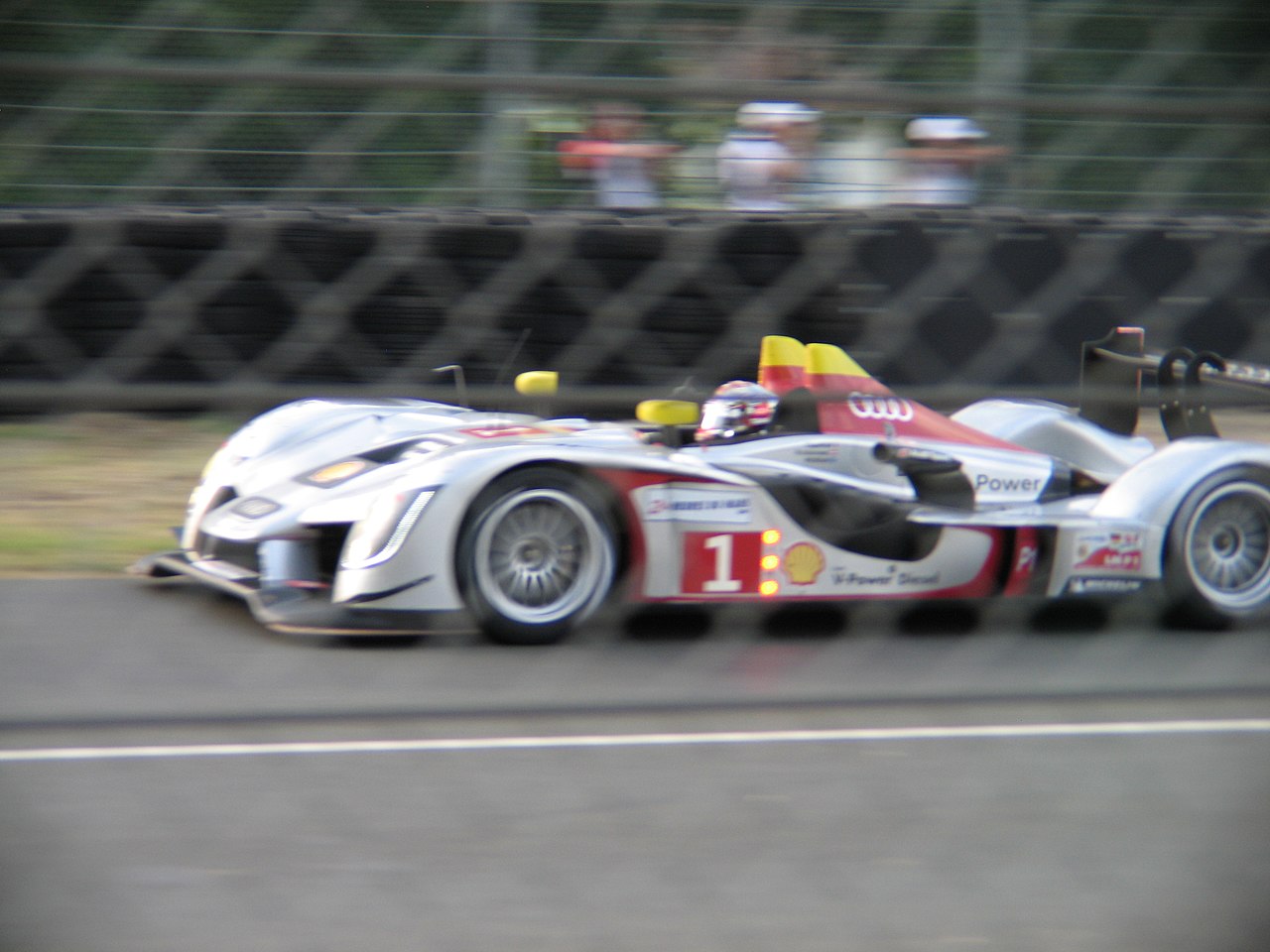


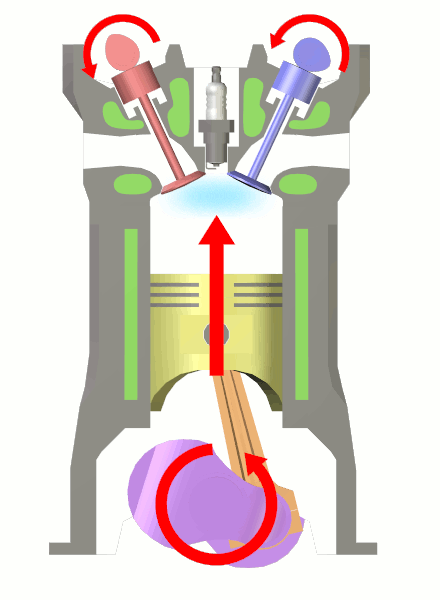
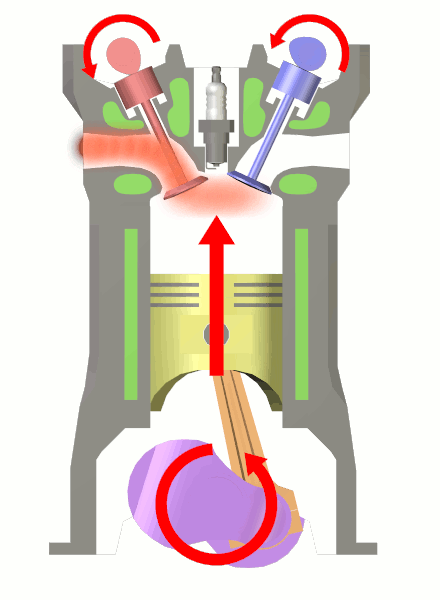

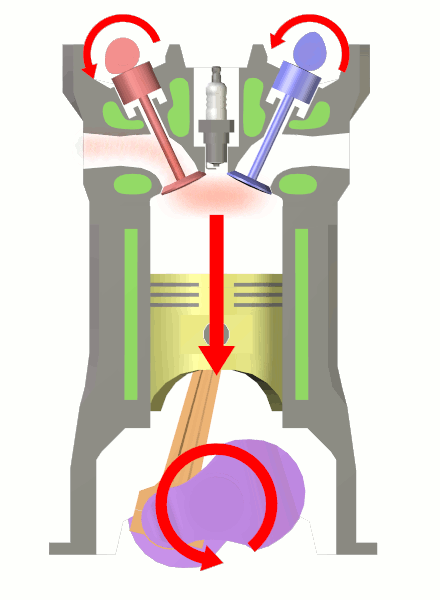

The four strokes
- Intake — The piston moves down, creating a partial vacuum that draws fuel and air (or air alone in direct-injection diesels) into the cylinder through an open intake valve.
- Compression — Both valves close and the piston rises, compressing the charge to increase its temperature and pressure before ignition.
- Power (expansion) — Near top dead center the mixture is ignited (by a spark plug in gasoline engines or by high compression in diesels), producing high-pressure gases that push the piston down and deliver useful work to the crankshaft.
- Exhaust — The piston rises again with the exhaust valve open, expelling combustion products and preparing the cylinder for the next intake stroke.
These four strokes correspond to two revolutions of the crankshaft and are often idealized by the Otto cycle for spark-ignition engines; diesel engines use a related four-stroke cycle with compression ignition. Key parts include the piston, connecting rod, crankshaft, cylinder head, valves, camshaft and ignition or fuel-injection system.
The practical four-stroke design was developed in the 19th century; earlier theoretical descriptions preceded the first commercially successful engines. Over time the layout evolved into many configurations—inline, V, flat and opposed—and into variants such as single-overhead-cam (SOHC) and double-overhead-cam (DOHC) valvetrains, with modern refinements like variable valve timing and turbocharging to improve efficiency and emissions.
Four-stroke engines are widely used in automobiles, motorcycles, lawn equipment, marine craft and stationary generators. Compared with two-stroke engines they generally offer lower fuel consumption and cleaner exhaust at the cost of greater mechanical complexity and weight. Ongoing development focuses on reducing frictional losses, improving combustion, and integrating hybrid or aftertreatment systems to meet stricter emissions standards.
Related articles
Author
AlegsaOnline.com Four-stroke engine Leandro Alegsa
URL: https://en.alegsaonline.com/art/35899