
Fort Sumner, New Mexico
Fort Sumner is a village and the county seat of De Baca County in eastern New Mexico, noted for its 19th‑century military history, the Bosque Redondo episode, and ties to outlaw Billy the Kid.
Fort Sumner is a small village in the state of New Mexico in the United States. It serves as the county seat of De Baca County and sits on the high plains of eastern New Mexico. The community developed around a U.S. Army post and retains a rural character today, with an economy shaped by agriculture, ranching and heritage tourism.
Image gallery
2 Images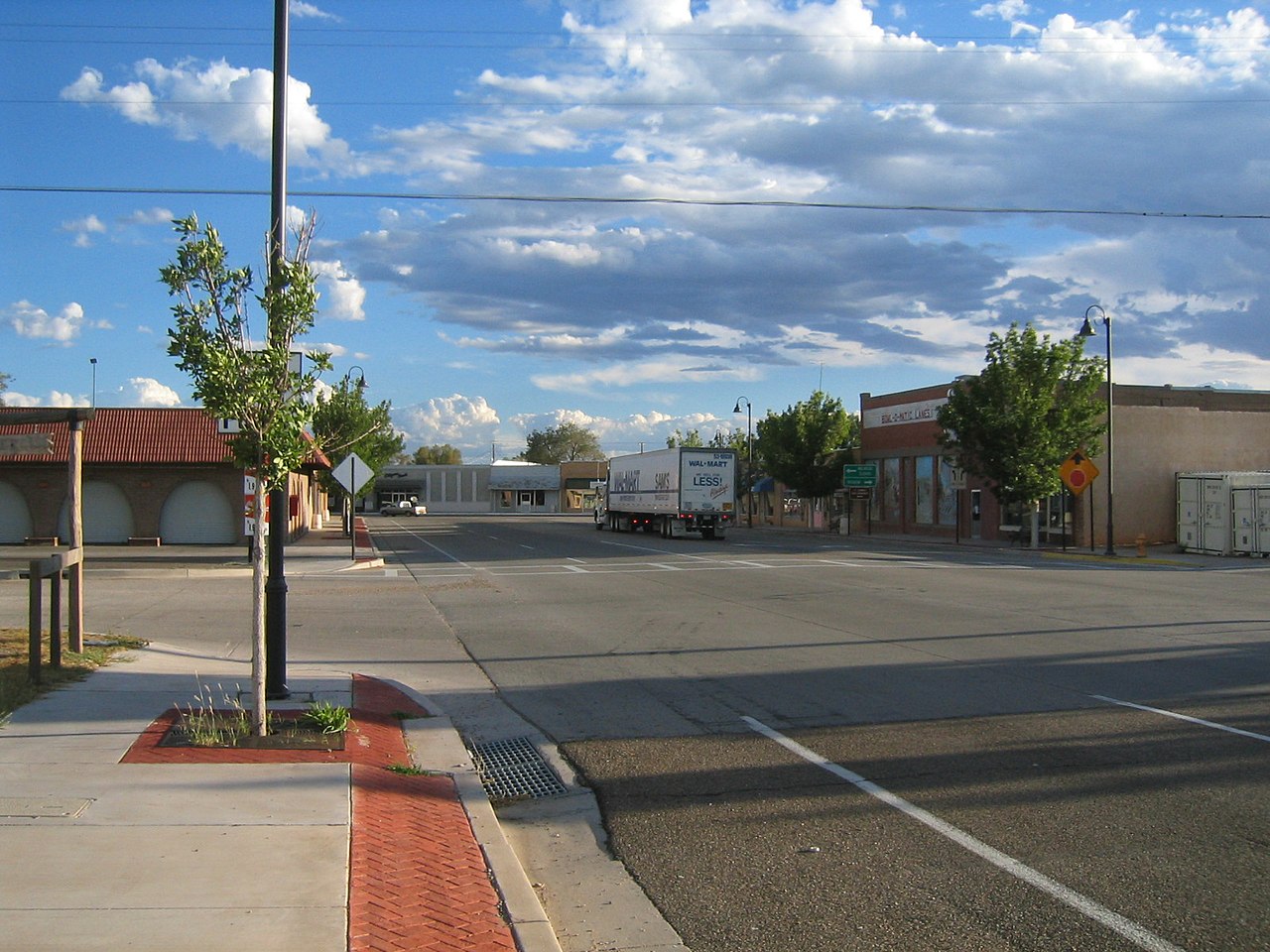

Characteristics and setting
The village occupies a landscape of dry grasslands and mesas, with irrigation-fed fields and scattered cottonwood trees along historic waterways. Local services include county government offices, small businesses, and cultural sites that draw visitors interested in frontier history. The climate is semi-arid with wide temperature swings between seasons, characteristic of the region.
History and significance
Fort Sumner grew from a 19th‑century military installation established on the plains. The site is closely linked to the Bosque Redondo experiment, an era when the U.S. government forcibly relocated Native American peoples to a reservation in the area. That episode and its consequences are commemorated at local memorials and interpretive displays, which examine the social and political impact of the relocation.
The town is also associated with William H. Bonney, popularly known as Billy the Kid. His final events, death and burial are part of Fort Sumner’s historical narrative and contribute to its role as a destination for those exploring Old West lore.
Attractions and notable sites
- Historic military site and interpretive markers relating to Bosque Redondo and the fort
- Museums and exhibits focused on frontier life and outlaw history
- Local cemetery and memorials connected with regional events and figures
- Outdoor recreation on nearby lakes and open plains
Visitors come for a mix of solemn history and small‑town Southwestern culture. Fort Sumner functions today as both a living community and a focal point for remembering complex chapters of American and Native American history, making it significant beyond its modest size.
Related articles
Author
AlegsaOnline.com Fort Sumner, New Mexico Leandro Alegsa
URL: https://en.alegsaonline.com/art/35779
Sources
- census.gov : "Population and Housing Unit Estimates"