
Fort William, Ontario
Former city on the Kaministiquia River that merged with Port Arthur to form Thunder Bay in 1970; historically a fur-trade post and Great Lakes transport hub.
Overview
Fort William was a standalone city on the north shore of Lake Superior where the Kaministiquia River meets the lake. For much of its history it served as a regional centre for trade, transport and rail connections in what is now northwestern Ontario. In January 1970 Fort William was amalgamated with neighbouring Port Arthur and nearby townships to create the city of Thunder Bay, changing municipal boundaries but leaving a strong local identity that survives in neighbourhood names and cultural memory. Thunder Bay remains the principal urban centre of the region.
Image gallery
3 Images

Historical development
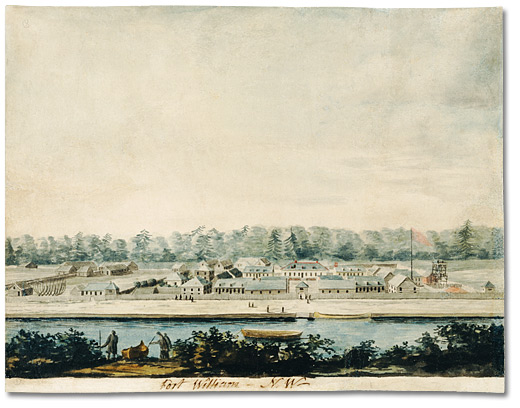
The place known as Fort William began as a fur-trade location used by Indigenous peoples and, later, by European traders. It developed around a trading post at the river mouth and expanded significantly in the 19th century as Canadian east–west transportation networks pushed toward the Lake Superior shore. Competition between lake shipping and emerging railway lines made the town an important transfer point for goods, grain and passengers moving between inland Canada and Great Lakes ports.
Geography and economy
Fort William occupies lowlands at the Kaministiquia River entrance to Lake Superior, a setting that shaped its role as a harbour and rail terminus. The river and lake gave access for oceangoing and lake vessels during the shipping season, while railways and roads allowed overland movement during the rest of the year. Historically, the local economy centred on port services, grain handling, timber, and railway activity; over time these functions consolidated into the regional economy of Thunder Bay. The site is commonly referenced in accounts of Lake Superior transport and northern Ontario logistics.
Legacy and cultural significance
Although Fort William no longer exists as an independent municipality, its name and history remain visible. A reconstructed fur-trade post and interpretive site near the original location commemorates the town's early role in the Hudson's Bay Company-era trade and the Indigenous–European interactions that shaped the area. Local museums and neighbourhoods preserve artifacts and stories about the town’s working waterfront, rail yards, and community life prior to amalgamation.
Notable features and distinctions
- Historic role as a gateway on the Kaministiquia River and Lake Superior shore.
- Part of a twin-city relationship with Port Arthur before joining to form Thunder Bay.
- Remains a focus for regional history and tourism in Northern Ontario and northwestern Ontario discussions.
Today Fort William is best understood as a major chapter in the broader story of settlement, trade and transportation on the Canadian Great Lakes — a community whose geographic advantages shaped local industry and whose municipal identity was reshaped by mid-20th-century amalgamation.
Related articles
Author
AlegsaOnline.com Fort William, Ontario Leandro Alegsa
URL: https://en.alegsaonline.com/art/35789
Sources
- tools.wmflabs.org : 48°23′N 89°17′W / 48.38°N 89.28°W / 48.38; -89.28